
Harvest
Contracts
Sign up

Independent Contractor Agreement Template in Czech

Independent contracting can be complex in Czechia, with strict legal standards and compliance requirements. Harvest helps contractors manage time, expenses, and invoicing efficiently.

Start from a template

AGREEMENT DRAFT

Add your logo here

Scope of work

Payment terms

Duration

Signatures

Client

Sign here

Contractor

Sign here

Get paid via:
Credit card / Debit card
ACH
Wire transfer

Customize contract

Appearance

Add a logo
Show contract title

Contract settings

Include payment terms Total fee, deposit, and schedule
Include termination clause Notice required to end the contract
Include signature blocks Both parties sign at the bottom

Understanding Independent Contractor Agreements in Czechia

Independent contractor agreements in the Czech Republic are governed by the Czech Civil Code, which distinctly separates these from traditional employment contracts. Unlike employees, independent contractors aren't entitled to statutory benefits such as paid leave or minimum wage, and they have the flexibility to work for multiple clients, set their own hours, and manage their own expenses. However, misclassifying an employee as an independent contractor can lead to significant penalties ranging from CZK 50,000 to CZK 10,000,000. To avoid such costly repercussions, it's crucial for companies to draft clear agreements that emphasize the independent nature of the contractor's role.

In practice, a well-drafted independent contractor agreement should clearly define the scope of work based on deliverables and outcomes rather than ongoing duties. Including clauses that highlight the contractor's ability to work for other clients and control their work location and hours can help avoid misclassification. Many contractors and businesses also focus on specific project deliverables to maintain compliance with Czech labor laws, ensuring that the working relationship is explicitly defined as independent.

Navigating Legal and Compliance Challenges

Legal compliance is crucial when dealing with independent contractor agreements in the Czech Republic. Misclassification risks are particularly high in sectors like construction and retail, where the practice of the "Švarc system"—illegally classifying employees as contractors—is prevalent. To mitigate these risks, businesses must ensure that their agreements reflect the contractor's independence and are aligned with Czech legal standards.

One key legal differentiation involves whether the contractor has control over their work processes and bears the financial risk of their business. Companies should draft agreements that emphasize these aspects to prevent penalties. Authorities in Czechia actively target misclassification, making it essential for businesses to regularly review and update contracts. This ensures compliance with evolving labor laws and helps maintain a clear distinction between contractors and employees.

Practical Tips for Drafting Agreements

Drafting a robust independent contractor agreement in Czechia requires careful attention to detail. It's vital to clearly define the scope of work, payment terms, and the contractor's ability to work independently. Including specific deliverables and tying payment structures to project completion can help enforce the contractor's independent status. Additionally, agreements should specify that the contractor is responsible for their own expenses and tools, further distancing the arrangement from an employment relationship.

Regularly updating these agreements to reflect changes in projects or legal requirements is essential. Written agreements are preferred over verbal ones, as they provide a solid legal foundation in case of disputes. Contractors should also keep meticulous records of their income and expenses, which is crucial for tax filing and financial management. Although Harvest does not provide legal templates, it can assist contractors in managing their time, expenses, and invoicing effectively.

Tax and Insurance Considerations for Contractors

Independent contractors in Czechia must navigate various tax and insurance obligations. They are generally responsible for their own income taxes and social/health contributions, with upcoming increases in minimum contributions starting January 1, 2026. For freelancers, the minimum monthly social insurance is projected to rise to approximately CZK 5,720, while health insurance will be around CZK 3,306. These changes underscore the importance of financial planning for independent contractors.

While Harvest does not handle VAT registration or tax obligations, it allows contractors to add VAT numbers to their invoices, facilitating better expense management. It's important for contractors to stay informed about their tax responsibilities and ensure compliance with Czech regulations. Keeping detailed financial records, including invoices and receipts, is essential for correct tax filing and potential audits. Harvest supports contractors by helping them efficiently track their expenses and invoicing, contributing to smoother financial management.

The Role of Harvest in Managing Contractor Workflows

While Harvest does not offer specific legal guidance or contract templates for independent contractor agreements in Czechia, it plays a crucial role in managing the operational aspects of contractor workflows. Harvest helps contractors efficiently track their time, manage expenses, and generate accurate invoices, all of which are essential for maintaining compliance and ensuring smooth business operations.

For contractors looking to streamline their administrative tasks, Harvest can be an invaluable tool. By organizing financial data and providing clear visibility into project budgets and expenses, Harvest supports better decision-making and financial planning. This focus on operational efficiency allows contractors to concentrate on delivering high-quality work to their clients while maintaining their independence.

Harvest for Contractor Agreements

Discover how Harvest supports contractors with time tracking, expense management, and invoicing, tailored for Czechia's needs.

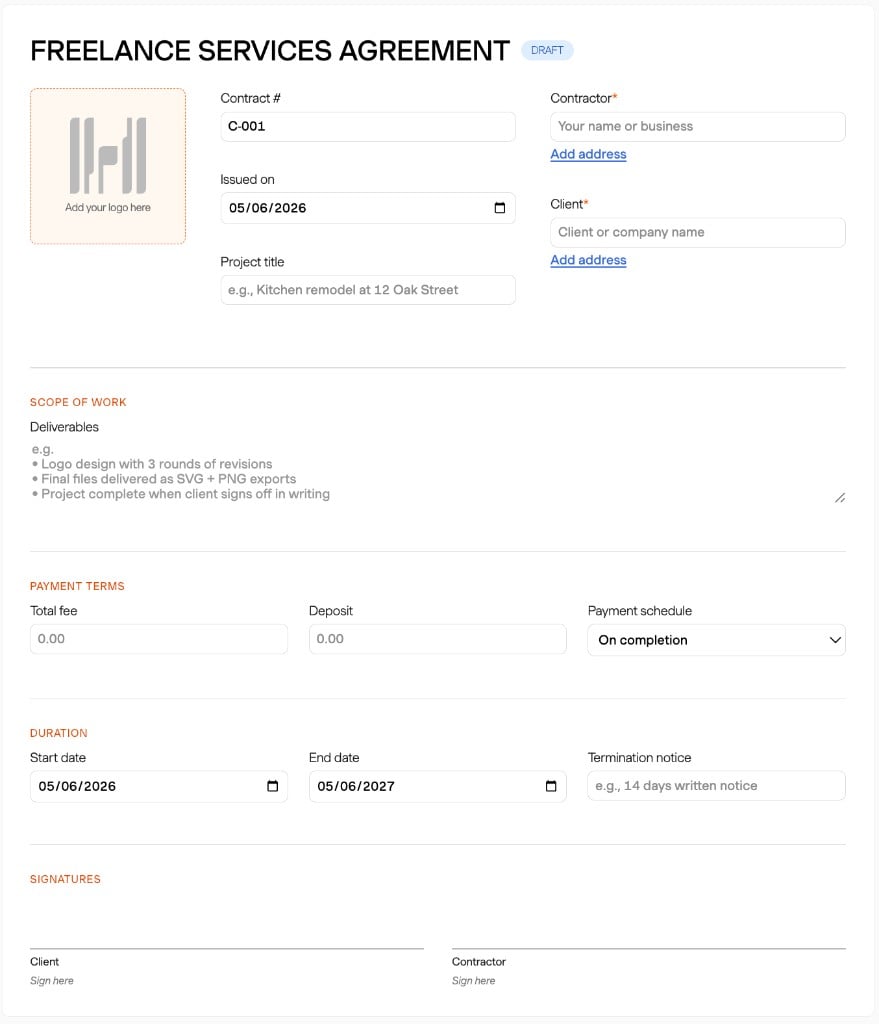
Independent contractor agreement template interface in Harvest.

Independent Contractor Agreement Template in Czech FAQs

  • In Czechia, independent contractor agreements must comply with the Czech Civil Code. They should clearly define the scope of work and emphasize the contractor's independence, such as control over work hours and locations. Misclassification can lead to penalties, so it's crucial that agreements reflect the contractor's role accurately.

  • To ensure compliance, draft agreements that highlight the contractor's independence, focusing on deliverables rather than ongoing work duties. Regularly updating the contract to reflect any changes in Czech labor laws is also essential. Consulting with legal professionals can provide further assurance of compliance.

  • Misclassifying employees as contractors in the Czech Republic can result in penalties ranging from CZK 50,000 to CZK 10,000,000. Companies may also become liable for back payments of taxes and insurance contributions. Ensuring clear, compliant agreements can help avoid these costly penalties.

  • A Czech independent contractor agreement should include clear definitions of the project scope, payment terms, and the contractor's right to work independently. Specify deliverables, payment structures, and emphasize the contractor's responsibility for their own tools and expenses.

  • Yes, independent contractors in Czechia must handle their own income taxes and social/health contributions. From 2026, the minimum contributions are set to increase, with social insurance rising to CZK 5,720 and health insurance to CZK 3,306. Contractors should stay informed about these obligations to ensure compliance.

  • Harvest helps independent contractors by managing time tracking, expense management, and invoicing. Although it doesn't provide legal templates, its tools are essential for efficient workflow management, allowing contractors to focus more on their projects.

  • While Harvest doesn't handle VAT registration, it allows users to add VAT numbers to invoices, facilitating better expense tracking and management. This feature supports contractors in maintaining accurate financial records for tax purposes.