Sign up


Understanding Independent Contractor Agreements in Germany
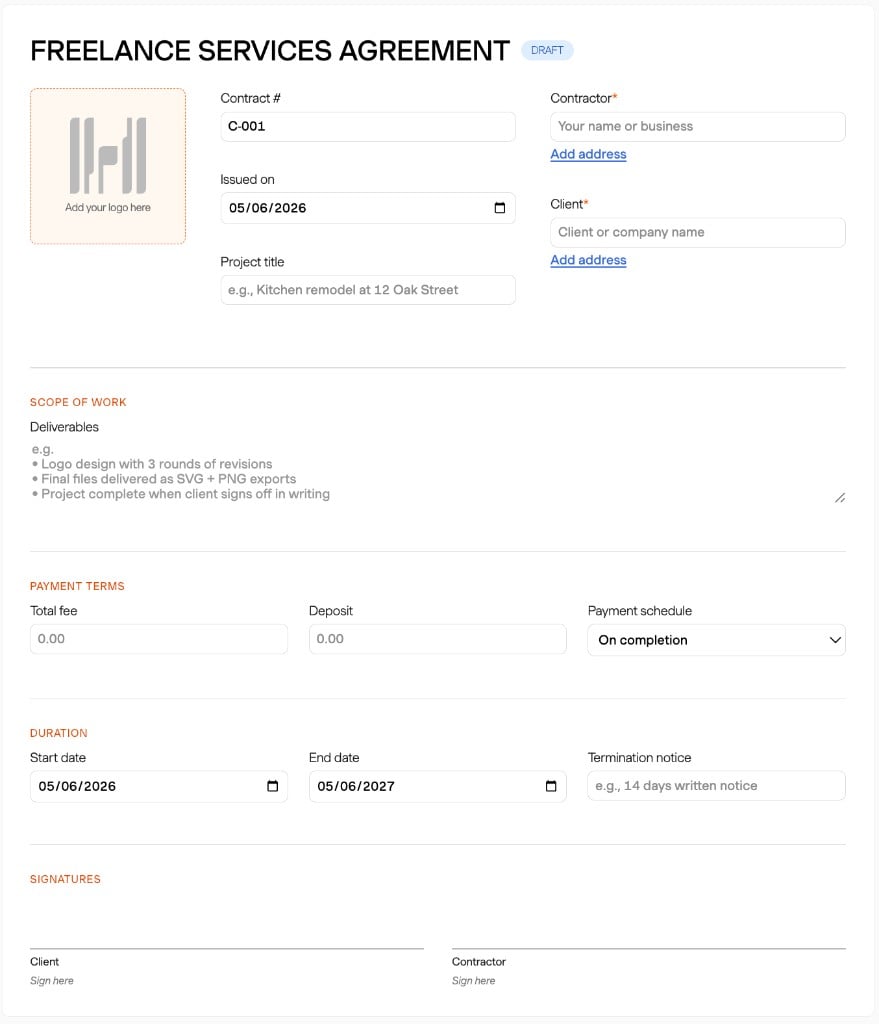
Independent contractor agreements, known as Dienstleistungsvertrag or Werkvertrag in German, are essential for defining the relationship between a client and a contractor. These agreements must clearly distinguish between independent contractors and employees to avoid the risk of Scheinselbstständigkeit (false self-employment), which can lead to significant financial penalties. According to the Statistisches Bundesamt, Germany's freelance market contributes approximately €87 billion annually to the economy, emphasizing the importance of well-drafted agreements.
To ensure compliance with German law, agreements should include detailed descriptions of services, clear compensation structures, and explicit statements of independence. Furthermore, German authorities use a "totality of circumstances" test to determine employment status, making the actual conduct of the working relationship more significant than the contract wording itself. In 2023, approximately 42,000 cases of suspected false self-employment were investigated, illustrating the rigorous scrutiny contracts face.