
Harvest
Contracts
Sign up

Cloud-Based Contract Template

With businesses losing up to 9% of their revenue due to inefficient contract management, Harvest supports enhanced cloud-based solutions by ensuring data security and compliance.

Start from a template

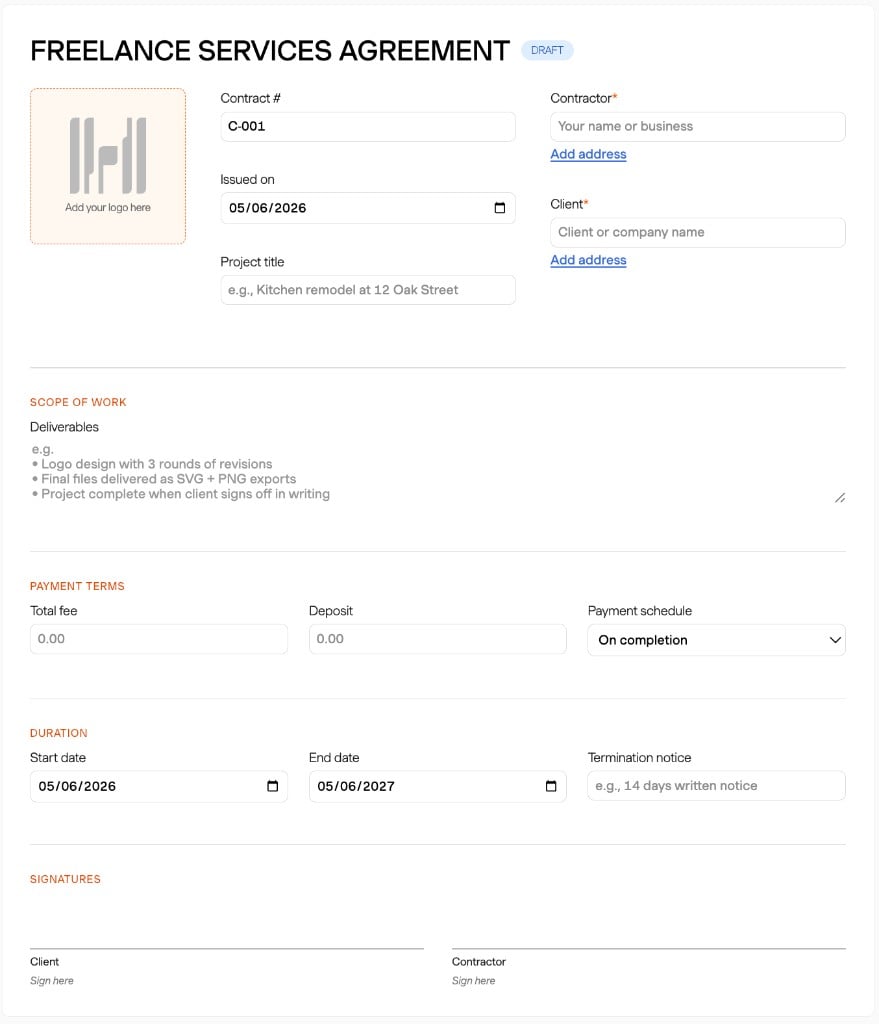
AGREEMENT DRAFT

Add your logo here

Scope of work

Payment terms

Duration

Signatures

Client

Sign here

Contractor

Sign here

Get paid via:
Credit card / Debit card
ACH
Wire transfer

Customize contract

Appearance

Add a logo
Show contract title

Contract settings

Include payment terms Total fee, deposit, and schedule
Include termination clause Notice required to end the contract
Include signature blocks Both parties sign at the bottom

Understanding Cloud-Based Contract Templates

Cloud-based contract templates are revolutionizing contract management by offering enhanced efficiency, compliance, and cost-effectiveness. With businesses losing an average of 9% of their annual revenue due to outdated contract management practices, adopting a cloud-based approach can mitigate such losses. This shift from manual to digital contract management has seen organizations reduce contract processing time by up to 50% through centralized, cloud-hosted platforms that allow real-time collaboration and version control.

These templates are particularly valuable in sectors like healthcare and construction, where complex contracts are commonplace. By centralizing documents and providing real-time access, cloud-based solutions eliminate version control issues and reduce delays. This centralization not only improves productivity but also enhances compliance by embedding standardized templates and clauses into the contract lifecycle. As businesses increasingly invest in cloud services—41% plan to boost their investment—cloud-based contract templates are becoming a vital tool in modern contract management.

Key Components of a Cloud-Based Contract Template

When drafting a cloud-based contract, certain components are essential to ensure legal compliance and operational efficiency. These contracts must include clear data handling and security provisions, particularly in cloud environments. For instance, the EU Data Act mandates that cloud contracts facilitate easy switching and data access without prohibitive costs. These legal requirements underline the importance of including provisions for data sharing, security compliance, and retention policies in cloud contracts.

Standardization is another critical component. By using pre-approved templates and clause libraries, organizations can reduce negotiation friction and ensure that contracts start from a compliant baseline. Furthermore, automation of workflows—such as contract creation, negotiation, and approval routing—enhances efficiency, preventing bottlenecks and missed deadlines. While Harvest does not offer legal templates, its infrastructure hosted on Google Cloud and AWS ensures robust data handling and security, aligning with industry standards.

Customizing Cloud Contracts for SaaS Needs

Customizing cloud-based contracts to fit specific SaaS needs requires an understanding of both legal requirements and operational demands. SaaS agreements must delineate between cloud services and traditional software licenses, detailing provisions for data access, security, and compliance with regulations like GDPR. These customizations ensure that contracts are not only legally sound but also operationally feasible.

Despite Harvest not providing specific SaaS contract templates or customization options, the principles of standardization and automation can still be applied. By utilizing centralized repositories and automated workflows, businesses can streamline contract management processes, reduce errors, and enhance compliance. Additionally, organizations should ensure that their contracts are regularly reviewed and updated to reflect changes in laws and industry standards, avoiding common pitfalls like inconsistent language and missed obligations.

Avoiding Common Pitfalls in Cloud Contract Drafting

Drafting cloud-based contracts comes with its own set of challenges, and understanding these can help avoid common pitfalls. A major issue is the lack of standardized language across contracts, which can increase compliance risks and slow negotiations. By adopting standardized templates and clause libraries, organizations can ensure consistency and reduce legal review cycles.

Another challenge is poor contract visibility due to fragmented storage. Centralizing contracts within a cloud-based, searchable repository can significantly mitigate this risk, providing easy access and preventing missed deadlines. Furthermore, automating key processes like contract creation and approval routing can prevent bottlenecks and ensure timely contract execution. While Harvest doesn't provide legal guidance on contract drafting, its capabilities in managing time, expenses, and invoices can support overall business efficiency, complementing cloud contract management efforts.

Ensuring Legal Compliance in Cloud Contracts

Legal compliance is a cornerstone of cloud contract management, with electronic records and signatures holding the same legal standing as paper documents under acts like the ESIGN Act and UETA. Cloud contracts must also comply with specific regulations depending on the jurisdiction, such as the EU Data Act, which mandates clear rules for data access and sharing.

To maintain compliance, organizations should define clear data retention policies, specifying timeframes for different data types and secure disposal methods. This ensures that contracts not only meet legal requirements but also support operational transparency and accountability. While Harvest does not offer legal compliance solutions, its data handling practices, including encryption and GDPR compliance, demonstrate a commitment to security and legal standards in cloud environments.

Explore Cloud-Based Contracts with Harvest

See how Harvest enhances cloud-based contract management with secure data handling and compliance features.

Screenshot of Harvest's cloud-based contract management features.

Cloud-Based Contract Template FAQs

  • A cloud-based contract template should include data handling, security provisions, and compliance with regulations like the EU Data Act. Standardized templates and clause libraries are also essential to ensure consistency and reduce negotiation friction.

  • Customizing a cloud-based contract for SaaS needs involves delineating cloud services from traditional licenses, and including provisions for data access and security. Regular updates to the contract templates ensure they reflect current laws and standards.

  • Common pitfalls include inconsistent contract language, fragmented storage, and reliance on manual processes. Centralizing contracts and using standardized templates can mitigate these issues, improving compliance and efficiency.

  • Yes, electronic signatures are legally binding in many jurisdictions, including the US under the ESIGN Act and UETA, and the UK under the Electronic Communications Act 2000. They hold the same legal standing as traditional signatures.

  • Cloud-based contracts improve efficiency by centralizing documents, enabling real-time collaboration, and automating workflows. This reduces contract processing time by up to 50%, enhances compliance, and reduces the risk of errors.

  • Data retention policies specify how long different types of data should be kept, ensuring compliance with legal obligations like GDPR and operational efficiency. Clear policies help avoid penalties and ensure data is handled appropriately.