
Harvest
Contracts
Sign up

Retainer Billing for Contractors

Retainer billing stabilizes contractor revenue streams, offering consistent cash flow and client loyalty. Harvest helps manage these agreements through efficient time tracking and invoicing.

Start from a template

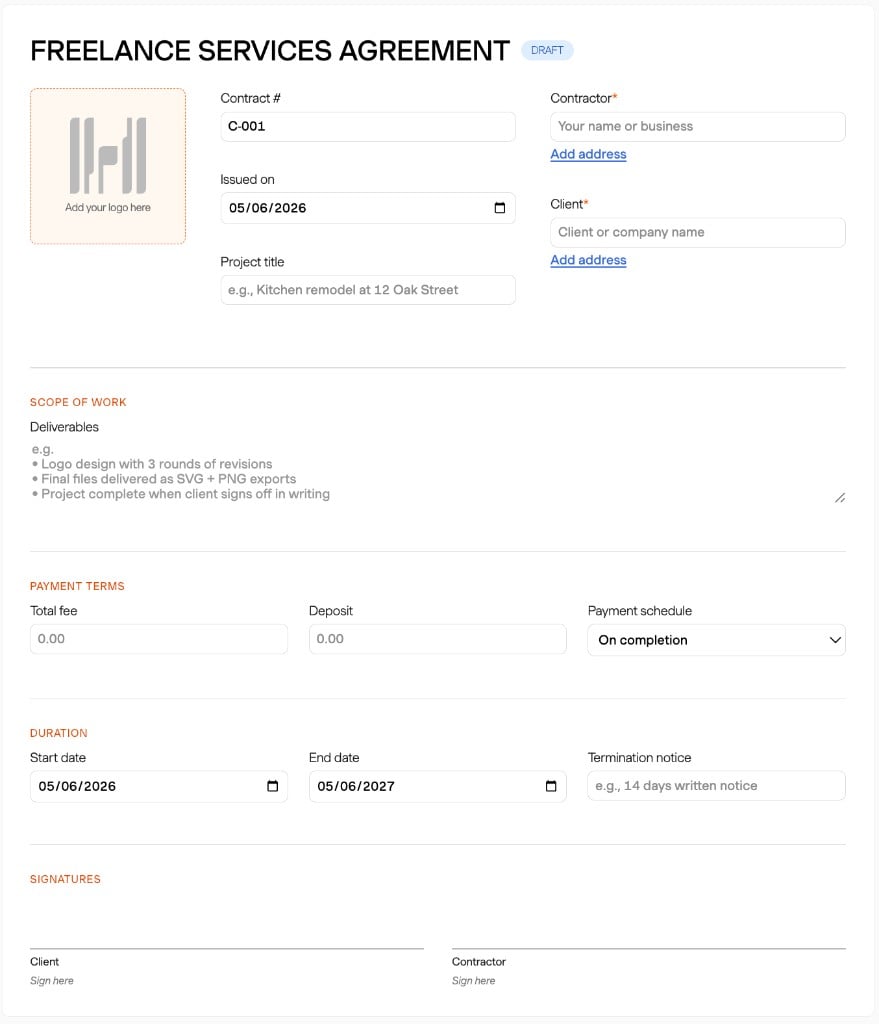
AGREEMENT DRAFT

Add your logo here

Scope of work

Payment terms

Duration

Signatures

Client

Sign here

Contractor

Sign here

Get paid via:
Credit card / Debit card
ACH
Wire transfer

Customize contract

Appearance

Add a logo
Show contract title

Contract settings

Include payment terms Total fee, deposit, and schedule
Include termination clause Notice required to end the contract
Include signature blocks Both parties sign at the bottom

Understanding Retainer Billing for Contractors

Retainer billing for contractors is a strategic payment model that offers significant advantages, such as providing financial stability for service providers and consistent expertise access for clients. Despite its potential, only 13% of service providers currently utilize retainer agreements. However, those who do report more stable revenue streams. In sectors like digital agencies, this model is more prevalent, with 7.5 out of 10 agencies adopting it. The benefits extend beyond stability; offering a 10-15% discount on standard rates in exchange for guaranteed income is common practice, making it an attractive option for both parties involved.

Retainer agreements are especially beneficial in industries where ongoing services are crucial. For instance, in the construction industry, retainage is a common practice involving the withholding of 5-10% of the total contract value until project completion, ensuring quality and performance. This method can, however, lead to delays in payment collection, with 68% of contractors experiencing waits over 30 days. By adopting retainer billing, contractors can mitigate such delays, streamline cash flow, and enhance client relationships.

Structuring Effective Retainer Agreements

Effectively structuring a retainer agreement involves clearly defining the scope of services, retainer fees, and billing cycles to prevent scope creep and ensure mutual satisfaction. A well-drafted retainer agreement outlines what services are included and, crucially, what are not, which helps manage client expectations and avoid additional uncompensated work. For contractors, incorporating a formal change order process for out-of-scope requests is critical to maintaining profitable operations.

Legal compliance is another essential aspect of retainer agreements. Contractors must ensure their agreements are legally binding in their jurisdiction, covering key elements like payment terms and termination clauses. Consulting a legal professional is recommended to tailor these agreements appropriately. While Harvest does not provide specific tools for structuring retainer agreements, its robust time tracking and invoicing solutions can support contractors in managing retainer contracts efficiently by monitoring project scope and expenses.

Managing Retainer Clients with Harvest

Managing retainer clients effectively is crucial for the success of contractors adopting this billing model. Although Harvest does not offer specialized features for retainer billing, it provides robust tools for tracking time, expenses, and invoicing, which are essential components in managing retainer agreements. By using Harvest, contractors can ensure accurate billing and timely invoicing, a critical aspect of maintaining healthy cash flow and client relationships.

Harvest's capabilities allow contractors to monitor project progress and expenses closely. This visibility helps mitigate common challenges such as scope creep, by tracking time spent on different activities and thus informing discussions about scope changes with clients. Furthermore, Harvest's invoicing features support regular and transparent communication with clients regarding their retainer usage, fostering trust and long-term partnerships.

Best Practices for Retainer Billing Success

To maximize the benefits of retainer billing, contractors should adopt several best practices. Firstly, clear communication with clients regarding retainer terms and usage is vital. Regular updates and transparent invoicing can prevent misunderstandings and build trust. Secondly, contractors should consider a trial period for new retainer agreements to adjust terms based on actual usage and client needs.

Another best practice is to evaluate whether to base retainer fees on deliverables or hours, a decision that depends on the nature of the services provided. Deliverable-based retainers avoid the pitfalls of hourly billing, such as penalizing efficiency. Harvest's time tracking and expense management tools can provide the necessary data to make informed decisions about these structuring choices. Ultimately, while Harvest does not specifically manage retainer agreements, its capabilities significantly support contractors in executing these best practices effectively.

Retainer Billing with Harvest

Explore how Harvest supports retainer billing with tools for time tracking and invoicing, enhancing contractor cash flow and client management.

Screenshot of Harvest software interface showing retainer billing features for contractors.

Retainer Billing for Contractors FAQs

  • Contractors can use various types of retainer agreements, including pay-for-work, pay-for-access, and project-based models. These agreements ensure consistent cash flow and client access to services. Each type has its advantages, and contractors should choose based on their specific business needs and client demands.

  • Retainer billing provides contractors with predictable cash flow by securing upfront payments for ongoing services. This model reduces financial uncertainty and allows for better resource planning. Contractors benefit from having a steady income stream, which can enhance business stability and growth.

  • Challenges include scope creep, inconsistent billing, and poor communication. Contractors can address these by clearly defining services in agreements, setting realistic retainer terms, and maintaining regular communication with clients. Using tools like Harvest for time tracking and invoicing helps in managing these challenges effectively.

  • Clear communication is crucial to ensure mutual understanding of retainer terms and prevent disputes. It involves regular updates on service usage and billing, helping to build trust with clients and fostering long-term relationships. Harvest's invoicing tools facilitate transparent client communication.

  • Scope creep occurs when additional services are expected without extra compensation, often leading to resource strain. Contractors can manage scope creep by clearly defining the scope of services in agreements and using tools like Harvest to track time and expenses, ensuring transparency in client interactions.

  • Yes, retainer agreements must comply with regional laws, covering elements like payment terms, service scope, and termination clauses. Consulting legal professionals is recommended to ensure these agreements are binding and protect the contractor's interests. Harvest assists by providing data for informed legal consultations.