
Harvest
Quotes
Sign up

Proposal Template for Contractors

Harvest helps contractors streamline project bids with customizable proposal templates, enhancing efficiency and win rates.

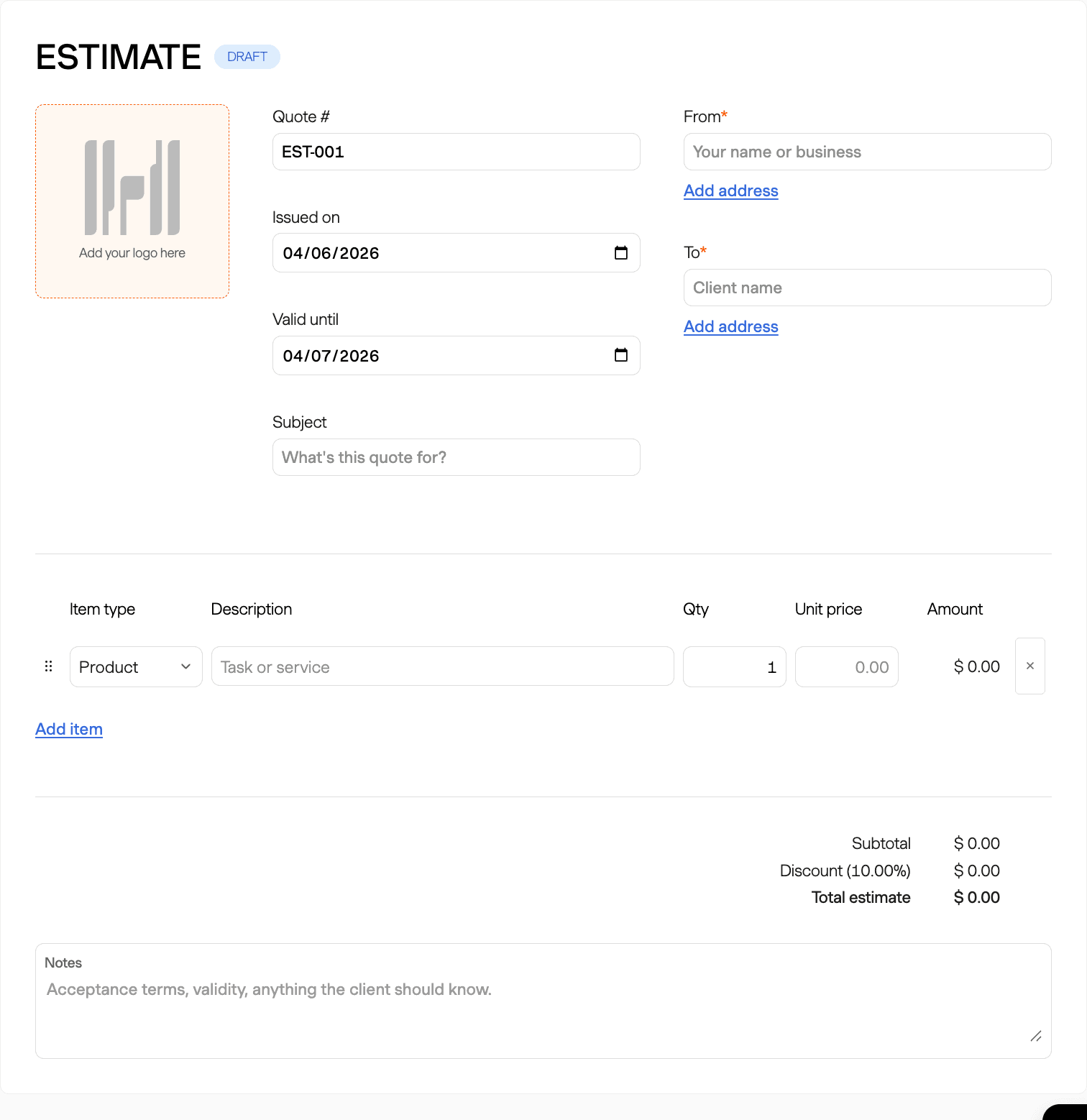
ESTIMATE DRAFT

Add your logo here
Item type
Description
Qty
Unit price
Tax
Amount
Subtotal
$0.00
Discount
$0.00
Total estimate
$0.00
Get paid via:
Credit card / Debit card
ACH
Wire transfer

Customize estimate

Appearance

Add a logo
Show estimate title

Quote settings

Tax Add up to 2 tax rates
%
Discount Apply a discount percentage
%

Understanding Contractor Proposal Templates

A contractor proposal template is an essential tool for streamlining project bids and effectively communicating your services to potential clients. The key components of a successful proposal include a comprehensive scope of work, detailed cost estimates, and clear terms and conditions. Industry trends show that the adoption of digital templates can enhance the professionalism and customization of proposals, leading to improved close rates. For instance, contractors who transitioned to using templates with high-quality visual documentation saw a significant increase in their win rates, from 10-20% for hard bids to upwards of 30-50% for negotiated projects. Moreover, companies have reported saving up to $17 million by integrating smart RFP CRM systems, which facilitate efficient management of proposals.

However, crafting a compelling proposal requires more than just a template. It's crucial to personalize each proposal to highlight your unique value propositions and differentiate your services from competitors. This can involve customizing the scope of work to align with client needs and ensuring that all team credentials and past project experiences are centralized for easy reference. It's also important to adhere to compliance requirements, as failing to do so can result in disqualification. By incorporating these elements, contractors can create proposals that not only meet client expectations but also stand out in competitive markets.

Customizing Your Contractor Proposal Template

Customizing a contractor proposal template to suit specific project requirements is vital for winning bids. A well-tailored proposal should address the client's unique needs and clearly articulate how your services meet those needs. To achieve this, begin by conducting a thorough analysis of the solicitation documents to understand the project requirements and evaluation criteria. Develop a strategic win theme that highlights your differentiators, such as specialized skills or unique methodologies, and incorporate these themes consistently throughout the proposal.

Gather all necessary supporting information, including team credentials, relevant past project references, and certifications. This not only strengthens your proposal's credibility but also demonstrates your capability to deliver the project. Industry experts recommend using historical data and industry benchmarks to ensure your proposal is competitive. For example, comparing your win rates against industry averages can help refine your bidding strategies. Additionally, integrating proposal templates with CRM systems can automate the population of client data, reducing manual errors and saving time.

Avoiding Common Proposal Mistakes

Many contractors face challenges when preparing proposals, leading to common mistakes that can jeopardize their chances of success. One major pitfall is submitting generic proposals that lack customization. To avoid this, personalize each proposal by articulating how your services uniquely meet the client's needs. Additionally, ensure strict adherence to RFP instructions, such as page limits and formatting guidelines. Implementing a compliance matrix and designating a dedicated reviewer can help ensure all requirements are met.

Another common mistake is rushing the bidding process, which can result in inaccurate estimations or incomplete submissions. Allocating adequate time to review plans, understand the scope of work, and gather subcontractor bids is essential. Furthermore, failing to substantiate qualifications with concrete evidence of past successes can weaken your proposal. Integrate relevant past projects, detailed case studies, and client testimonials to build credibility and demonstrate your ability to deliver results. By addressing these common pitfalls, contractors can enhance their proposal quality and increase their chances of winning bids.

Legal Considerations for Contractor Proposals

Legal considerations play a critical role in the proposal process for contractors. While Harvest does not provide legal terms and conditions templates, it's important to engage competent legal counsel to review document formats and ensure compliance with relevant regulations. This is especially vital in government contracting, where strict adherence to detailed instructions is mandatory. Failing to comply with requirements such as margins, font size, and specific section titles can lead to disqualification.

Furthermore, understanding the legal definitions of terms like "proposal," "quote," and "contract" is crucial, as they can vary by state and impact the legal enforceability of your documents. Regularly reviewing and updating your proposal templates to align with current legal standards can prevent costly misunderstandings. Additionally, contractors should be aware of any unique obligations related to cybersecurity standards or invoice protocols that may apply to their industry. By prioritizing legal compliance, contractors can protect their interests and those of their clients.

Streamline Proposals with Harvest

See how Harvest's proposal templates help contractors customize bids with scope, cost, and terms. Improve efficiency and win rates.

Screenshot of Harvest proposal template for contractors.

Proposal Template for Contractors FAQs

  • A contractor proposal template should include a detailed scope of work, cost estimates, payment terms, and terms and conditions. Visual documentation and a company biography can also enhance the proposal's appeal.

  • To customize a proposal template, analyze the project requirements, develop a win theme that highlights your strengths, and gather supporting information such as team credentials and past project references. Personalizing the proposal to the client's needs is key.

  • Avoid submitting generic proposals by customizing them for each client. Ensure compliance with RFP instructions and provide evidence of past successes to substantiate your qualifications.

  • Yes, legal considerations are crucial. Engage legal counsel to review document formats and ensure compliance with relevant regulations. Be aware of any unique obligations related to your industry.

  • Present your proposal clearly and professionally, highlighting key elements like the scope of work and cost breakdown. Use visual aids and ensure your proposal aligns with the client's needs and expectations.

  • Customizing proposals demonstrates that your services are tailored to meet the specific needs of the client, which can differentiate you from competitors and increase your chances of winning the bid.

  • Harvest supports contractors in managing estimates, time tracking, and organizing job costs, which enhances overall workflow efficiency. While it doesn't offer proposal customization features, it helps manage the financial aspects of projects.