
Harvest
Contracts
Sign up

Retainer Tracking for Contractors

Managing retainers can be challenging for contractors, impacting cash flow and project profitability. Harvest makes it easier by providing tools for efficient time tracking and invoicing.

Start from a template

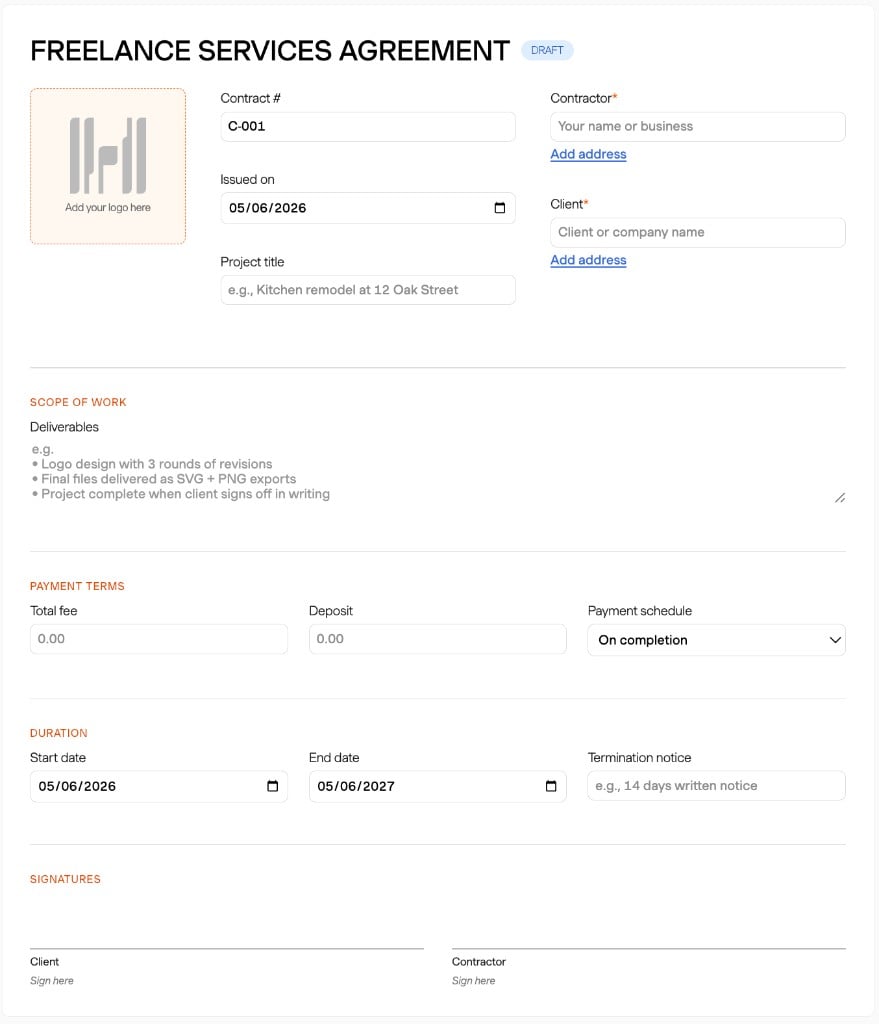
AGREEMENT DRAFT

Add your logo here

Scope of work

Payment terms

Duration

Signatures

Client

Sign here

Contractor

Sign here

Get paid via:
Credit card / Debit card
ACH
Wire transfer

Customize contract

Appearance

Add a logo
Show contract title

Contract settings

Include payment terms Total fee, deposit, and schedule
Include termination clause Notice required to end the contract
Include signature blocks Both parties sign at the bottom

Understanding Retainer Tracking for Contractors

Retainer tracking for contractors plays a crucial role in maintaining financial stability and ensuring project profitability. A well-managed retainer system allows contractors to secure a steady income stream, which is essential for growth and operational efficiency. Research indicates that retainers not only provide predictable cash flow but also facilitate efficient scheduling and reduce downtime. This stability enables contractors to make informed decisions regarding investments in new equipment and hiring additional staff, ultimately enhancing work quality.

In the construction industry, retainage—a practice of withholding a portion of each payment until project completion—is common. This can impact cash flow significantly, especially for subcontractors awaiting final payments. Meanwhile, in professional services like creative agencies, accurate time tracking is critical to avoid scope creep and ensure fair compensation. By implementing robust tracking systems, firms report 45% fewer data entry errors and 30% faster reconciliation. Harvest supports these needs by providing tools that streamline time tracking and invoicing, ensuring contractors can efficiently manage retainers.

The Benefits of Retainer Models for Contractors

Retainer models offer contractors numerous advantages, including a stable and predictable income stream. This financial predictability allows contractors to enhance their business operations, such as by optimizing work schedules and investing in growth opportunities. Industry trends show that the majority of agency monthly retainers fall between $1,000 and $10,000, providing a substantial foundation for financial planning and stability.

Harvest supports contractors in maximizing these benefits by facilitating regular invoicing and efficient payment tracking. By integrating with existing business processes, Harvest ensures that contractors can manage client relationships effectively and maintain financial health. Moreover, with the rise of automation, contractors using Harvest experience a decrease in data entry errors and faster financial reconciliation, which are crucial for maintaining profitability and client satisfaction.

Implementing Effective Retainer Tracking Systems

To implement an effective retainer tracking system, contractors need to focus on structured processes and the strategic use of technology. A practical approach involves monitoring three key numbers per client: included hours, logged hours, and internal hourly cost. This process ensures that contractors can track utilization accurately, manage overages, and make informed decisions about retainer scope and pricing.

Harvest plays a pivotal role in this process by providing tools that enable detailed time and expense tracking. This system helps contractors keep a close eye on project progress and profitability. By aligning retainer tracking with other business processes, such as accounting and project management, Harvest ensures a seamless workflow that supports financial stability and client satisfaction. Contractors can rely on Harvest to streamline their operations and focus on delivering quality services.

Avoiding Common Pitfalls in Retainer Agreements

Retainer agreements can present various challenges, such as scope creep and misaligned client expectations. To mitigate these issues, clear communication and well-defined terms are essential. One common mistake is failing to charge a consistent monthly rate, which can lead to disputes over billing adjustments. Setting clear retainer terms and maintaining accurate time tracking can help avoid these pitfalls.

While Harvest does not define the terms of retainer agreements, it provides the tools necessary to track time and expenses meticulously, helping contractors manage project scopes effectively. By offering reliable invoicing and payment tracking, Harvest supports contractors in maintaining positive client relationships and ensuring project profitability. By leveraging Harvest's capabilities, contractors can navigate the complexities of retainer agreements with greater ease and confidence.

Harvest Retainer Tracking

See how Harvest helps contractors manage retainer tracking efficiently, ensuring stable cash flow and streamlined project management.

Screenshot of Harvest's retainer tracking tools for contractors.

Retainer Tracking for Contractors FAQs

  • A retainer agreement is a contract between a contractor and a client where the client pays the contractor a fixed amount upfront for a specified range of services. This arrangement ensures that the contractor has a steady income stream and that the client can rely on the contractor's availability for ongoing work.

  • Contractors benefit from retainer agreements by securing a predictable income stream, which aids in planning and budgeting. Retainers also allow contractors to optimize their schedules, reduce downtime, and ensure consistent work hours for their teams, leading to improved work quality and client satisfaction.

  • Common challenges with retainer tracking include managing scope creep, maintaining accurate time logs, and ensuring fair compensation. These challenges can impact client relationships and project profitability, making effective tracking systems essential for success.

  • Harvest helps with retainer tracking by providing tools for detailed time and expense management. This ensures contractors can track project progress accurately, manage client relationships effectively, and maintain financial stability through efficient invoicing and payment tracking.

  • Best practices for managing retainers in construction include understanding legal requirements like retainage, integrating retainers into cash flow projections, and using automated systems to track payments and project progress accurately. This approach helps maintain financial stability and project quality.

  • Accurate time tracking is crucial for retainers as it ensures that contractors can provide detailed client reports, track profitability, and manage project scopes effectively. Inaccurate tracking can lead to billing disputes or underpayment, affecting client relationships and profitability.

  • Contractors can use tools like Harvest for retainer tracking, which offer features for time tracking, invoicing, and expense management. These tools help streamline operations, reduce errors, and improve financial reconciliation, ensuring effective retainer management.