
Harvest
Contracts
Sign up

Security Services Contract Template

Security services contracts require clear terms to avoid disputes. Harvest helps manage time and invoicing, ensuring accurate service billing.

Start from a template

AGREEMENT DRAFT

Add your logo here

Scope of work

Payment terms

Duration

Signatures

Client

Sign here

Contractor

Sign here

Get paid via:
Credit card / Debit card
ACH
Wire transfer

Customize contract

Appearance

Add a logo
Show contract title

Contract settings

Include payment terms Total fee, deposit, and schedule
Include termination clause Notice required to end the contract
Include signature blocks Both parties sign at the bottom

Key Elements of a Security Services Contract

A well-structured security services contract is essential for ensuring clarity and preventing disputes. Key elements to include are scope of work, payment terms, liability clauses, and termination conditions. The scope of work should explicitly outline services like patrolling, CCTV monitoring, and emergency response to avoid confusion. Payment terms must detail the amount, frequency, and method of payment, as well as the contract's duration and renewal provisions.

Liability clauses are crucial for defining responsibilities and protecting both parties from legal claims. Indemnity provisions can safeguard against financial loss due to third-party claims. Termination conditions should be clear, specifying grounds for ending the contract, notice periods, and any penalties involved. Including these elements ensures a comprehensive agreement that aligns with both parties' expectations and regulatory requirements.

Legal and Compliance Considerations

When drafting a security services contract, compliance with legal standards is paramount. In the U.S., non-compliance with regulations like the Cybersecurity Maturity Model Certification (CMMC) can result in hefty fines, ranging from $10,000 to $1,000,000 per violation. Similarly, the Health Insurance Portability and Accountability Act (HIPAA) mandates Business Associate Agreements (BAAs) for handling Protected Health Information (PHI), with penalties reaching up to $1.5 million annually for violations.

In the UK, the Security Industry Authority (SIA) requires licenses for specific security duties, and failure to comply can lead to severe penalties. It's essential to research applicable laws, such as GDPR in the EU, to ensure contract provisions align with data protection standards. This legal diligence not only mitigates risks but also fosters trust with clients by demonstrating adherence to industry norms and regulatory frameworks.

Customizing Your Security Services Contract Template

Customizing a security services contract template involves tailoring it to meet specific client needs and operational contexts. Start by defining the scope of work in detail, specifying tasks such as alarm monitoring, access control, or patrol schedules. This clarity helps prevent scope creep and service misunderstandings. Next, establish Service Level Agreements (SLAs) and Key Performance Indicators (KPIs) to measure service effectiveness, such as response times and patrol adherence.

It's also crucial to verify the security provider's licensing and insurance status, ensuring they meet regional requirements and have adequate coverage for liabilities. Regular performance reviews should be scheduled to assess compliance with SLAs and KPIs, allowing for necessary adjustments and continuous improvement. By carefully customizing the contract, both parties can ensure a mutually beneficial relationship that meets operational and legal expectations.

Avoiding Common Pitfalls in Security Contracts

Common pitfalls in security contracts often stem from vague service descriptions and poorly defined liability terms. To avoid these, explicitly detail all services, including emergency response and additional patrols, within the contract. Clearly assign liability and ensure the security provider holds adequate insurance, rather than shifting all responsibility to the client.

Another critical area is training standards. Specify expectations for professional certifications and continuous training to ensure guards remain competent and prepared. By addressing these areas, you can prevent misunderstandings and ensure the contract aligns with both parties' expectations, fostering a secure and efficient partnership.

Harvest Security Services Contract Template

Explore how Harvest's templates assist in drafting comprehensive security services contracts. Manage time and invoicing with ease.

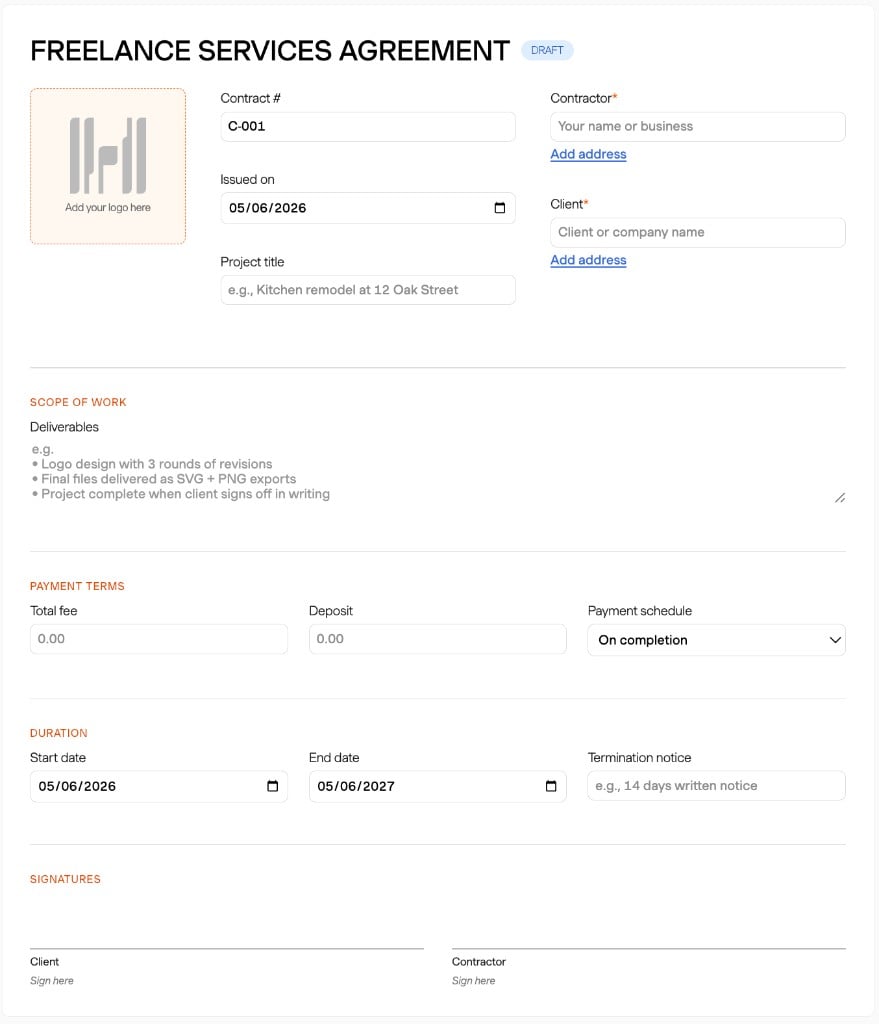
Security services contract template preview in Harvest

Security Services Contract Template FAQs

  • A security services contract should include the scope of work, payment terms, liability clauses, termination conditions, and compliance with relevant laws. Clear definitions prevent misunderstandings and protect both parties legally.

  • To customize a security services contract template, define the specific services required, establish SLAs and KPIs for performance measurement, and ensure the provider's compliance with local licensing and insurance requirements.

  • Security services must comply with regional laws such as the CMMC in the U.S. for defense contractors, HIPAA for healthcare-related services, and the GDPR in the EU for data protection. Non-compliance can result in significant penalties.

  • SLAs and KPIs provide measurable benchmarks for service performance, ensuring the security provider meets agreed standards. They help align services with client expectations and facilitate regular performance evaluations.

  • Defining liability in a security contract protects both parties from legal claims. Clear allocation of responsibility and adequate insurance coverage prevent disputes and financial losses.

  • Common pitfalls include vague service descriptions, poorly defined liability, and lack of training standards. Addressing these areas can prevent misunderstandings and ensure a secure partnership.

  • While Harvest does not directly draft security services contracts, it assists with managing time tracking and invoicing, ensuring accurate billing for security service providers.