
Harvest
Contracts
Sign up

Contract Template for Excavation Contractors

Harvest simplifies time tracking and invoicing for excavation contractors, allowing them to focus on project execution without administrative burdens.

Start from a template

AGREEMENT DRAFT

Add your logo here

Scope of work

Payment terms

Duration

Signatures

Client

Sign here

Contractor

Sign here

Get paid via:
Credit card / Debit card
ACH
Wire transfer

Customize contract

Appearance

Add a logo
Show contract title

Contract settings

Include payment terms Total fee, deposit, and schedule
Include termination clause Notice required to end the contract
Include signature blocks Both parties sign at the bottom

Key Components of an Excavation Contract

An effective excavation contract should encompass several essential elements that ensure clarity and legal compliance. Central to this is a clear project description, which details the site location, specific tasks, excavation type, depth, dimensions, and how materials will be disposed of. This clarity helps manage expectations and prevent disputes.

Another critical component is the timeline, with clearly defined start and end dates alongside interim milestones. This is crucial for maintaining project momentum and accountability. Payment terms are also vital, outlining the total cost, payment schedule, and procedures for handling delays. Contracts should further detail liability and insurance requirements, compliance with permits, and a dispute resolution process to protect all parties involved.

Finally, it's important to incorporate clauses addressing unforeseen site conditions, change orders, and safety measures. Industry experts recommend thorough site investigations to avoid unexpected complications and ensure that all safety and legal requirements are met. These elements collectively form a robust contract that can mitigate risks and streamline project execution.

Customizing Your Excavation Contract Template

Customizing an excavation contract template to suit specific project needs involves several strategic steps. Start by tailoring the scope of work section to reflect the unique demands of your project. This may involve specifying the depth and width of the excavation, any special requests, and the disposal methods for excavated materials.

Next, adjust the timeline and milestones to align with project expectations. Ensure that all parties agree on the proposed schedule to avoid conflicts later. Payment terms should be customized to reflect the agreed-upon budget and cash flow requirements, including any provisions for handling delays or changes in the scope of work.

Legal compliance is another key area. Ensure your contract adheres to relevant federal and state regulations, such as California's new cap on retention rates and mandatory payment procedures. This not only protects against legal disputes but also fosters trust between parties. Finally, include clauses for risk management, such as insurance and liability coverage, to safeguard against unforeseen circumstances.

Legal Considerations and Compliance

Legal compliance is a cornerstone of any excavation contract, requiring careful attention to federal and state regulations. For instance, in California, new legislation effective from January 1, 2026, caps retention rates at 5% of each progress payment, with mandatory claims and payment procedures to follow. Failure to comply can result in significant penalties and hinder future contract opportunities.

Compliance with safety standards is equally crucial. The Occupational Safety and Health Administration (OSHA) mandates specific excavation and trenching safety standards, which include mapping underground utility lines and inspecting work sites for erosion. Violations can lead to fines of up to $161,323 per serious violation.

Additionally, contracts should address potential risks by including clauses for unforeseen site conditions, change orders, and dispute resolution. This proactive approach not only ensures compliance but also minimizes potential legal disputes, fostering a smoother project execution.

Common Challenges and Solutions in Excavation Projects

Excavation projects often encounter challenges such as unexpected soil conditions and utility damage, which can lead to costly delays. Addressing these issues proactively can significantly improve project outcomes. For instance, conducting detailed site assessments and soil testing before the start of the project helps identify potential hazards, allowing for the selection of appropriate tools and techniques.

Utility damage is another common issue. To mitigate this, always check with local utility companies for markouts and use specialized equipment like ground-penetrating radar to locate utilities. Hand-digging within a meter of marked utilities before using heavy machinery can prevent costly mistakes.

Improving project planning and coordination is also essential. Thorough site surveys, understanding permit requirements, and collaborating with experienced contractors can prevent flawed project scopes and unrealistic timelines. Some companies adopt a "design-build" approach to streamline planning, ensuring all team members are aligned and potential issues are addressed early.

Integrating Contracts with Business Processes

Integrating excavation contracts with broader business processes enhances efficiency and accuracy. Utilizing software for customer relationship management (CRM) helps organize leads, bids, and contracts, streamlining project management. This integration reduces administrative burdens and allows for seamless data sharing across platforms.

Integrating contracts with accounting software can further streamline financial tracking and payroll processes, eliminating the need for double entry. By tracking equipment usage and costs through equipment management systems, businesses can ensure accurate project costing and scheduling, leading to better resource allocation and cost management.

Moreover, digital tools aid in risk management by providing real-time updates and compliance tracking, ensuring projects adhere to regulatory requirements. This integration not only enhances operational efficiency but also contributes to more transparent and accurate invoicing, ultimately benefiting both contractors and clients.

Streamline Excavation Contracts with Harvest

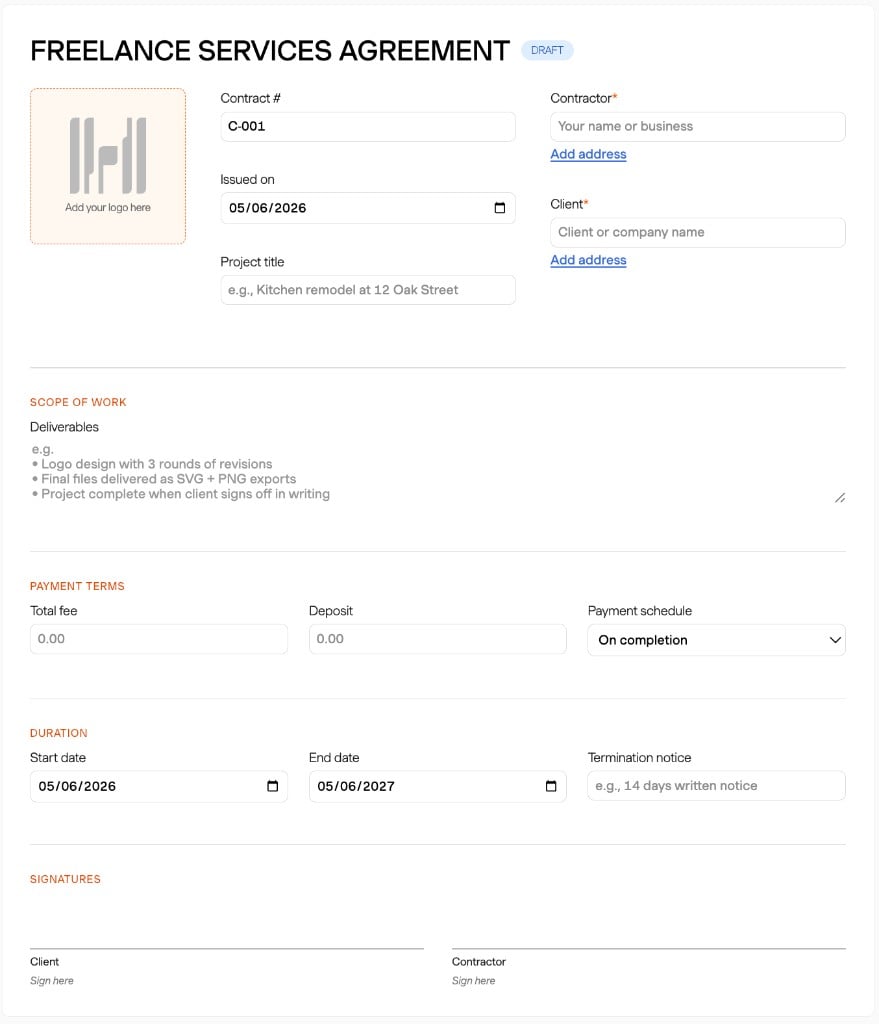
Harvest offers a customizable contract template for excavation contractors, ensuring legal compliance and streamlined project management.

Screenshot of Harvest's contract template for excavation contractors.

Contract Template for Excavation Contractors FAQs

  • An excavation contract should include a clear project description, timeline, payment terms, liability and insurance requirements, and dispute resolution process. It should also cover unforeseen site conditions and safety measures to ensure compliance and protect all parties involved.

  • To customize your excavation contract template, tailor the scope of work to your project's unique demands. Adjust timelines and payment terms to align with project expectations. Ensure compliance with federal and state regulations, and include clauses for risk management.

  • Excavation contracts must adhere to federal and state regulations, such as OSHA safety standards and specific state laws like California's cap on retention rates. Including clauses for unforeseen site conditions and safety measures ensures compliance and minimizes legal disputes.

  • Common challenges include unexpected soil conditions and utility damage. These can cause costly delays. Conducting site assessments and using specialized equipment to locate utilities can mitigate these risks, ensuring smoother project execution.

  • Excavation contracts integrate with business processes through CRM and accounting software, streamlining financial tracking and project management. This integration reduces administrative burdens and enhances operational efficiency, leading to accurate invoicing and better resource allocation.

  • To ensure compliance with excavation safety standards, follow OSHA regulations, map underground utilities, inspect work sites regularly, and include safety clauses in your contracts. Adhering to these standards minimizes risks and potential fines.

  • Risk management is crucial in excavation contracts to address unforeseen site conditions and safety concerns. By including clauses for change orders, insurance, and liability, contractors can safeguard against potential legal issues and ensure smoother project execution.