
Harvest
Contracts
Sign up

Contract Template for Window Contractors

Harvest enables window contractors to streamline time tracking and invoicing, simplifying project management and enhancing efficiency.

Start from a template

AGREEMENT DRAFT

Add your logo here

Scope of work

Payment terms

Duration

Signatures

Client

Sign here

Contractor

Sign here

Get paid via:
Credit card / Debit card
ACH
Wire transfer

Customize contract

Appearance

Add a logo
Show contract title

Contract settings

Include payment terms Total fee, deposit, and schedule
Include termination clause Notice required to end the contract
Include signature blocks Both parties sign at the bottom

Understanding the Essentials of a Window Installation Contract

A well-crafted window installation contract is crucial for ensuring the smooth execution of a project, protecting both the contractor and the client. At its core, such a contract should define the scope of work, including detailed descriptions of the materials to be used, project timelines, and the roles of each party involved. A comprehensive contract helps prevent misunderstandings and disputes, which can save time and money in the long run. For instance, industry experts suggest that contracts that include a clear breakdown of costs, timelines, and responsibilities tend to result in improved project outcomes.

Additionally, it is vital to address any local legal requirements within the contract. For example, in states like California and Pennsylvania, specific legal provisions must be included, such as the contractor's registration number and a three-day right to cancel. Failure to comply with these regulations can lead to significant legal and financial repercussions. By using a template that incorporates these elements, window contractors can ensure compliance and safeguard their interests.

Customizing Contract Templates for Window Contractors

Customizing a contract template to fit the specific needs of a window installation project is essential for contractors. A tailored contract should not only include general terms and conditions but also specific details unique to the project. This includes any special materials or construction techniques involved, as well as the anticipated project timeline and payment schedule. Customization can help avoid common pitfalls such as vague scopes of work or undefined payment terms, which can lead to disputes.

To make the process more efficient, contractors can utilize digital tools and templates that integrate with contract management software. Digitalization reduces the time required to sign contracts from weeks to mere days, enhancing overall efficiency and reducing costs. Contractors should ensure that all verbal agreements are documented in writing within the contract, as failure to do so can result in misunderstandings and potential litigation.

Legal Considerations and Compliance for Window Installation Contracts

Adhering to legal requirements is non-negotiable when drafting a window installation contract. Each state may have specific regulations that dictate contract structure, including mandatory disclosures and consumer protection measures. For example, in New Jersey, contracts must specify the contractor's legal business details and include comprehensive material descriptions. Violations can result in severe penalties, such as civil liability or criminal charges under consumer protection laws.

By staying informed of these legal stipulations and incorporating them into contract templates, window contractors can avoid costly legal battles and ensure their contracts are enforceable. It's also advisable to consult with a legal professional to review the contract, ensuring it meets all jurisdictional requirements and adequately protects the contractor's interests.

The Role of Digital Solutions in Contract Management

Incorporating digital solutions into contract management can significantly enhance project efficiency for window contractors. Digital contract management systems allow for real-time updates and tracking, reducing the risk of miscommunication and ensuring that all stakeholders are aligned. Such systems can streamline the contract lifecycle—from creation and negotiation to execution and closeout—by using pre-approved templates and clauses.

Moreover, the advent of digital signatures and blockchain technology is transforming how contracts are executed and managed, offering enhanced security and transparency. By adopting these technologies, contractors can ensure timely execution and compliance with project milestones, which is essential for maintaining cash flow and project momentum. These advancements represent a natural progression in the construction industry, offering numerous benefits such as reduced costs and improved project management.

Streamline Contracts with Harvest

Explore how Harvest helps window contractors manage time tracking and invoicing to streamline project workflows.

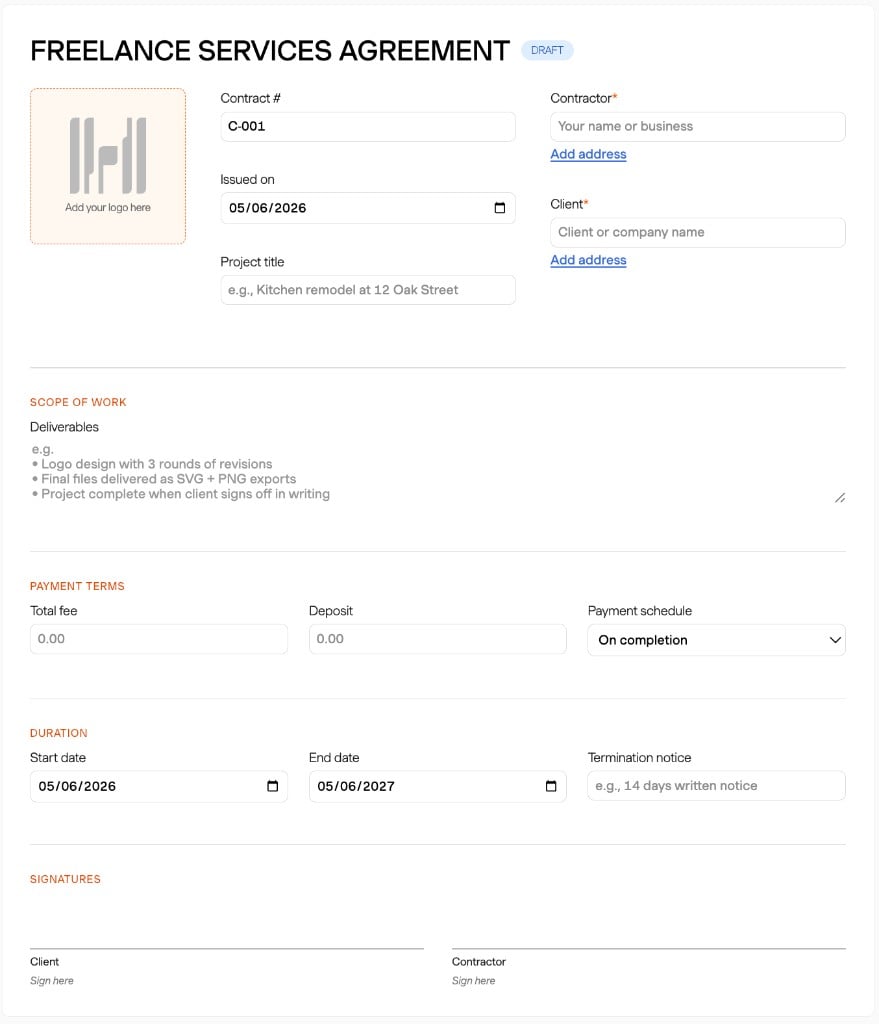
Contract template interface for window contractors using Harvest.

Contract Template for Window Contractors FAQs

  • A window installation contract should include a detailed scope of work, materials to be used, project timelines, payment terms, and any legal requirements specific to the jurisdiction. Clearly outlining these elements helps prevent disputes and ensures both parties are aligned on expectations.

  • A contract template provides a structured framework that window contractors can customize to fit specific project needs. It ensures that all necessary elements are included, reducing the risk of omissions that could lead to legal issues or misunderstandings. Utilizing a digital template can also enhance efficiency by streamlining the creation and execution process.

  • Yes, legal requirements for window installation contracts vary by state. For instance, in New Jersey, contracts must include the contractor's legal details and material specifications. Compliance with local laws is crucial to avoid penalties and ensure the enforceability of the contract.

  • Customizing a contract template allows window contractors to address project-specific needs, such as unique materials or construction techniques. It also helps avoid common pitfalls like unclear payment terms or vague scopes of work, which can lead to disputes and project delays.

  • Digital solutions enable real-time updates and tracking, reducing miscommunication risks. They streamline the entire contract lifecycle, from creation to execution, and facilitate the use of digital signatures and blockchain technology for enhanced security and efficiency.

  • Common mistakes include failing to have a written contract, vague scopes of work, and unclear payment schedules. Contractors should ensure all verbal agreements are documented in writing and comply with local laws to avoid disputes and legal issues.