
Harvest
Expenses
Sign up

Expense Management for Restaurants

Harvest helps restaurants manage expenses efficiently amidst rising food and labor costs, offering project-based tracking and invoicing solutions.

  • Attach receipts to projects & tasks
  • Turn tracked expenses into client invoices
  • Free 30-day trial, no credit card needed

or drag & drop • Images and PDFs, max 10 MB

Understanding Restaurant Expense Challenges

Expense management in the restaurant industry is fraught with challenges, primarily due to the volatile nature of food and labor costs. In the past three years, food and beverage costs have surged by 21.8%, while labor costs have increased by 18.3%—a substantial burden for any restaurant owner. These rising costs, coupled with the need to adhere to complex regulations, demand a robust strategy for managing expenses effectively. The average restaurant profit margin has also declined, now standing at 9.3% in 2023, emphasizing the need for precise financial oversight.

To tackle these challenges, restaurants are increasingly adopting technology-driven solutions. Automation is a critical trend, with 87% of CFOs prioritizing expense automation to enhance accuracy and compliance. Implementing automated systems can lead to a 60% reduction in processing time and a 35% cut in costs, making it a compelling option for restaurant owners seeking to optimize their operations.
The Role of Automation in Reducing Costs

Automating repetitive tasks can significantly alleviate the manual burden on restaurant staff, reducing costs and enhancing efficiency. For instance, the adoption of automated scheduling software can optimize staff shifts, preventing both overstaffing and understaffing, which in turn reduces overtime expenses. Predictive analytics, another technological advancement, has enabled restaurants to reduce overstaffing by 20%, as demonstrated by a mid-sized restaurant chain.

Beyond staffing, automation also extends to inventory management and payroll processing. By leveraging tools that automate these processes, restaurants can minimize human error and save valuable time. Harvest, while not specializing in restaurant-specific automation, offers comprehensive project-based expense tracking and invoicing solutions that can support restaurants in managing their general expenses efficiently.

Centralizing Expense Tracking for Multi-Location Restaurants

For restaurant chains or franchises, centralizing expense management is crucial to maintain a unified view of financial health. Approximately 21% of restaurants have integrated more technology into their operations to manage rising costs effectively. Centralized systems enable these businesses to track expenses across multiple locations, providing insights into spending patterns and opportunities for cost optimization.

While Harvest does not offer industry-specific integrations like POS systems, its robust expense tracking capabilities are suitable for small-to-medium businesses. Harvest enables restaurants to categorize and track expenses by date and project, aiding in maintaining a comprehensive overview of financial activity across locations.

Optimizing Restaurant Profitability Through Strategic Expense Management

To achieve profitability, restaurants need to maintain an ideal prime cost—comprising the cost of goods sold and labor costs—at approximately 55% of total sales. This requires a strategic approach to expense management, including regular monitoring of daily expenditures and embracing technology to streamline operations. By investing in user-friendly POS systems and adopting energy-saving measures, restaurants can reduce operating expenses, which should ideally be around 25% of sales.

Harvest provides a platform for tracking and invoicing expenses, enabling restaurant owners to manage their finances effectively. While it doesn't offer specific tools for optimizing restaurant overheads, it supports the tracking of general business expenses, helping owners identify areas of excessive cost and potential savings through detailed reporting.

Harvest for Restaurant Expenses

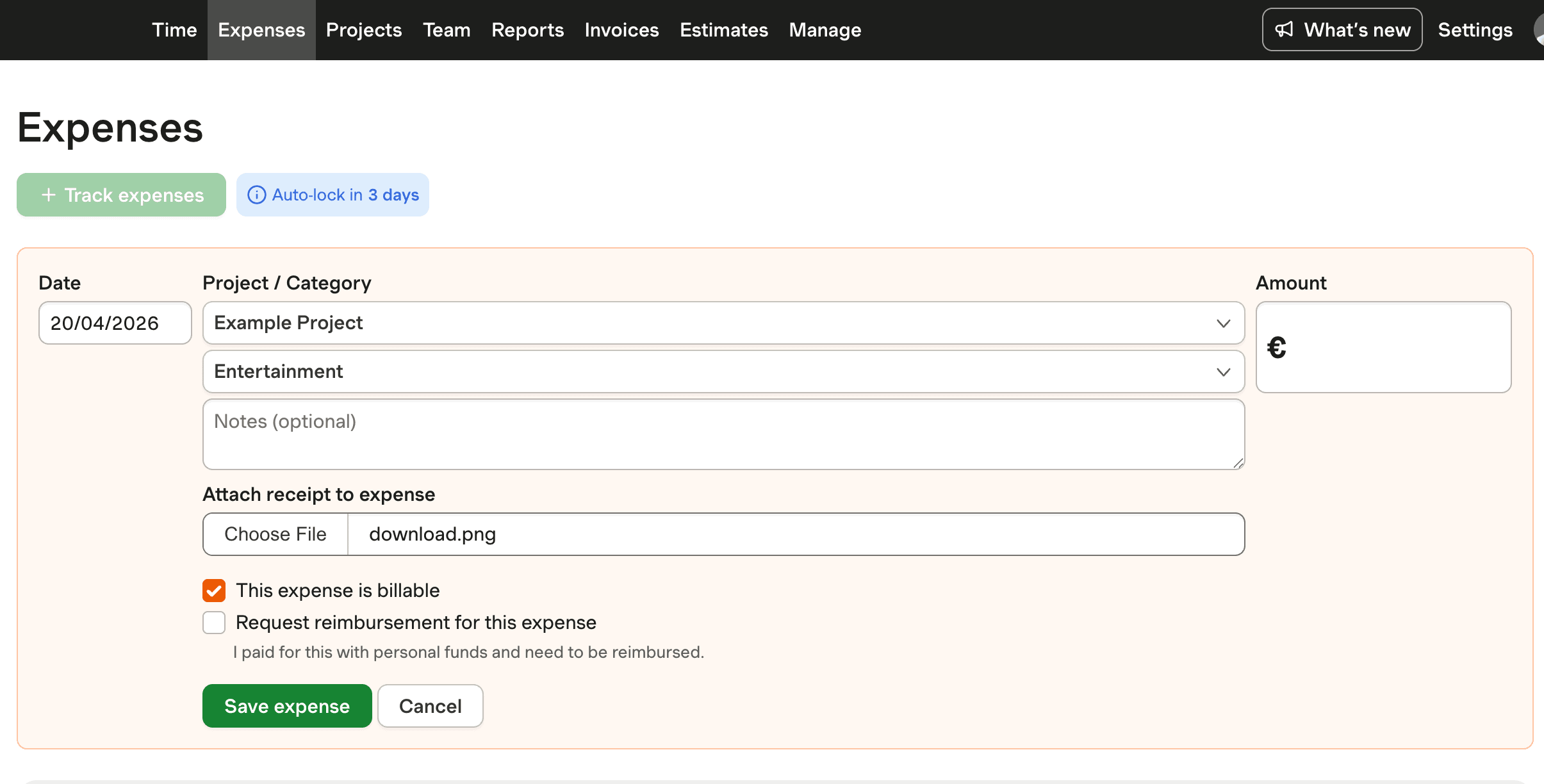
See how Harvest helps restaurants manage expenses with tracking and invoicing, even without POS integration.

Harvest expense management dashboard for restaurants

Expense Management for Restaurants FAQs

  • To optimize overhead costs, focus on efficient staffing, energy-saving measures, and technology adoption. Automating routine tasks like inventory management and payroll can significantly reduce overheads. Additionally, regularly review supplier contracts to secure better deals and manage expenses effectively.

  • Restaurants typically track food and labor costs using a combination of POS systems and financial software to monitor sales and expenses in real time. While Harvest doesn't integrate with POS systems, it offers project-based expense tracking that can support general financial management.

  • Automating expense management in restaurants can lead to a 60% reduction in processing time and a 35% decrease in costs. Automation also minimizes human error, enhances compliance, and provides real-time insights into financial performance, aiding in strategic decision-making.

  • Harvest offers project-based expense tracking and invoicing, suitable for managing general expenses in restaurants. While it doesn't provide restaurant-specific features like POS integration, it supports efficient financial oversight for small-to-medium businesses.

  • To integrate expense management with a POS system, look for software solutions that offer seamless integration capabilities. While Harvest does not integrate with POS systems, it can facilitate manual tracking and invoicing, complementing existing POS data.

  • Labor costs typically constitute 30% to 35% of restaurant revenue. Managing these costs effectively is crucial for maintaining profitability, and can be achieved through strategic staffing, cross-training employees, and leveraging technology for scheduling.

  • Tracking daily expenditures is vital for identifying spending patterns, pinpointing areas of excessive cost, and addressing financial discrepancies promptly. This practice helps maintain budget control and supports informed decision-making for cost optimization.