
Harvest
Expenses
Sign up

Expense Reimbursement Examples

Harvest simplifies expense tracking and invoicing for small businesses, ensuring efficient management without complex compliance features.

  • Attach receipts to projects & tasks
  • Turn tracked expenses into client invoices
  • Free 30-day trial, no credit card needed

or drag & drop • Images and PDFs, max 10 MB

Understanding Expense Reimbursement Examples

Expense reimbursement is a crucial process where employers repay employees for business-related expenses incurred out-of-pocket. This system ensures employees are not financially burdened while maintaining accurate financial records and controlling costs. Businesses often face challenges in managing reimbursements due to manual processes, leading to inefficiencies and high operational costs. For instance, companies still relying on manual systems can spend up to 330 hours annually processing expense reports, compared to those who adopt automated solutions that reduce this by 58%.

Examples of reimbursable expenses include travel costs, office supplies, and client entertainment. However, specific criteria must be met for these expenses to qualify for reimbursement. In the UK, expenses must be incurred "wholly, exclusively, and necessarily" for work duties to be tax-exempt. Similarly, U.S. federal laws require certain documentation and compliance to ensure non-taxable status. Businesses must have clear policies outlining allowable expenses and documentation requirements to avoid compliance issues and potential penalties.
Documenting Reimbursable Expenses Effectively

Proper documentation is essential for expense reimbursement, helping businesses maintain compliance and streamline processes. Employees should follow a systematic approach: incur the expense, collect receipts, create a detailed expense report, and submit it for approval. This process can be enhanced by integrating expense management systems, which automate data entry and reduce errors. For example, automation can decrease fraud risks, which only 35% of finance teams rated as effectively managed in 2025, down from 56% in 2024.

Common documentation mistakes include losing receipts, mixing personal and business expenses, and not understanding company policies. To avoid these, employees should document expenses immediately and use mobile apps for instant uploads. Businesses can benefit from automated systems, like Harvest, which allow for efficient tracking and invoicing of project expenses, providing a centralized platform to monitor expenses in real-time.

Legal and Compliance Considerations in Expense Reimbursement

Understanding legal and compliance requirements is vital for effective expense reimbursement management. In the U.S., federal and state laws dictate reimbursement obligations, such as California's requirement for employers to cover all necessary business expenses. In the UK, expenses must meet specific criteria to remain non-taxable. Companies must adhere to these regulations to avoid penalties, which can include interest and legal fees for non-compliance.

Employers are encouraged to establish clear, comprehensive reimbursement policies. Vague terms like "reasonable" can lead to misinterpretations and disputes. Leveraging technologies like Harvest helps companies track expenses efficiently, though Harvest itself focuses on tracking and invoicing rather than directly managing tax compliance or IRS accountable plans. This underscores the importance of integrating expense tracking with broader financial systems to ensure compliance and accuracy.

Leveraging Technology for Efficient Expense Management

With the rise of digital solutions, automating expense management has become a strategic priority for many businesses. Automated systems significantly reduce processing costs and time, allowing employees to focus on core tasks and enhancing overall productivity. For example, automated expense management can lead to a 58% reduction in processing costs and save significant hours previously spent on manual reporting.

Harvest offers a streamlined platform for tracking and invoicing expenses, making it an ideal choice for small businesses. While it does not handle complex compliance features, it provides essential tools for managing project expenses efficiently. Businesses benefit from the real-time syncing of data, reduced manual entry, and improved accuracy, enabling them to maintain better financial oversight and employee satisfaction through faster reimbursements.

Explore Expense Tracking with Harvest

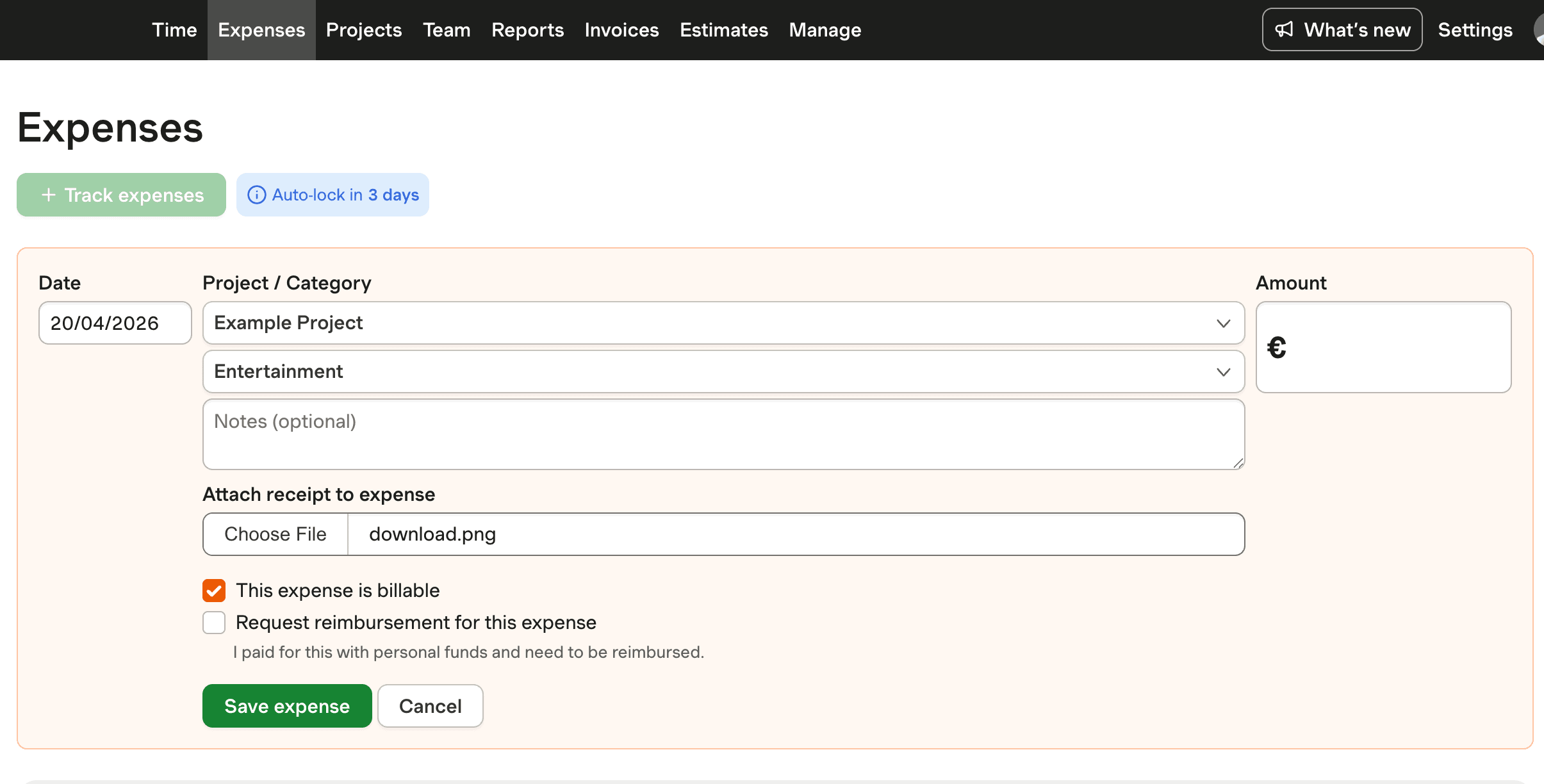
See how Harvest streamlines tracking and invoicing of project expenses, ideal for small businesses seeking efficiency.

Screenshot of Harvest's expense tracking feature.

Expense Reimbursement Examples FAQs

  • Reimbursable expenses typically include travel costs, office supplies, and client entertainment. They must be incurred for legitimate business purposes and properly documented to qualify for reimbursement.

  • Document reimbursable expenses by collecting receipts, creating a detailed expense report, and submitting it for approval. Automation tools like Harvest can simplify this process by reducing manual data entry and improving accuracy.

  • Automated expense management can cut processing costs by 58% and save significant time spent on manual reporting. It enhances accuracy, reduces fraud risks, and allows employees to focus on core responsibilities.

  • Harvest provides a streamlined platform for tracking and invoicing expenses, ideal for small businesses. While it doesn't manage complex compliance, it offers essential tools for efficient expense management and real-time data syncing.

  • Common mistakes include losing receipts, mixing personal and business expenses, and misunderstanding company policies. To avoid these, document expenses immediately and use digital tools for organization.

  • In the UK, expenses must be incurred "wholly, exclusively, and necessarily" for work duties to be non-taxable. Employers must report these on form P11D unless specific exemptions apply.

  • Companies must comply with federal and state laws regarding expense reimbursement. In the U.S., failing to follow these can lead to penalties and legal fees. Clear policies and automation can help ensure compliance.

  • Automation reduces manual entry errors and detects fraudulent patterns by checking data against business rules, improving the effectiveness of fraud prevention strategies in expense management.