
Harvest
Expenses
Sign up

Car Mileage Log

Harvest provides a simple solution for tracking mileage expenses, helping businesses keep detailed records and calculate reimbursements based on IRS rates.

  • Attach receipts to projects & tasks
  • Turn tracked expenses into client invoices
  • Free 30-day trial, no credit card needed

or drag & drop • Images and PDFs, max 10 MB

Understanding IRS Mileage Log Requirements

For businesses and individuals aiming to deduct vehicle expenses, understanding IRS mileage log requirements is crucial. The IRS does not mandate a specific format, but it requires that mileage records include the date, destination, business purpose, and total miles driven for each trip. This ensures that deductions are substantiated and compliant with tax regulations.

To maximize tax deductions, businesses should maintain logs that clearly distinguish between personal, commuting, and business mileage. Annually, record the odometer reading at both the start and end of the year. Keeping these records organized and accurate is essential, as inaccuracies can lead to disallowed deductions during audits. Harvest assists users by allowing detailed record-keeping for business trips, ensuring all necessary information is captured.
The Financial Implications of Inaccurate Mileage Tracking

Inaccurate mileage logs can lead to significant financial repercussions. Manual tracking is time-intensive, costing drivers up to a 40-hour workweek annually. Moreover, errors in mileage records can result in a 15-20% loss of potential tax deductions. Automated solutions save an average of 42 hours per year, enhancing efficiency and accuracy.

While Harvest requires manual entry of mileage quantities, it streamlines the process by allowing administrators to set per-mile reimbursement rates. This feature ensures accurate reimbursement calculations based on IRS rates, helping businesses avoid financial pitfalls associated with incorrect mileage logging.

Leveraging Digital Solutions for Mileage Tracking

The evolution from paper logs to digital solutions has transformed mileage tracking. With an estimated CAGR of 14% in the mileage tracker market, reaching USD 620 million by 2032, digital tools offer enhanced accuracy and ease of use. Digital logs, unlike traditional methods, reduce errors and integrate seamlessly with other business processes.

Harvest facilitates this transition by providing a platform to manually record and track mileage expenses. While it does not support automatic trip logging, its ability to record detailed notes for each trip, including business purpose and destination, ensures compliance and accuracy in expense reporting.

Best Practices for Maintaining a Mileage Log

Maintaining a comprehensive mileage log requires attention to detail and consistency. Record the date, starting location, destination, and total miles for each business trip. This practice not only ensures IRS compliance but also aids in accurate reimbursement and cost management.

Users should regularly review and reconcile their logs with odometer readings and supporting documents to correct any discrepancies. Harvest supports this by enabling detailed record-keeping that captures all essential trip details, making it easier to identify and rectify errors.

Car Mileage Log with Harvest

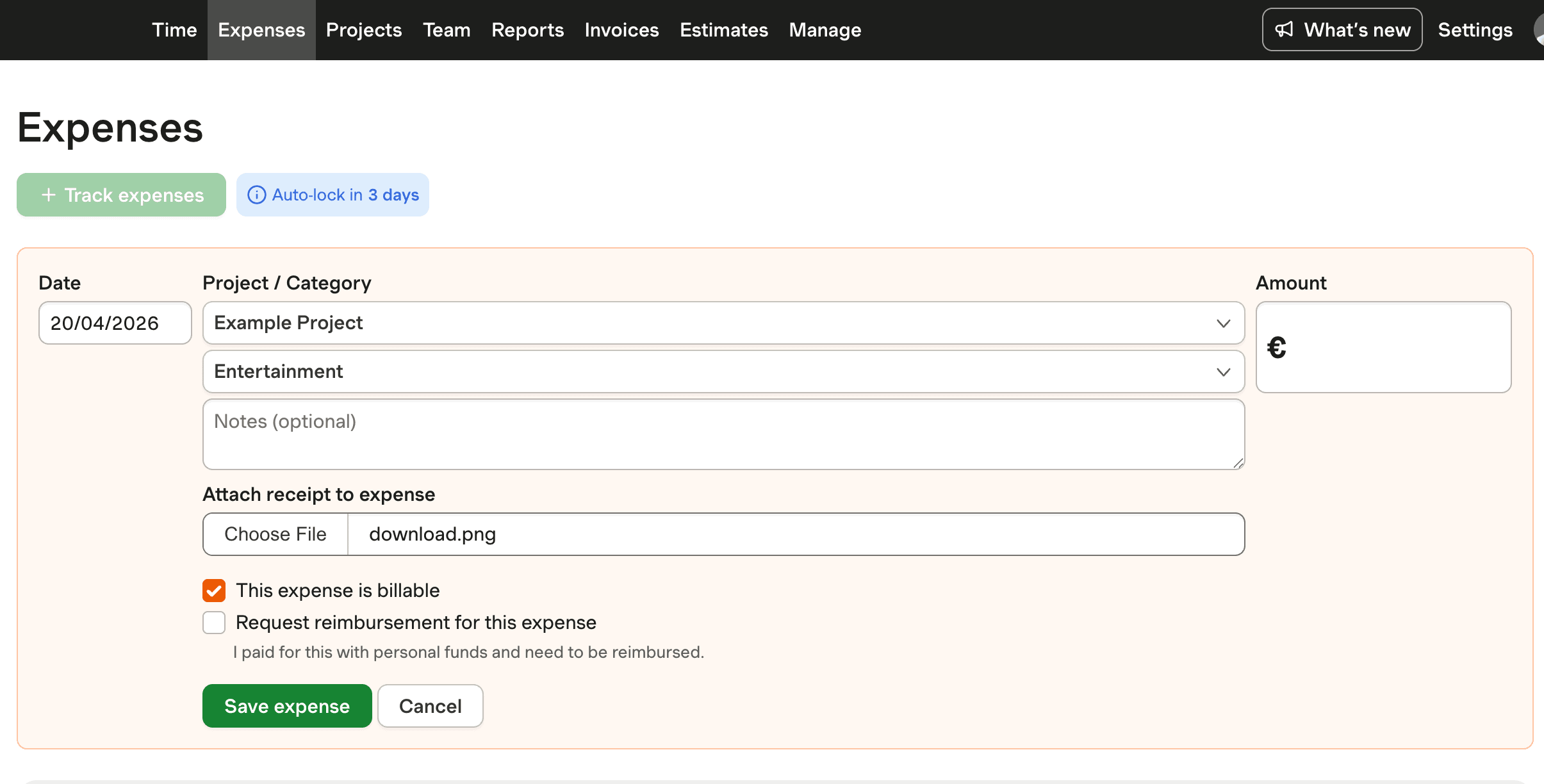
See how Harvest helps track car mileage for business expenses, offering detailed record-keeping and reimbursement calculations based on IRS rates.

Harvest interface showing car mileage log tracking feature.

Car Mileage Log FAQs

  • Tracking mileage for business expenses involves recording the date, destination, purpose, and total miles for each trip. Using a tool like Harvest simplifies this process by allowing detailed entry of each trip's information, ensuring compliance with IRS requirements.

  • The IRS requires that mileage logs include the date, destination, business purpose, and total miles driven for each business trip. Accurate record-keeping is essential to substantiate claims and avoid penalties during audits.

  • Yes, Harvest allows users to set per-mile reimbursement rates and track mileage expenses manually. This helps small businesses calculate reimbursements accurately based on IRS rates.

  • Automating mileage tracking typically involves using GPS-enabled apps that record trips in real time. While Harvest requires manual entry, it supports detailed tracking and reimbursement calculations to ensure accuracy.

  • Many online resources offer free mileage log templates. However, using an application like Harvest can provide more comprehensive tracking capabilities, including detailed trip records and reimbursement calculations.

  • Harvest helps users maintain compliance by allowing detailed notes for each trip, including the purpose and destination. This ensures that all necessary information is captured for IRS compliance.