
Harvest
Expenses
Sign up

Expense Report for Logistics

Logistics companies face rising costs, with transportation expenses accounting for up to 58% of total logistics spending. Harvest simplifies expense tracking and invoicing, helping teams manage these costs effectively.

EXPENSE REPORT DRAFT

Drop your receipts here or click to upload

Images and PDFs (max 10 MB each)

Date
Category
Merchant
Description
Amount
Total
$0.00

Customise report

Appearance

Show report title

Report settings

Understanding Logistics Expense Categories

Logistics operations involve a diverse array of expenses that must be meticulously tracked to optimize costs and enhance efficiency. Key expenses in logistics include transportation costs, which can account for up to 58% of total logistics expenses, making them the most significant category. Additionally, last-mile delivery costs have increased by 27% since 2023, further emphasizing the need for careful expense management in this area. Other critical expense categories include warehousing fees, which are rising at an annual rate of 15%, and inventory carrying costs, often representing 20% to 30% of the inventory's value.

To effectively manage these expenses, a comprehensive expense report template should capture all relevant costs, including fuel, tolls, maintenance, and administrative overhead, which can consume up to 10% of the logistics budget. Harvest offers a solution by allowing logistics teams to set up custom categories for high-volume expenses, ensuring that all costs are accurately tracked and reported. This capability is crucial for businesses aiming to achieve cost optimization, which can lead to annual savings of 10% to 20%.
Customizing Expense Reports for Logistics Operations

Customizing expense reports to align with the specific needs of logistics operations is vital for accurate financial management and reporting. A well-structured report should not only track expenses by category but also provide insights into cost drivers and highlight areas for potential savings. Manual expense reporting is time-consuming, with employees spending an average of 20 minutes per report. Automating these processes can lead to a 30% reduction in expense processing costs and a 65% decrease in errors.

Harvest's mobile app supports on-the-go expense entry for drivers and field employees, enabling them to record expenses and upload receipts immediately, thus reducing delays in expense report submissions. This mobile capability is especially advantageous in logistics, where real-time data entry is crucial for maintaining financial accuracy and optimizing cash flow. By leveraging Harvest's project-based tracking, logistics teams can ensure that expenses are categorized correctly and aligned with operational demands.

Addressing Compliance and Legal Requirements

Compliance with legal and tax regulations is a critical aspect of managing logistics expenses. In the U.S., federal and state laws require businesses to reimburse employees for necessary business expenses, with stricter requirements in states like California and Illinois. Failure to comply can result in significant penalties, including waiting time penalties and PAGA penalties.

While Harvest does not specialize in VAT recovery or compliance documentation, it allows users to add VAT numbers to invoices, facilitating basic compliance needs. Additionally, Harvest's expense tracking capabilities ensure that all relevant financial information is captured and organized, supporting audit readiness and regulatory compliance. This is essential for logistics companies that need to maintain detailed records to avoid financial risks and regulatory issues.

Overcoming Common Challenges in Logistics Expense Management

Logistics companies often face challenges such as scattered expense capture, inconsistent tracking of transport expenses, and approval bottlenecks. These issues can lead to margin erosion, a lack of real-time visibility into costs, and delayed reconciliation, impacting cash flow. By automating expense management processes, companies can eliminate manual data entry, reduce errors, and speed up reimbursement cycles.

Harvest addresses these challenges by providing a straightforward tool for tracking and invoicing project expenses. Its mobile capabilities allow for immediate expense entry by drivers and field employees, ensuring timely submissions and approvals. This functionality helps logistics firms reduce processing costs by 30% and cut approval times by 50%, ultimately improving operational efficiency and financial oversight.

Optimizing Logistics Costs with Data-Driven Insights

In the competitive logistics industry, data-driven insights are key to optimizing costs and enhancing profitability. Companies that leverage real-time analytics tools and dashboards can reveal hidden costs, such as inefficient routes or excessive freight charges, and achieve operating profit increases of 30% to 60%. However, 34% of businesses lack comprehensive visibility into overall spending, which can lead to overspending and missed savings opportunities.

While Harvest does not offer real-time visibility into spending, it provides project-based expense tracking that supports budget inclusion. This allows logistics teams to monitor expenses closely, identify inefficiencies, and make informed decisions about cost management. By ensuring accurate expense tracking and categorization, Harvest helps businesses maintain financial control and capitalize on cost-saving opportunities.

Harvest for Logistics Expense Management

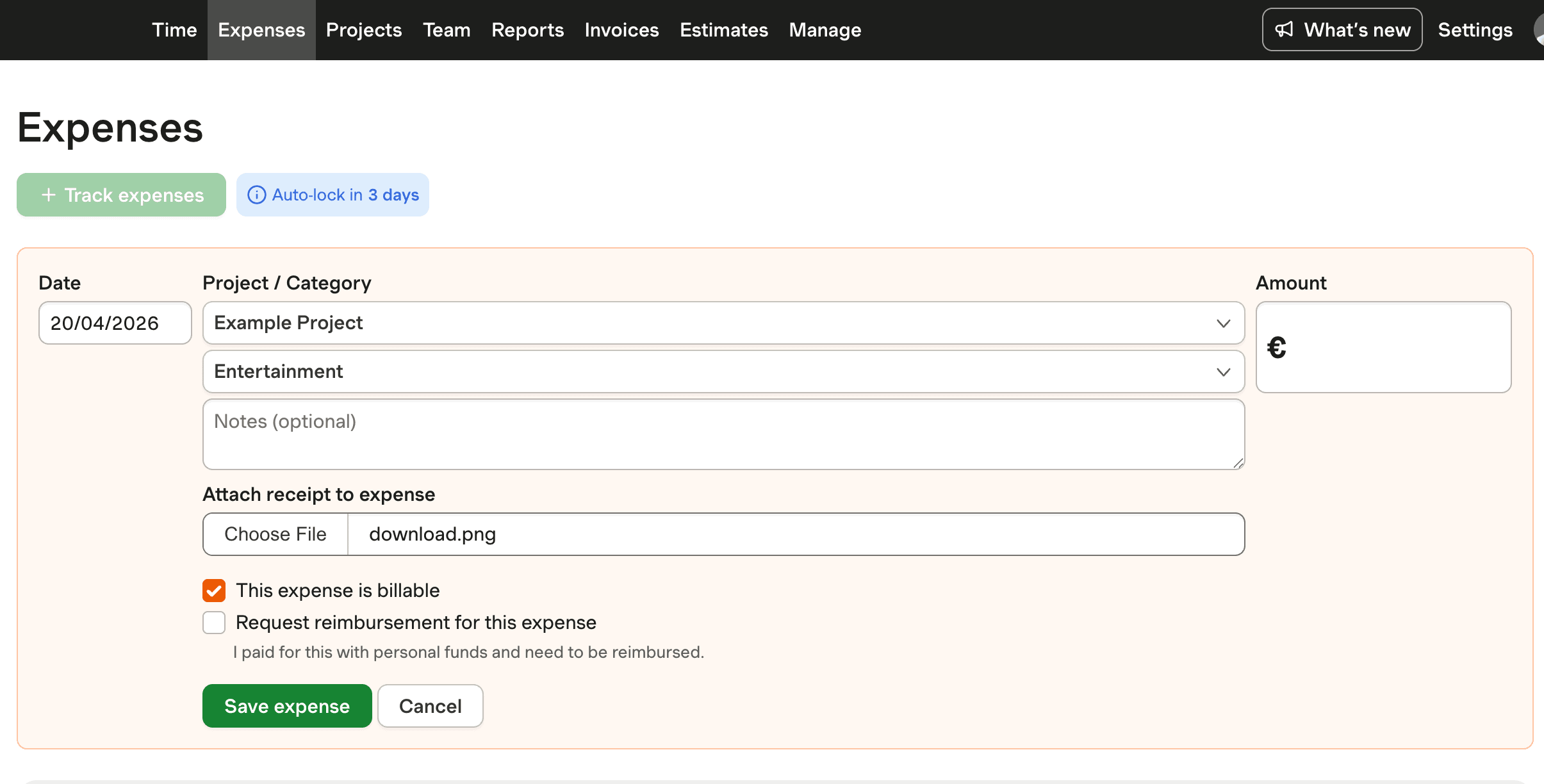
Harvest showcases expense tracking for logistics, allowing teams to manage fuel, tolls, and maintenance efficiently.

Screenshot of Harvest's logistics expense tracking feature

Expense Report for Logistics FAQs

  • A logistics expense report should include transportation costs, which can be up to 58% of total expenses, as well as warehousing fees, inventory carrying costs, and last-mile delivery expenses. Administrative overhead and maintenance costs are also critical components.

  • Customizing a logistics expense report involves setting up specific categories for expenses such as fuel, tolls, and maintenance. Harvest allows teams to create custom categories and track expenses by project, ensuring alignment with operational needs.

  • Common challenges include scattered expense capture, inconsistent tracking, approval delays, and margin erosion from unflagged expenses. Automating processes with tools like Harvest can significantly reduce these issues.

  • Compliance involves maintaining detailed documentation and adhering to federal and state reimbursement laws. While Harvest supports VAT invoicing, it primarily aids compliance through accurate expense tracking and reporting.

  • Automation reduces the time spent on manual data entry, cuts processing costs by 30%, and decreases errors by 65%. It also speeds up approval cycles, crucial for maintaining cash flow in logistics.

  • Yes, Harvest's mobile app allows drivers and field employees to record expenses and upload receipts while on the move, ensuring timely expense capture and submission.

  • Harvest provides a straightforward tool for tracking high-volume expenses, such as fuel and tolls, with mobile capabilities for field teams. This helps logistics companies optimize costs by 10-20%.