
Harvest
Expenses
Sign up

Expense Report in Korean

Harvest simplifies expense tracking, though it currently supports English only, making it less suitable for those needing Korean language features.

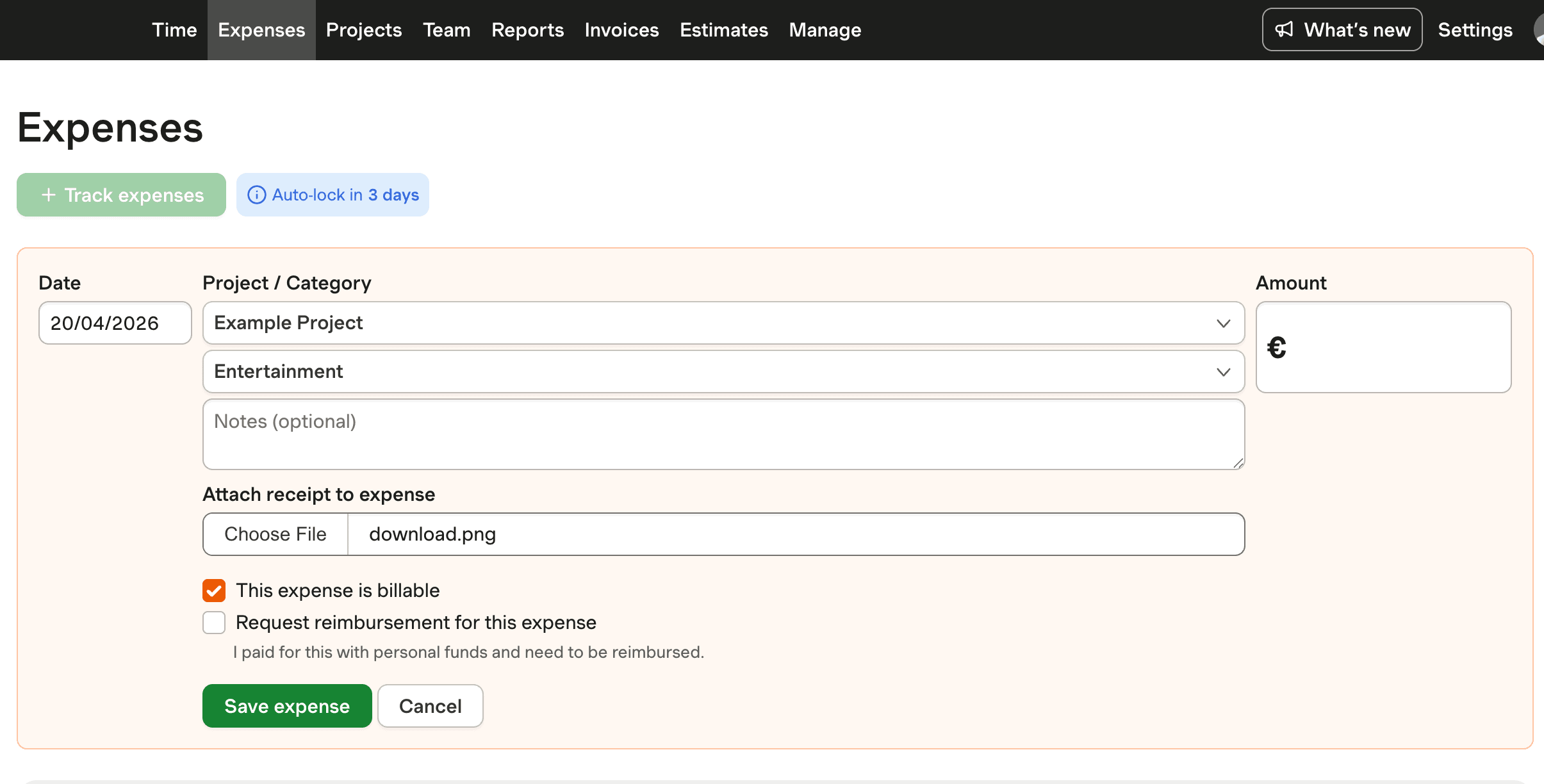
  • Attach receipts to projects & tasks
  • Turn tracked expenses into client invoices
  • Free 30-day trial, no credit card needed

or drag & drop • Images and PDFs, max 10 MB

Understanding the Korean Translation for 'Expense Report'

The term "expense report" in Korean is translated as "경비 보고서" (gyeongbi bogoseo) or "지출 보고서" (jichul bogoseo). These documents are essential for employees seeking reimbursement for work-related expenses. The process involves itemizing expenses to ensure compliance with tax regulations and facilitating accurate financial tracking.

Expense reports play a crucial role in business operations by providing a structured way to manage costs and reimburse employees. In South Korea, the adoption of automation in expense reporting is increasing, with a notable 51.1% of businesses utilizing AI for work purposes, indicating a shift towards more efficient, technology-driven solutions.
Automation and Efficiency in Korean Expense Reporting

In South Korea, the trend towards automation significantly impacts the efficiency of expense reporting processes. Manual entry of expense data can be time-consuming, with accountants spending up to 10 hours per month on data entry alone. Automation helps to streamline this process, reducing time spent and minimizing errors.

Many Korean SMEs have begun to integrate systems that automatically collect transaction data, significantly decreasing the manual effort required. This integration not only improves accuracy but also enhances productivity, allowing businesses to allocate resources to more critical tasks. Harvest, although primarily available in English, offers robust expense tracking features that can help businesses streamline their processes through integration and automation.

Legal and Compliance Considerations in South Korea

For an expense to be recognized for tax purposes in South Korea, it must be directly related to business activities. Proper documentation is crucial, with records needing to be maintained for at least five years. This includes tax invoices and cash receipts, which are necessary for claiming deductions and input tax credits.

Businesses must be diligent in obtaining "proper evidence" (적격증빙) for expenses, particularly those exceeding 30,000 KRW. Failure to obtain this evidence can result in penalties and disallowed tax credits. While Harvest does not offer localized Korean tax compliance features, its expense tracking capabilities can still support businesses in maintaining organized records for audit preparedness.

Practical Tips for Effective Expense Management

Effective expense management requires clear documentation and strategic use of payment methods. Businesses should consistently record transaction details such as date, vendor, and amount, and utilize corporate credit cards for significant expenses to simplify reporting.

Regular reconciliation of expense reports with financial statements helps identify discrepancies early. Additionally, understanding specific limits and requirements for expense categories can prevent compliance issues. Harvest's expense tracking features support these practices by providing a structured way to record and manage expenses, although currently only in English.

Explore Expense Reports with Harvest

See how Harvest can streamline expense report management, though it currently supports English. Discover automation trends in South Korea.

Harvest interface showing expense report features in English context.

Expense Report in Korean FAQs

  • The Korean translation for 'expense report' is "경비 보고서" (gyeongbi bogoseo) or "지출 보고서" (jichul bogoseo). These terms are used to describe documents that itemize work-related expenses for reimbursement.

  • Automation significantly enhances the efficiency of expense reporting by reducing the time spent on manual data entry. In South Korea, automation is part of a broader trend where 51.1% of businesses use AI for work processes, including financial operations.

  • In South Korea, expenses must be directly related to business activities to be recognized for tax purposes. Proper documentation, such as tax invoices and cash receipts, is necessary and must be retained for at least five years.

  • Businesses can ensure accuracy by maintaining detailed records, using corporate credit cards, and regularly reconciling reports with financial statements. This approach helps prevent errors and ensures compliance with tax regulations.

  • Yes, specific categories like entertainment expenses have limits. For instance, entertainment expenses have annual and per-transaction limits, requiring proper evidence to avoid penalties.

  • Harvest offers a structured way to track and manage expenses through its robust features. While it currently supports only English, it provides tools to streamline expense documentation and reporting.

  • Common mistakes include mixing personal and business expenses, lacking proper evidence, and incorrect categorization. These errors can lead to tax penalties and inaccurate financial reporting.