
Harvest
Expenses
Sign up

How to Create Expense Reports Automatically

Harvest offers customizable expense tracking features, ideal for teams seeking project-based management without complex automation, addressing the need to reduce manual errors and streamline workflows.

  • Attach receipts to projects & tasks
  • Turn tracked expenses into client invoices
  • Free 30-day trial, no credit card needed

or drag & drop • Images and PDFs, max 10 MB

The Benefits of Automating Expense Reports

Automating expense reports can drastically reduce the time and cost associated with manual processing. The average cost to process a single expense report manually is about $58. Through automation, this cost can be slashed to around $10, representing a significant financial saving for businesses. Additionally, companies have reported a 67% reduction in processing times, freeing up valuable resources for more strategic tasks.

Manual expense reporting is error-prone, with nearly 20% of reports containing mistakes. Automation can reduce these errors by 65%, ensuring more accurate financial records. By eliminating the need for manual data entry and enabling real-time policy enforcement, businesses can enhance both financial accuracy and regulatory compliance.
How Harvest Supports Expense Tracking

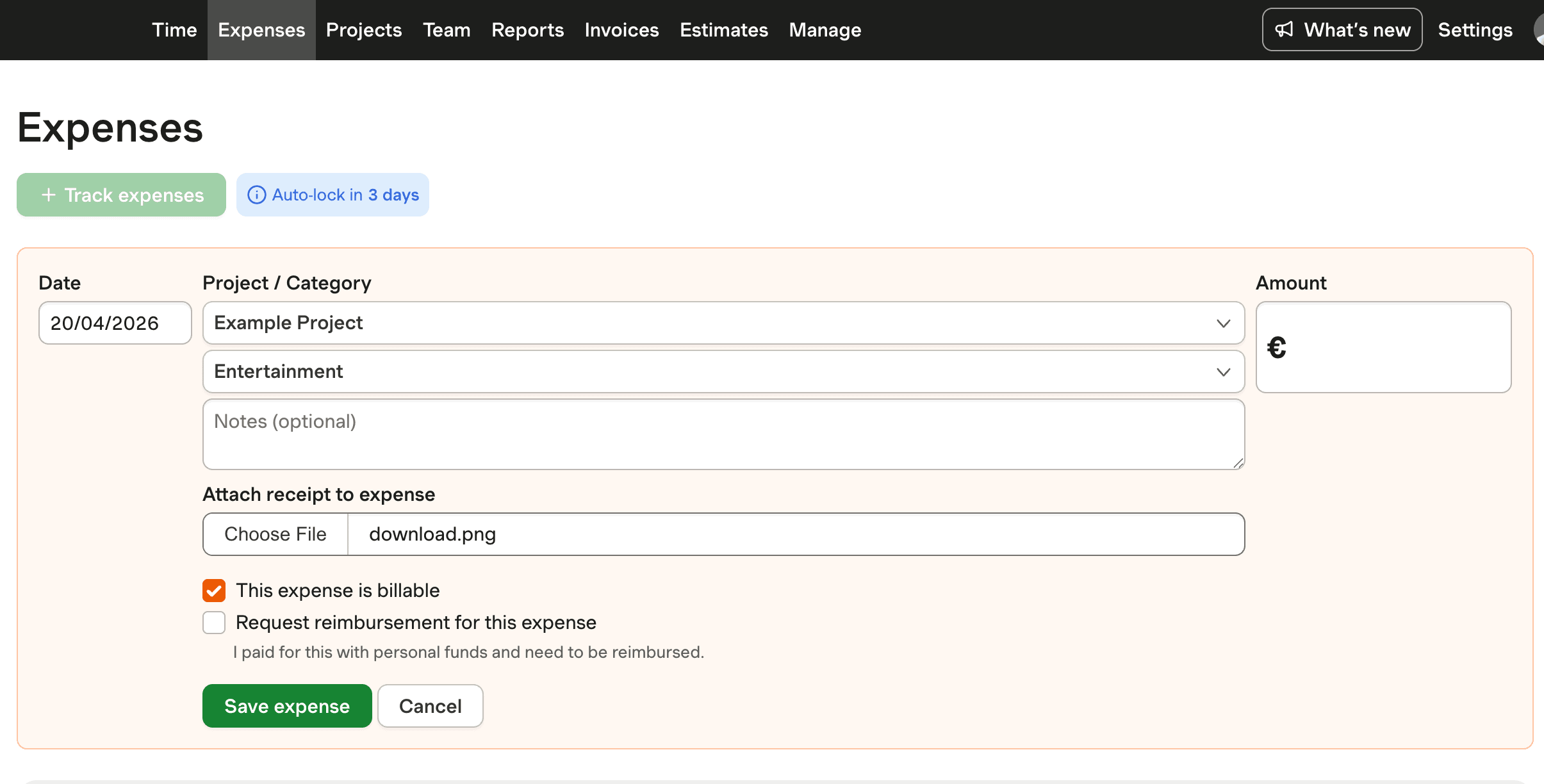
While Harvest does not automate expense policy enforcement, it offers robust features that support efficient expense tracking. Users can manually upload receipts and categorize expenses, allowing for customized tracking aligned with specific business needs. This flexibility is ideal for teams that require project-based expense management without the complexity of automated systems.

Harvest also allows for the customization of expense categories and includes expense approval workflows within the timesheet process. This feature ensures that expenses are reviewed and approved in a streamlined manner, integrating seamlessly with project management activities. For businesses using QuickBooks Online or Xero, Harvest can facilitate invoice copying, although direct expense entry automation isn't supported.

Setting Up Automated Expense Reporting Systems

Implementing an automated expense reporting system requires a strategic approach. Businesses should first identify inefficiencies in their current workflow, such as frequent errors or slow approvals. By pinpointing these areas, companies can target automation efforts effectively for maximum impact.

Key features to look for in automated systems include accounting integrations and AI-driven categorization, which eliminates manual data entry. Additionally, mobile accessibility is crucial, allowing employees to log expenses on-the-go. For businesses with international operations, supporting multi-currency transactions is essential. Continuous monitoring and optimization of the system ensure it remains aligned with evolving business needs.

Ensuring Compliance with Automated Expense Reporting

Automating expense reporting plays a vital role in maintaining compliance with financial regulations. Automated systems enforce spending rules by flagging non-compliant transactions before they are approved, significantly reducing compliance risks. This capability is crucial, as the Association of Certified Fraud Examiners reports occupational fraud accounts for an estimated 5% of a company's annual revenue.

Real-time policy enforcement and automated data extraction ensure that expenses align with corporate spending guidelines. This not only prevents audit delays but also enhances financial accountability. By integrating these systems with document management software, businesses can achieve seamless workflow orchestration and robust compliance.

Practical Tips for Implementing Expense Automation

Successfully implementing automated expense reporting involves several practical steps. Training employees and establishing clear policies are essential to ensure smooth adoption. Automation is only effective if users understand how to leverage the system's capabilities.

It is also important to integrate expense management solutions with existing accounting and ERP systems for seamless data flow. Mobile applications can further enhance the process by enabling employees to submit expenses instantly via smartphone. Regularly reviewing data insights will highlight areas for improvement, ensuring that the system continues to deliver value over time.

Create Expense Reports Automatically with Harvest

Explore how Harvest simplifies expense tracking, offering customizable features to automate and streamline your reporting process.

Harvest software interface showing expense tracking capabilities.

How to Create Expense Reports Automatically FAQs

  • To automate expense reporting, start by identifying inefficiencies in your current workflow. Look for solutions with accounting integrations, AI-driven categorization, and mobile accessibility. Set clear policies and train employees to ensure successful implementation. Finally, integrate the system with your existing ERP or accounting software for seamless data flow.

  • Automated systems eliminate manual data entry, significantly reducing the likelihood of errors, which occur in nearly 20% of manual reports. By enforcing spending rules and providing real-time oversight, automation ensures that expenses adhere to company policies, reducing the risk of mistakes and enhancing compliance.

  • Harvest supports expense tracking with customizable features, allowing for manual receipt uploads and category customization. While it doesn't automate policy enforcement, it integrates with QuickBooks Online and Xero for invoice copying, making it ideal for project-based expense management.

  • Automating expense reports reduces processing costs from $58 to about $10 per report and cuts down approval times by 50%. It enhances financial accuracy, reduces errors by 65%, and ensures compliance by automatically flagging non-compliant transactions. These efficiencies free up resources for more strategic activities.

  • Automated systems enforce spending rules in real-time, flagging non-compliant expenses before approval. This reduces compliance risks and ensures adherence to financial regulations, preventing audit delays and enhancing overall financial accountability.

  • Look for solutions offering accounting integrations, AI-driven categorization, mobile accessibility, and multi-currency support. These features minimize manual data entry, enhance compliance, and allow employees to log expenses on the go, streamlining the entire process.

  • Mobile apps enable employees to log expenses instantly by snapping photos of receipts. This feature supports on-the-go categorization and immediate submissions, expediting the approval process and ensuring that expenses are captured accurately and promptly.