
Harvest
Expenses
Sign up

Real Estate Expense Tracker Excel Spreadsheet

Harvest offers customizable expense categories and project-based tracking, making it the ideal solution for real estate agents managing their expenses effectively.

  • Attach receipts to projects & tasks
  • Turn tracked expenses into client invoices
  • Free 30-day trial, no credit card needed

or drag & drop • Images and PDFs, max 10 MB

Why Accurate Expense Tracking is Crucial for Real Estate Professionals

Accurate expense tracking is essential for real estate professionals as it directly influences profitability and tax efficiency. With every legitimate expense documented, real estate agents can potentially reduce their taxable income, saving anywhere from $4,500 to $12,000 annually, considering a combined federal and state tax rate of 30-40%. This financial clarity aids in understanding business performance, identifying unnecessary expenditures, and optimizing tax preparation.

Despite the popularity of spreadsheets, there is a noticeable trend toward digital solutions like Harvest, which offers customizable expense categories and project-based tracking. This shift helps reduce manual data entry and streamlines the process, allowing agents to focus more on core business activities rather than paperwork.
Best Practices for Organizing Real Estate Expenses

Effective organization of real estate expenses is vital for maximizing tax deductions and ensuring compliance. Start by categorizing expenses into clear segments such as marketing, travel, client entertainment, and legal/professional services. Differentiating between repairs, which are deductible in the year paid, and capital improvements, which are capitalized and depreciated over time, is crucial to avoid misclassification.

Harvest can help streamline this process by offering tailored expense categories for real estate agents. With features that allow for detailed tracking of costs like advertising, car expenses, and commissions, Harvest ensures that each expense is accurately recorded and easily accessible when needed.

Leveraging Technology for Efficient Expense Management

In the modern real estate industry, leveraging technology is no longer optional but a necessity for efficient expense management. While traditional spreadsheets are still in use, automated solutions like Harvest provide significant advantages. Harvest's customizable categories, mileage tracking, and project-based expense management can significantly reduce the time spent on manual entry and improve accuracy.

Using Harvest, real estate professionals can separate personal and business finances by setting up project-specific tracking. This not only supports compliance but also aids in maintaining detailed mileage logs, ensuring that all deductible expenses are captured. By integrating these tools, agents can focus on strategic growth while minimizing the risk of non-compliance and financial errors.

Ensuring Compliance with Tax Regulations

Compliance with tax regulations is a critical concern for real estate professionals. The IRS recommends keeping tax records for at least three years, but this period can extend depending on specific circumstances, such as underreported income. Failing to maintain adequate records can result in audits, penalties, or even legal action.

To assist with compliance, Harvest allows users to maintain detailed records and custom categories that align with tax forms like Schedule C. This ensures a seamless transition of information during tax preparation and helps avoid common pitfalls like inaccurate record-keeping or inadequate documentation.

Track Real Estate Expenses with Harvest

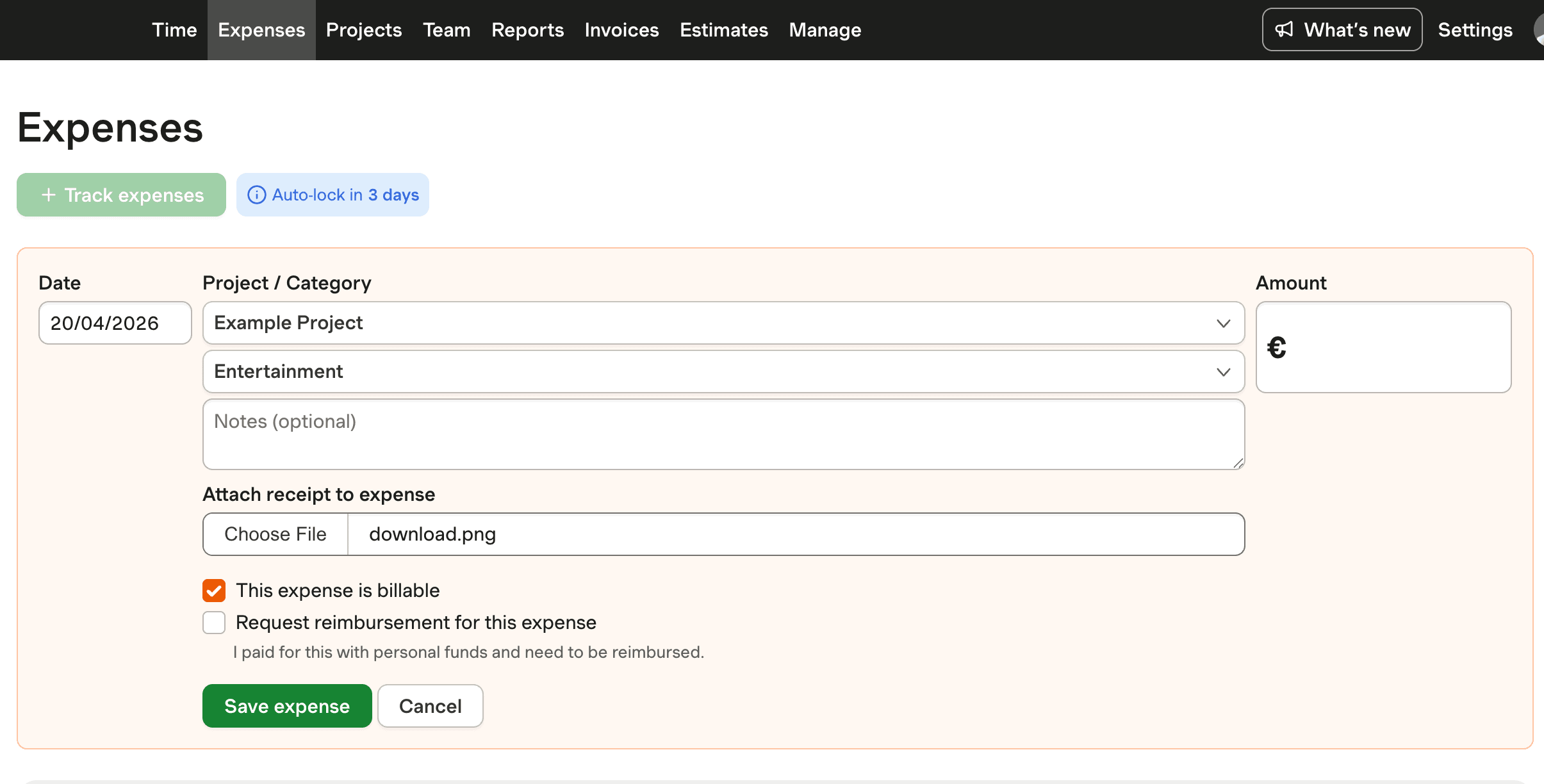
Harvest provides customizable expense categories and project tracking, ideal for real estate agents managing expenses and maximizing deductions.

Harvest's expense tracker interface for real estate agents.

Real Estate Expense Tracker Excel Spreadsheet FAQs

  • Best practices include categorizing expenses, maintaining separate accounts for business and personal finances, and regularly updating records. Using tools like Harvest can streamline this process by offering customized expense categories and project-based tracking.

  • Real estate agents can maximize tax deductions by thoroughly documenting all business-related expenses, such as marketing, travel, and professional dues. Harvest aids this process by allowing detailed tracking and categorization of these expenses.

  • Separating personal and business finances is crucial to ensure accurate financial records and compliance with tax regulations. Harvest supports this by offering project-based tracking and custom expense categories, which help maintain clear distinctions.

  • Harvest allows real estate agents to create a mileage expense category, enabling them to track distances for business purposes accurately. This feature helps in maintaining detailed mileage logs, which are important for maximizing deductions.

  • Common deductible expenses for real estate agents include marketing costs, vehicle expenses, client entertainment, and professional dues. Proper tracking of these expenses can save agents significant amounts in taxes, and tools like Harvest facilitate this process.

  • Real estate professionals can ensure compliance by keeping detailed records of all transactions and aligning expense tracking with tax forms like Schedule C. Harvest aids in this by providing custom categories that mirror tax requirements.

  • A real estate expense tracking spreadsheet should include categories such as Date, Description, Amount, and Category, along with property details for multi-property tracking. Harvest simplifies this by offering tailored categories and automated tracking features.