
Harvest
Expenses
Sign up

Home Expense Tracker Excel

Harvest helps manage home expenses by offering customizable categories and date-specific tracking, complementing Excel's flexibility in financial planning.

  • Attach receipts to projects & tasks
  • Turn tracked expenses into client invoices
  • Free 30-day trial, no credit card needed

or drag & drop • Images and PDFs, max 10 MB

Why Excel Remains a Top Choice for Home Expense Tracking

Excel remains a top choice for home expense tracking due to its unparalleled flexibility and widespread usage. A staggering 82% of finance professionals express a strong attachment to Excel, despite its manual nature, because it offers unmatched customizability. Users can tailor spreadsheets to fit personal financial needs, creating detailed expense categories and customized budgets. This capability is crucial as financial habits evolve, with 58% of finance leaders still relying on spreadsheets as their primary tool, even amidst the rise of AI-driven apps.

The importance of Excel is underscored by its ability to facilitate detailed financial projections and "what-if" scenarios, which are indispensable for long-term wealth planning. This feature is particularly valued by younger professionals, with 89% of Gen Z and Millennial finance experts affirming Excel's continued or increased significance in the next decade. For households, Excel's shareability fosters transparency, allowing family members to collaborate on budget management and align financial goals.
Setting Up Your Home Expense Tracker in Excel

Creating a home expense tracker in Excel involves a few straightforward steps that can transform your financial management. Start by downloading a personal budget template or creating a blank spreadsheet. Customize your tracker with specific income sources, expense categories, and savings goals. Financial experts recommend avoiding broad categories like "other" by establishing 8-15 main categories with 2-4 subcategories each, ensuring that all spending is accurately captured.

Once set up, assign spending limits to each category and employ Excel's built-in formulas to automatically calculate remaining balances. This approach not only saves time but also minimizes errors. As expenses occur, log them promptly and compare actual spending against your projections. Consistency is key—regular updates and reviews can lead to significant financial improvements, with some users reporting a 25% decrease in unnecessary spending within six months of disciplined tracking.

Leveraging Excel Features for Enhanced Financial Tracking

Excel's advanced features can significantly enhance your financial tracking efforts. Conditional formatting, for instance, can be used to highlight overspending or savings in different colors, providing a quick visual overview of your financial health. Additionally, Excel's graphing capabilities allow for the creation of charts that visualize spending trends, making it easier to identify patterns and adjust budgets accordingly.

For those comfortable with more advanced tools, PivotTables offer powerful analysis options, and Power Query can streamline data entry by importing bank CSV exports. Moreover, modern Excel versions with AI features, like Copilot, can provide insights into spending trends and anomalies, facilitating more informed financial decisions. These tools transform a simple spreadsheet into a comprehensive financial management resource.

How Harvest Complements Excel for Expense Tracking

While Excel excels in customization and data analysis, Harvest offers a seamless way to track expenses with additional features tailored for household budgeting. Harvest allows users to create customizable expense categories, perfect for managing seasonal expenses like holidays or vacations. This feature ensures that your financial tracking is as detailed and tailored to your life events as possible.

Harvest also supports tracking expenses by date and category, providing a structured approach to budgeting that aligns well with the flexibility of Excel. Although Harvest does not include visual aids within the platform, users can export data to Excel for further analysis. This integration of Harvest and Excel allows for a robust, dual-system approach to financial management, harnessing the strengths of both tools.

Home Expense Tracking with Harvest

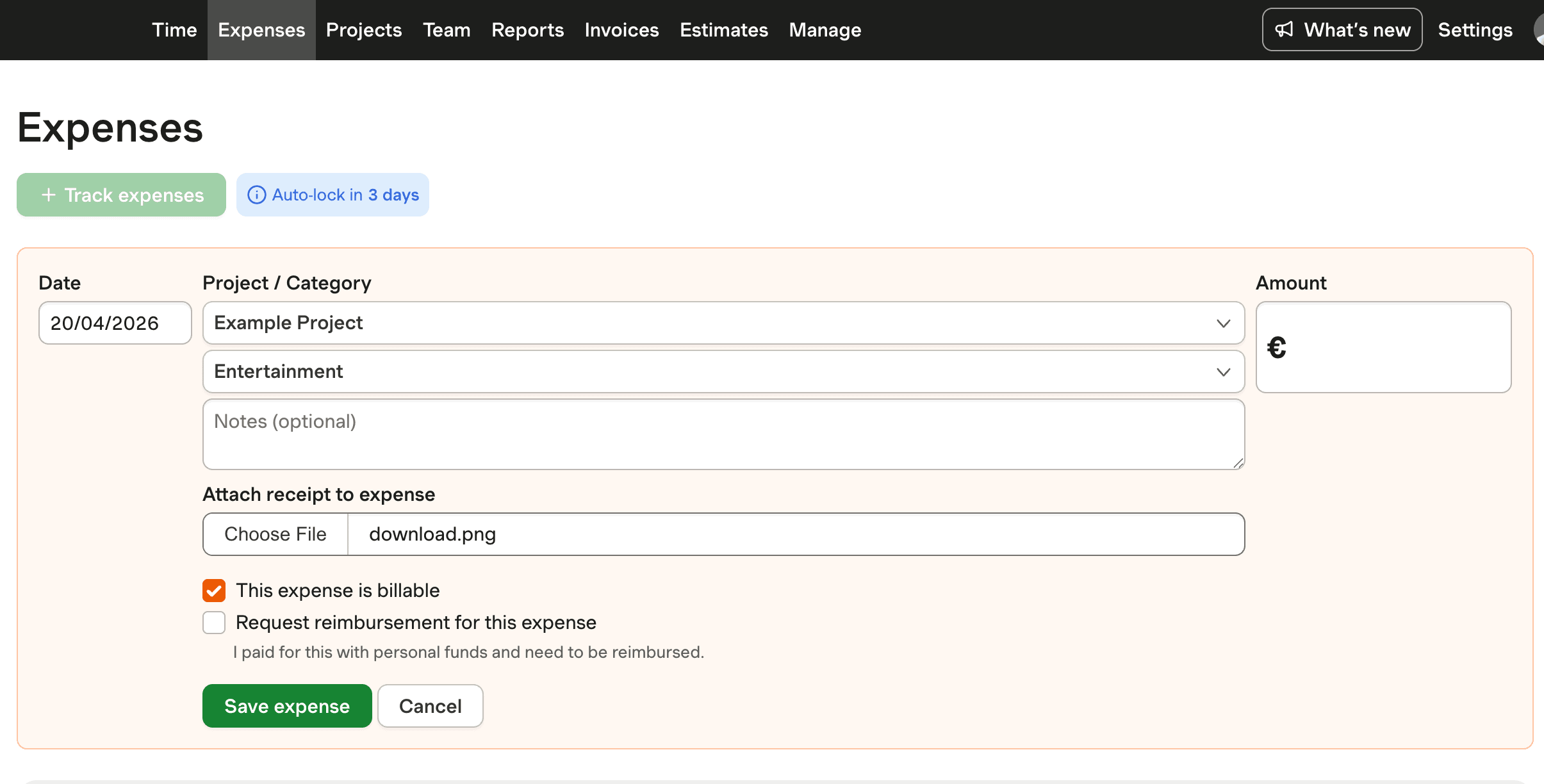
See how Harvest enhances Excel for home expenses with customizable categories and date-specific tracking, perfect for budgeting.

Harvest expense tracking interface integrated with Excel for home budgeting.

Home Expense Tracker Excel FAQs

  • The best way to track home expenses in Excel is to create specific categories for each type of expense, assign budget limits, and use formulas to calculate balances. Avoid broad categories to ensure accuracy in tracking.

  • Customize an Excel expense tracker by adding specific income and expense categories, using conditional formatting to highlight trends, and applying formulas for automatic calculations. This setup helps maintain precision in financial management.

  • Include 8-15 main categories such as housing, utilities, groceries, and transportation, each with 2-4 subcategories to capture all spending details. This structure avoids a large "other" category that can obscure spending patterns.

  • Harvest complements Excel by offering customizable expense categories and date-specific tracking, which integrate well with Excel's analytical capabilities. This dual approach enhances detailed financial management.

  • Common mistakes include using overly broad categories, failing to regularly update entries, and treating budgeting as a one-time task. Regular updates and specific categories help maintain an accurate financial overview.

  • Yes, Excel can be integrated with tools like Harvest for enhanced tracking. Import data from Harvest into Excel to leverage Excel's analytical features, providing a comprehensive financial overview.

  • People prefer Excel for its flexibility and ability to customize financial tracking. Despite the rise of automated apps, Excel's adaptability and detailed data analysis capabilities continue to make it a popular choice.

  • Excel's AI features, such as Copilot, can provide insights into spending trends and anomalies, allowing for more informed financial decisions. These tools enhance the accuracy and depth of financial tracking.