
Harvest
Expenses
Sign up

Record Business Expenses

Harvest simplifies the recording of business expenses with custom categories and receipt uploads, making tax time easier and more efficient.

  • Attach receipts to projects & tasks
  • Turn tracked expenses into client invoices
  • Free 30-day trial, no credit card needed

or drag & drop • Images and PDFs, max 10 MB

The Importance of Organized Expense Records

Effective management of business expenses is crucial for maintaining financial accuracy and optimizing tax deductions. Businesses can lose track of approximately 20% of their spending due to inefficient tracking methods, which not only leads to financial discrepancies but also impacts profitability. The IRS requires businesses to keep adequate records for at least three years, with extensions in specific cases, to substantiate income and deductions. This highlights the necessity of organized and accurate record-keeping for compliance and financial health.

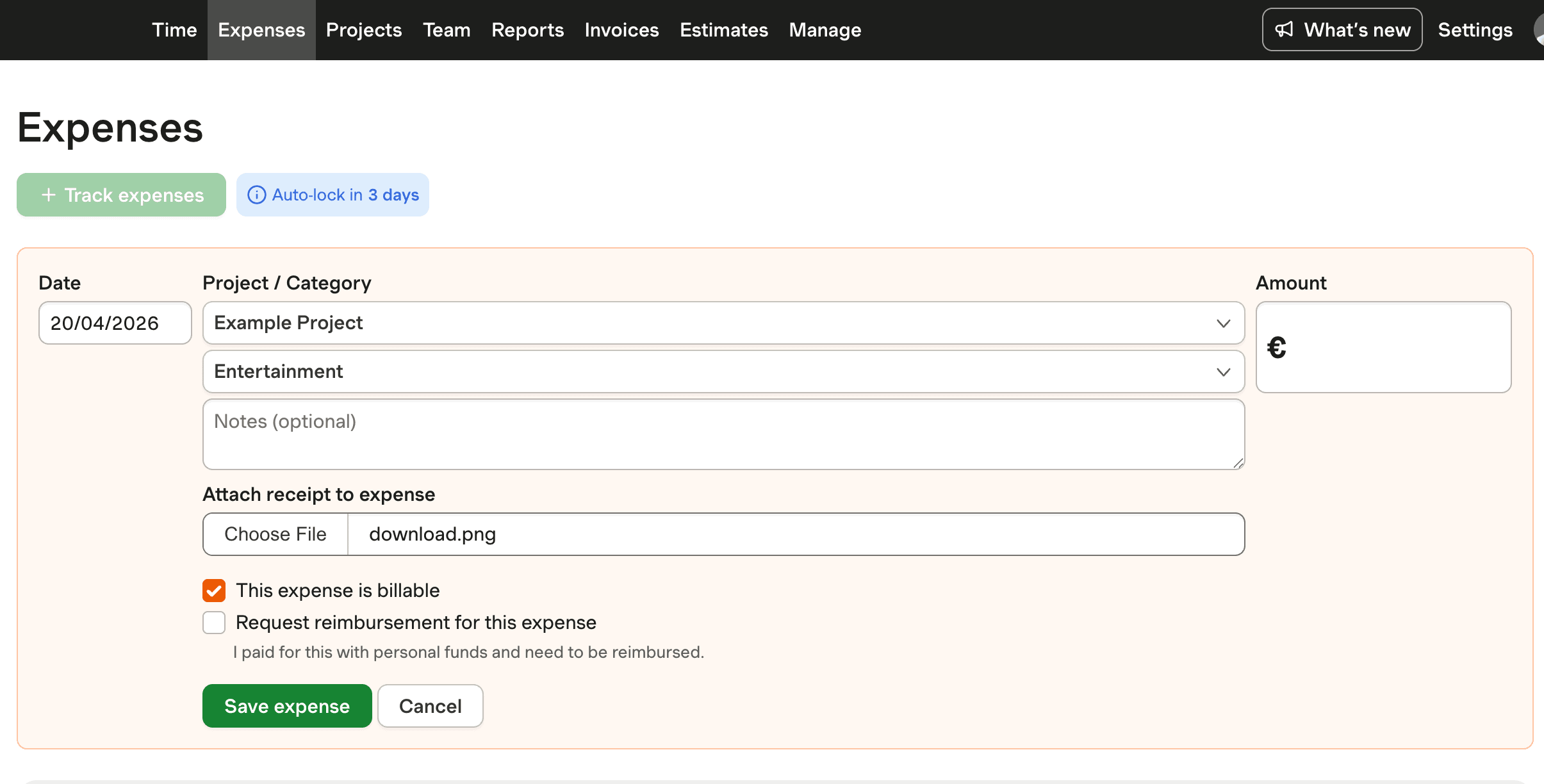
Harvest addresses these challenges by enabling users to upload and organize receipts directly alongside each expense entry. This feature ensures that all necessary documentation is stored securely, making it easier to comply with tax requirements and maximize deductions. The ability to categorize expenses further aids in financial reporting, enabling businesses to maintain precise and organized records that streamline tax preparation and audits.
Automating Expense Tracking for Enhanced Efficiency

Manual expense processing is not only time-consuming but also costly, with an average single expense report taking about 20 minutes and costing between $27 and $58. For a company with 200 employees, this can translate to 330 hours per year lost in processing expenses manually. The shift towards automated systems is driven by the need to reduce these inefficiencies and errors.

Harvest's electronic expense tracking module automates this process, allowing expenses to be tracked by date, project, and category without the need for manual data entry. This digital transformation can lead to a productivity boost of over 70%, saving companies more than 30,000 hours annually compared to traditional methods. By adopting Harvest, businesses can avoid the pitfalls of manual tracking and enjoy quicker, more accurate financial oversight.

Custom Expense Categories for Better Financial Reporting

Accurate categorization of business expenses is essential for clear financial reporting and analysis. Misclassification or overly broad categories, such as "miscellaneous," can lead to unreliable financial reports and potential audit red flags. Experts recommend establishing a standardized chart of accounts tailored to the business to ensure consistent categorization.

With Harvest, administrators can create custom expense categories that align with the specific needs of their business. This customization facilitates detailed financial reporting and helps in preparing for tax obligations. By categorizing expenses accurately, companies can gain insights into spending patterns, enabling more strategic financial decision-making and improved budgeting.

Leveraging Technology for Compliance and Reporting

Businesses often face challenges with compliance due to inconsistent policy enforcement and outdated tracking methods. The IRS and other tax authorities impose strict record-keeping requirements, with significant penalties for non-compliance. For instance, the IRS can impose a 20% negligence penalty for poor documentation.

Harvest mitigates these risks by integrating seamlessly with existing accounting systems, providing a comprehensive solution for expense management. This integration eliminates manual data entry, reduces errors, and ensures that all expenses are accurately documented and categorized. As a result, businesses can maintain compliance with regulatory requirements while also benefiting from real-time financial visibility, crucial for proactive decision-making and avoiding costly penalties.

Record Business Expenses with Harvest

See how Harvest helps you organize business expenses with custom categories and receipt uploads, enhancing financial reporting and compliance.

Harvest dashboard displaying expense recording features for businesses.

Record Business Expenses FAQs

  • It's crucial to maintain detailed records for all business expenses, including receipts, invoices, and bank statements. The IRS requires businesses to keep these records for at least three years to substantiate tax deductions. Using software like Harvest to upload and categorize these documents can simplify compliance.

  • Categorizing business expenses accurately is key to clear financial reporting. Create a standardized chart of accounts and categorize each expense appropriately. Harvest allows you to set up custom categories, ensuring every expense is recorded correctly and aligned with your business needs.

  • Automating expense tracking saves time and reduces errors. Manual processes are costly and time-consuming, with businesses losing significant hours annually. Harvest's automated tracking module enhances efficiency by eliminating manual data entry, allowing for precise and real-time financial oversight.

  • Harvest aids in tax compliance by allowing you to organize and store receipts with each expense entry, ensuring all necessary documentation is readily available. This feature helps in maximizing tax deductions and maintaining compliance with IRS record-keeping requirements.

  • The IRS requires businesses to keep records for expenses of $75 or more, usually needing receipts or invoices. Harvest can help you organize and store these documents, which are vital for substantiating income and deductions during tax time.

  • Yes, Harvest integrates seamlessly with existing accounting systems. This integration reduces manual entry, minimizing errors and providing real-time financial visibility, essential for maintaining compliance and accurate financial reporting.

  • Electronic expense tracking software like Harvest offers numerous benefits, including improved accuracy, reduced time spent on manual entry, and better compliance with tax regulations. These tools provide a streamlined process for recording and managing expenses efficiently.