
Harvest
Expenses
Sign up

Business Expenses Google Sheets

Harvest helps businesses manage costs effectively by tracking project expenses and mileage, streamlining expense management.

EXPENSE REPORT DRAFT

Drop your receipts here or click to upload

Images and PDFs (max 10 MB each)

Date
Category
Merchant
Description
Amount
Total
$0.00

Customise report

Appearance

Show report title

Report settings

Why Automate Business Expense Tracking?

Automating business expense tracking is essential for modern companies seeking efficiency and cost reduction. Companies that switch from manual to automated systems report a 70% reduction in time spent processing expenses. This shift not only frees employees from administrative burdens but also enhances productivity by allowing them to focus on core tasks. Additionally, automated systems can help reduce costs by 35% and improve fraud detection, saving businesses significant amounts annually.

Despite the benefits of automation, some companies still rely on traditional methods like spreadsheets, which are prone to errors such as incorrect data entries and duplicate records. By transitioning to automated solutions, businesses can achieve real-time visibility into their expenses—a priority for 70% of finance teams aiming for improved financial oversight by 2025. Harvest offers an effective solution for capturing job costs and mileage, ensuring accurate expense reporting and efficient management.
Customizing Your Google Sheets Expense Tracker

Creating a customized expense tracker in Google Sheets allows businesses to maintain control over their expense data while tailoring the tool to their specific needs. Start by setting up a new spreadsheet with columns for "Merchant or Supplier," "Description of Item or Service," "Category," "Amount of Purchase," "Date of Purchase," and "Method of Payment." Ensure all entries are updated regularly to maintain accurate records.

For more robust tracking, use Google Sheets functions like SUM and SUMIF to calculate totals by category or month. This structured approach helps in organizing financial data effectively, minimizing errors, and improving accuracy. While Harvest does not offer spreadsheet formulas, it excels in tracking expenses by project and category, providing a seamless alternative for businesses seeking more than just spreadsheet solutions.

Compliance and Best Practices in Expense Management

Maintaining compliance with tax regulations is a critical aspect of expense management for businesses. In the U.S., the IRS requires businesses to keep records of all expenses above $75, and these records must be maintained for at least three years. Digital records are acceptable, making tools like Google Sheets a viable option for documentation.

Best practices include developing clear expense policies and requiring receipts for all transactions, regardless of amount, to prevent fraud and ensure compliance. Automated solutions like Harvest can assist by marking expenses as billable or non-billable, providing clarity and aiding in project profitability analysis. While Harvest does not create IRS-compliant reports, it supports detailed expense tracking essential for informed financial decision-making.

Integrating Expense Tracking with Business Systems

Integrating expense tracking with other business systems can dramatically enhance operational efficiency. By connecting expense management tools with accounting software, businesses can automate data transfer, reduce manual entry errors, and gain real-time financial insights. This integration also supports compliance by centralizing financial data, simplifying audits and tax preparations.

Harvest stands out by allowing businesses to track expenses by project and category, facilitating integration with broader business processes. Although it doesn't offer data validation or conditional formatting, its ability to separate reimbursable from general expenses provides deep insights into project profitability, making it a valuable asset for companies seeking streamlined expense management.

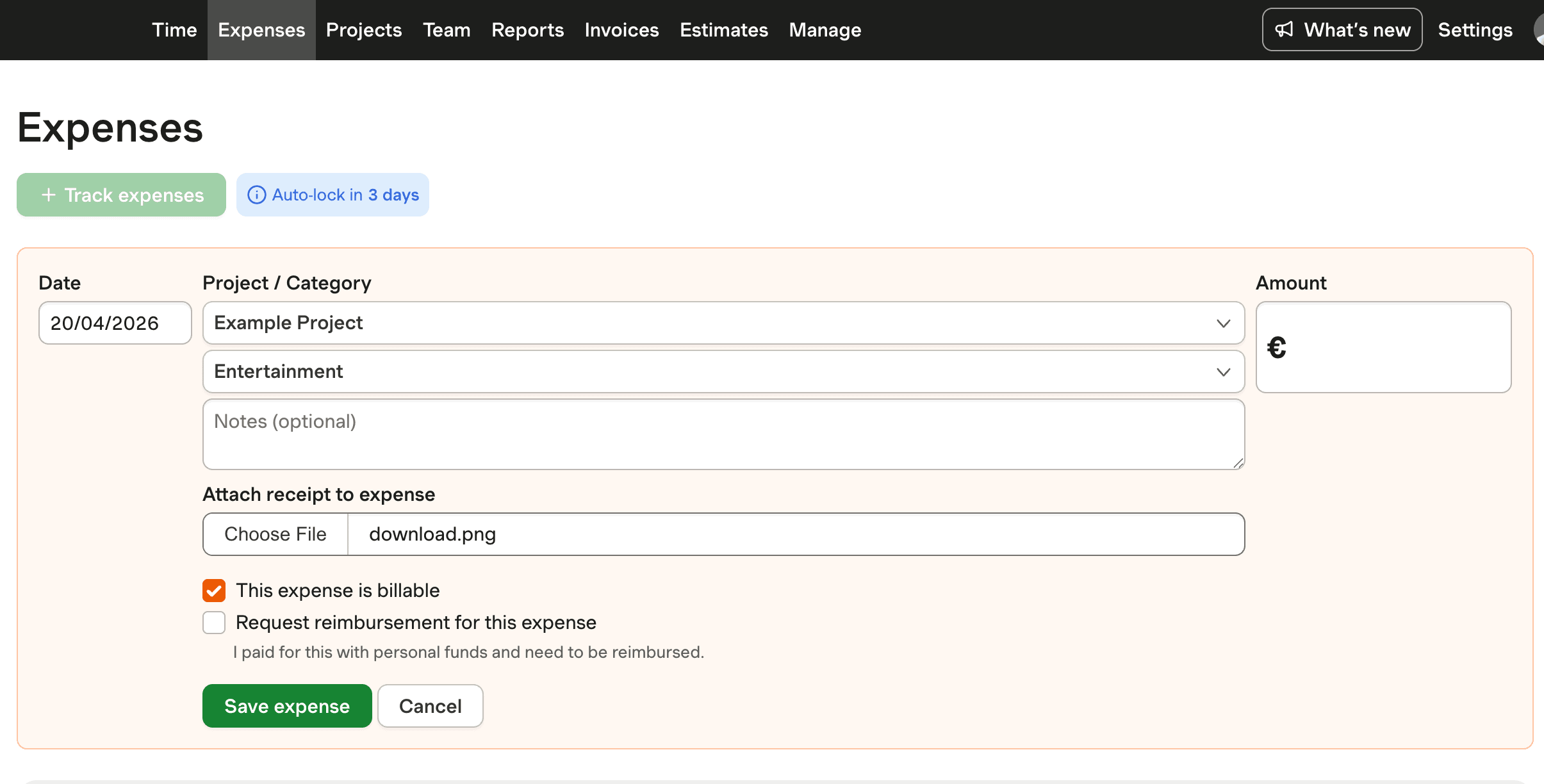
Harvest Business Expense Tracking

Explore how Harvest tracks project expenses and mileage, offering a seamless management solution for businesses.

Screenshot of Harvest's project expense tracking interface.

Business Expenses Google Sheets FAQs

  • Google Sheets offers various templates for tracking business expenses, allowing users to organize data by category, date, and amount. These templates can be customized to fit specific business needs.

  • To customize a Google Sheets expense tracker, start by adding columns for key details like merchant, category, and amount. Use functions like SUM to automate calculations and create monthly or annual summaries for better organization.

  • Common formulas include SUM for totals and SUMIF for conditional sums. These functions help track expenses by category or date, ensuring accurate financial records.

  • Ensure your tracker records all necessary details: amount, date, purpose, and receipt. Digital records are acceptable, but maintain them for at least three years, as required by the IRS.

  • Regularly update your spreadsheet, categorize expenses consistently, and use functions to automate calculations. Create separate sheets for summaries and frequently review your data for accuracy.

  • Harvest tracks expenses by project and category, allowing businesses to capture job costs and mileage accurately. It separates reimbursable from general expenses, aiding in profitability analysis.

  • Yes, Harvest integrates with various accounting software, automating data transfer and enhancing financial visibility. This integration reduces manual data entry and improves accuracy.