
Harvest
Expenses
Sign up

Reporting Business Expenses

Harvest simplifies business expense reporting by offering customizable categories and receipt uploads, helping small businesses maintain accurate records for tax purposes.

EXPENSE REPORT DRAFT

Drop your receipts here or click to upload

Images and PDFs (max 10 MB each)

Date
Category
Merchant
Description
Amount
Total
$0.00

Customise report

Appearance

Show report title

Report settings

Understanding Deductible Business Expenses

Accurately reporting business expenses is crucial for tax compliance and financial transparency. Deductible expenses are those deemed necessary for the operation of a business, such as office supplies, travel, and meals. Under the Tax Cuts and Jobs Act (TCJA), certain deductions like entertainment expenses have been largely eliminated, with meals remaining 50% deductible. By 2026, deductions for meals on employer premises will end, except under specific exemptions provided by the "One Big Beautiful Bill" (OBBB).

Harvest assists in categorizing these deductible expenses through customizable categories, allowing self-employed individuals and small businesses to track what is deductible accurately. This feature ensures that users maintain precise records, which are essential for maximizing tax deductions and avoiding compliance issues.
Differentiating Between Personal and Business Expenses

One of the challenges in reporting business expenses is distinguishing them from personal expenditures. This distinction is vital as only business-related expenses can be deducted on taxes. The IRS requires clear separation to ensure compliance, and failure to do so can lead to significant penalties or audits.

Harvest simplifies this process by allowing users to label expenses as billable or non-billable, effectively differentiating between personal and business expenses. With this feature, businesses can ensure that only legitimate business expenses are reported, aiding in accurate tax filings and financial forecasting.

The Importance of Detailed Record-Keeping

Maintaining comprehensive records of business expenses is not only a best practice but a legal requirement for claiming deductions. Detailed documentation helps in audits and is vital for financial analysis. According to industry research, automating record-keeping can reduce expense report errors by 65% and processing time by 67%.

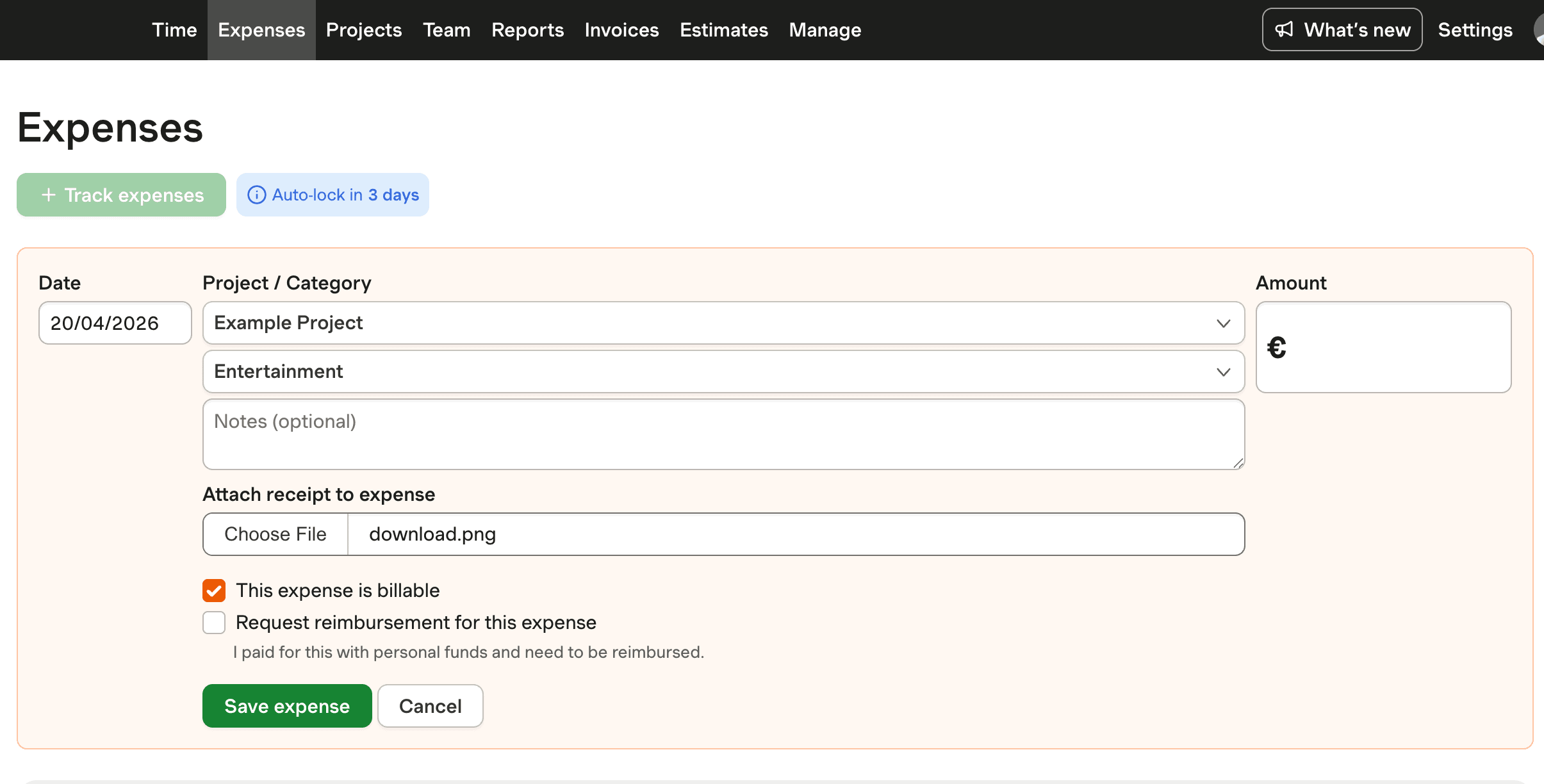
Harvest provides tools to track expenses by date, project, and category, offering a structured approach to record-keeping. Users can upload receipt images or PDFs directly to their entries, ensuring that all necessary documentation is attached and stored securely. This functionality supports compliance and makes the audit process smoother, should it arise.

Tracking Vehicle Expenses for Business Use

For many businesses, especially those involving travel, tracking vehicle expenses is essential for accurate reporting. The IRS allows deductions for business-related mileage, which requires precise records of each trip.

Harvest enables users to create a mileage category with a per-mile rate, automatically calculating total vehicle expenses. This feature simplifies the tracking of travel-related deductions, ensuring that businesses can claim the maximum allowable deductions without the hassle of manual calculations.

Best Practices for Managing Receipts and Documentation

Efficient management of receipts and documentation is a common challenge in expense reporting. Lost or missing receipts can delay reimbursements and complicate audits. Research indicates that 27% of claims take over 30 days to approve due to incomplete documentation.

Harvest addresses this by allowing users to upload receipt images instantaneously, reducing the likelihood of lost documents. This capability, combined with automated categorization, ensures that all necessary documentation is readily available, streamlining the approval process and enhancing overall efficiency.

Streamline Business Expense Reporting with Harvest

Harvest shows customizable categories and receipt uploads, aiding accurate reporting of business expenses for tax purposes.

Screenshot of Harvest's business expense tracking interface with categories and receipt uploads.

Reporting Business Expenses FAQs

  • Deductible business expenses are those necessary and ordinary expenses required to operate a business, such as office supplies, travel, and meals. Accurate categorization is crucial for compliance with IRS guidelines.

  • To differentiate, label expenses as billable or non-billable. Only business-related expenses are deductible. Harvest helps by allowing users to mark expenses accordingly, simplifying this distinction.

  • Documentation should include receipts, invoices, and detailed records of expenses showing the date, amount, and business purpose. This is essential for audits and claiming deductions.

  • The business structure, such as a sole proprietorship or LLC, dictates how expenses are reported and what deductions are available. Consult a tax professional for specific guidance.

  • Accurate record-keeping is vital for tax compliance and financial analysis. It helps prevent errors and supports audit readiness. Automated systems like Harvest enhance this process by organizing records efficiently.

  • Harvest allows users to track vehicle expenses by creating a mileage category with a per-mile rate, automatically calculating the total expenses. This simplifies the process for claiming travel-related deductions.

  • Best practices include capturing images of receipts immediately and using automated categorization systems. Harvest supports these practices by allowing quick receipt uploads, reducing lost documentation.