
Harvest
Expenses
Sign up

Work Expense Sheet

Harvest simplifies the tracking of project-based expenses, including mileage and petty cash, offering detailed reporting to ensure compliance and accuracy.

EXPENSE REPORT DRAFT

Drop your receipts here or click to upload

Images and PDFs (max 10 MB each)

Date
Category
Merchant
Description
Amount
Total
$0.00

Customise report

Appearance

Show report title

Report settings

The Evolution of Work Expense Sheets

Work expense sheets have evolved significantly from manual processes to sophisticated digital systems. This transformation, driven by the need for efficiency and accuracy, has been accelerated by digital innovations such as automation and AI. Modern tools not only streamline the process but also enhance compliance with regulatory requirements. For instance, AI-powered systems can categorize transactions and capture receipt data automatically, reducing expense claim processing costs by up to 78% per transaction. This shift from manual to digital also reduces error rates by 20%, addressing the inefficiencies of traditional methods where 19% of reports typically contain errors.

The impact of these advancements is tangible, especially in remote work environments where home office expenses are more prevalent. As companies navigate economic pressures, leveraging digital solutions for expense management becomes a strategic priority. Harvest, with its project-based expense tracking, offers a robust solution to manage these modern challenges effectively.
Streamline Expense Tracking with Harvest

Tracking business expenses accurately is crucial for maintaining financial health. Harvest provides a comprehensive platform to manage project-based expenses, including mileage and petty cash. This capability helps businesses track their travel expenses accurately, thanks to the ability to create a mileage expense category with a per-mile rate. This feature is particularly beneficial for companies with frequent travel needs, ensuring accurate reimbursements and compliance with tax regulations.

Moreover, Harvest allows administrators to create custom categories, such as petty cash, which simplifies tracking of small incidental expenses. This customization ensures that all business expenses are captured accurately, reducing the likelihood of errors and fraud. In a landscape where 27% of expense claims take over 30 days for approval, Harvest’s real-time tracking capabilities can significantly enhance the efficiency of expense management processes.

Best Practices for Effective Expense Management

Implementing effective expense management requires a strategic approach that includes automation and integration. Automating workflows and leveraging real-time tracking through tools like Harvest can streamline processes significantly. For example, using mobile apps to capture receipts instantly and employing AI for automatic categorization can save 27% of the time typically spent on manual processes.

To avoid common pitfalls, businesses should ensure clear policy definitions and robust oversight. This includes mandating receipts for all expenses and using automated systems to flag non-compliant entries before submission. Integration with accounting or ERP systems is crucial for real-time visibility and compliance, allowing seamless data transfer and reducing manual entry errors. Harvest's expense tracking capabilities are designed to integrate with broader business processes, enhancing financial transparency and supporting better decision-making.

Ensuring Compliance with Expense Regulations

Compliance with regional tax regulations is a critical aspect of managing work expense sheets. In the U.S., for instance, the IRS requires that business expenses be "ordinary" and "necessary," with receipts required for expenses over $75. Similarly, UK regulations stipulate that expenses must be "wholly, exclusively, and necessarily incurred" for employment duties.

Harvest's detailed reporting features facilitate compliance by allowing users to track expenses by category and project. This capability ensures that all expenses meet the necessary documentation requirements, aiding in tax reporting and audits. By retaining records as required—typically seven years—businesses can safeguard against compliance issues. Harvest's ability to customize reports for specific needs ensures businesses stay aligned with both IRS and HMRC regulations.

Manage Work Expenses with Harvest

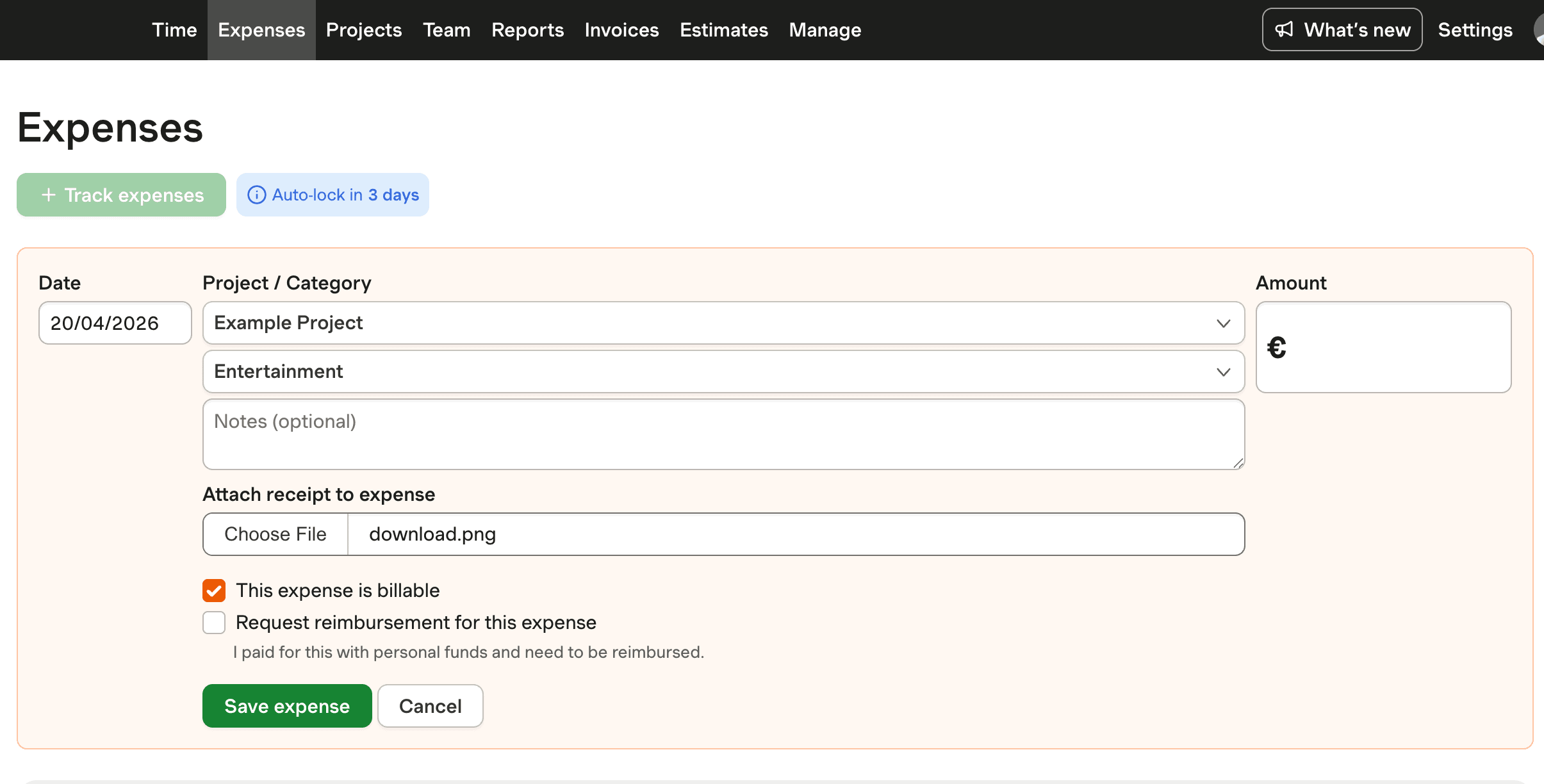
Harvest's work expense sheet features enable accurate tracking of project-based expenses, including mileage and petty cash.

Screenshot of Harvest's expense tracking interface for work expense sheets.

Work Expense Sheet FAQs

  • A work expense sheet, also known as an expense report, is a document used to track business expenses. It helps in recording and managing costs incurred during business activities, ensuring accuracy and compliance with financial regulations.

  • Tracking mileage expenses involves recording the number of miles traveled for business purposes and applying a per-mile rate for reimbursement. Harvest allows users to create a mileage expense category, simplifying this process for accurate reporting.

  • Automation in expense management reduces manual data entry, minimizes errors, and speeds up processing. It can cut processing costs by up to 78% and save significant time, making it essential for efficient financial operations.

  • Harvest enables users to create custom expense categories, including for petty cash. This feature helps track small, incidental expenses accurately, ensuring they are properly accounted for in financial reports.

  • In the US, the IRS requires that business expenses be "ordinary and necessary," with receipts needed for expenses over $75. Harvest's detailed reporting features help users meet these requirements by tracking expenses effectively.

  • Yes, Harvest is designed to integrate with accounting and ERP systems, facilitating seamless data transfer and reducing errors. This integration supports real-time tracking and compliance, improving financial management.

  • Common mistakes include vague policy language, lax receipt requirements, and ignoring duplicate payments. To avoid these, establish clear policies, mandate receipts, and use centralized systems for tracking, like Harvest.