Harvest
Invoices
Sign up

Invoicing Software for Developers

Harvest excels in automating billing for developers by seamlessly integrating time tracking and expense management into its invoicing process. This ensures accurate and efficient billing tailored to development projects.

INVOICE DRAFT

Add your logo here
Item type
Description
Quantity
Unit price
Tax
Amount
Subtotal
$0.00
Discount
$0.00
Amount Due
$0.00
Get paid via:
Credit card / Debit card
ACH
Wire transfer

Customise invoice

Appearance

Add a logo
Show invoice title

Invoice settings

Tax Add up to 2 tax rates
%
Discount Apply a discount percentage
%

Key Features Developers Need in Invoicing Software

Developers benefit most from invoicing software that integrates seamlessly with their workflow, prioritizing features that track effort and align with project delivery. Essential capabilities include robust time tracking integration, allowing direct conversion of logged hours into billable entries, often with project and task-level granularity. Software should support milestone-based billing, which is crucial for project-oriented work, enabling invoices to be generated upon completion of predefined project phases or deliverables, rather than solely hourly. Furthermore, a user-friendly interface is paramount; it reduces administrative overhead, ensuring developers can quickly generate accurate invoices without extensive training or diverting focus from core development tasks. Look for intuitive dashboards and straightforward invoice creation processes.
How to Choose the Right Invoicing Software for Developers

Selecting the optimal invoicing software for development work involves prioritizing features that align with project management styles and avoiding common pitfalls. To make an informed decision, consider these key criteria:

  1. Integration Capabilities: Does it connect with your existing project management tools, version control systems, or accounting software? Seamless data flow can save hours of manual entry.
  2. Customization for Project Types: Can it handle various billing models, such as hourly, fixed-price, retainer, or milestone-based contracts, and adapt invoice templates accordingly?
  3. Reporting and Analytics: Look for strong reporting features that provide insights into project profitability, client payment history, and outstanding balances.
  4. Scalability: Ensure the software can grow with your business, supporting an increasing number of clients, projects, and team members without performance degradation.

A common pitfall is choosing overly complex software with unnecessary features, leading to higher costs and a steeper learning curve. Conversely, selecting a tool that lacks essential developer-centric features like detailed time tracking can create significant manual workarounds.

Avoiding Common Invoicing Mistakes

Preventing invoicing errors is critical for maintaining healthy cash flow and strong client relationships. One frequent pitfall is a lack of clarity in contracts regarding payment terms, leading to disputes or delayed payments; always ensure terms like "Net 30" (payment due 30 days from invoice date) are explicitly stated. Another common mistake is inconsistent billing cycles, which can confuse clients and disrupt your financial forecasting. Establish and adhere to a regular billing schedule, whether weekly, bi-weekly, or monthly. Furthermore, neglecting to track all billable hours or project expenses accurately can result in under-billing, directly impacting profitability. Implement a rigorous system for logging all work and costs. Finally, overlooking compliance requirements, such as local tax regulations or specific invoice formatting standards, can lead to legal issues or rejected invoices. Regularly review and update your invoicing practices to ensure full compliance.

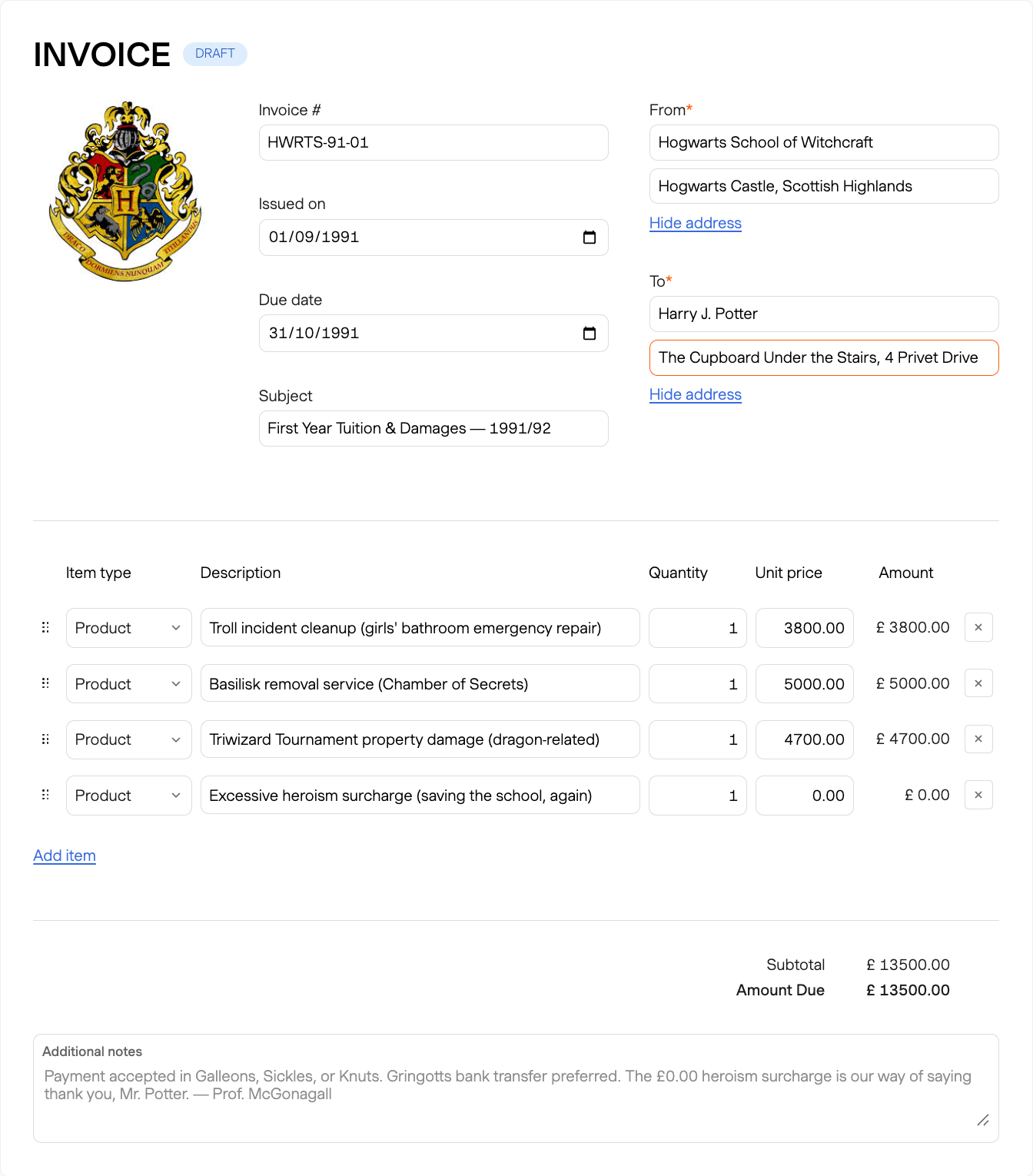
See Your Developer Invoice Template in Action

Preview how developer invoices incorporate project milestones, tracked hours, and detailed expense pass-throughs, ensuring comprehensive billing for your clients.

Invoicing Software for Developers FAQs

  • Harvest automates billing by converting tracked time and expenses into invoices, ensuring accurate and efficient invoicing. This integration allows developers to transition seamlessly from project work to billing, ensuring that every tracked hour is reflected in the invoices sent to clients.

  • Milestone billing allows developers to issue invoices at predefined project phases or upon completion of specific deliverables. This method aligns billing with project progress and client expectations, improving cash flow and project visibility. It also helps manage client relationships by providing clear checkpoints for review and payment.

  • Harvest employs strong security measures, including data encryption, secure servers, and regular security audits to protect user data. Your information is safe, and Harvest prioritizes data privacy.
  • Harvest allows for mixed billing arrangements by supporting invoices that combine tracked time and fixed fees. This flexibility ensures developers can tailor billing to match varied project requirements and client agreements, streamlining the invoicing process.

  • Invoicing software may sometimes lack the flexibility to fully adapt to unique or highly specialized billing scenarios, such as those requiring custom contract terms. Additionally, some software might not offer comprehensive multi-currency support or detailed client-specific customization without additional configuration or integration work.