Harvest
Invoices
Sign up

Track Invoice

Harvest provides comprehensive tools for tracking and managing invoices, ensuring efficient cash flow and financial management.

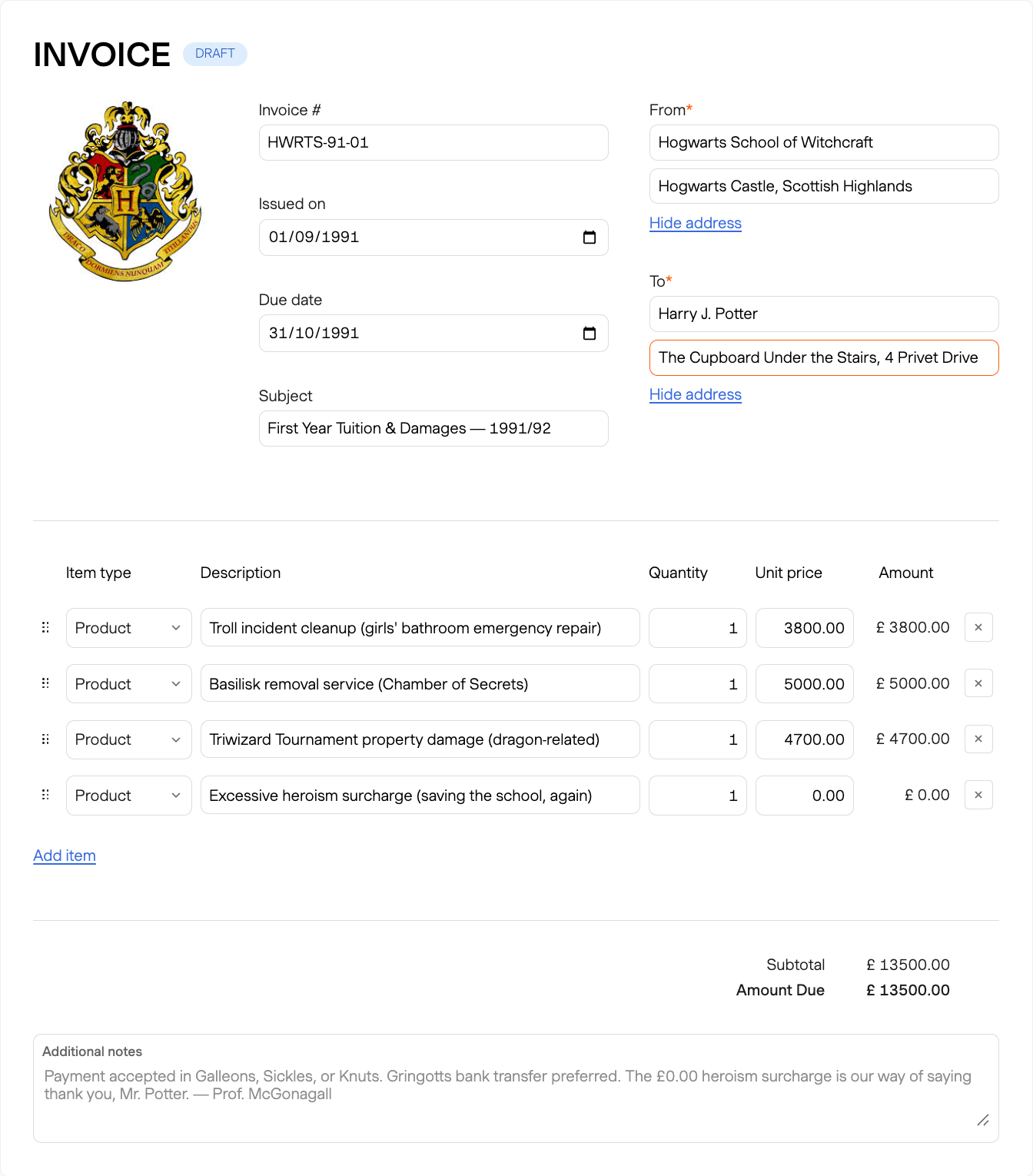
INVOICE DRAFT

Add your logo here
Item type
Description
Quantity
Unit price
Tax
Amount
Subtotal
$0.00
Discount
$0.00
Amount Due
$0.00
Get paid via:
Credit card / Debit card
ACH
Wire transfer

Customise invoice

Appearance

Add a logo
Show invoice title

Invoice settings

Tax Add up to 2 tax rates
%
Discount Apply a discount percentage
%

Key Features for Effective Invoice Tracking

Effective invoice tracking tools provide immediate visibility into payment statuses, significantly reducing the time spent chasing outstanding payments. Look for solutions that offer real-time tracking of invoice payment status, allowing you to see at a glance which invoices are open, paid, or overdue without manual checks. Automated reminders are another critical feature; these systems should automatically send polite, customizable notifications to clients for upcoming due dates and overdue invoices, potentially reducing late payments by 20-30%. Finally, seamless integration with your existing accounting software is paramount. This ensures data consistency, eliminates duplicate data entry, and streamlines reconciliation processes, saving valuable administrative time and minimizing errors.
Selection Criteria for Choosing Invoice Tracking Software

Selecting the right invoice tracking software involves balancing functionality with practical considerations to ensure it meets your operational needs.

  1. User-Friendly Interface: Prioritize intuitive design and ease of use. A complex system will lead to low adoption rates and wasted time, regardless of its features.
  2. Cost Considerations: Evaluate pricing models (e.g., per user, per invoice, tiered features) against your budget and anticipated usage. Consider the total cost of ownership, including potential setup and training expenses.
  3. Scalability and Customization Options: Choose a solution that can grow with your business. It should offer flexibility to customize invoice templates, reporting, and workflows to align with your unique business processes and future expansion plans.

Ensure the software can handle your current volume and has room for future growth without requiring a complete system overhaul.

Avoiding Common Pitfalls in Invoice Tracking

To maximize the efficiency of your invoice tracking efforts, be mindful of common mistakes that can undermine even the most robust systems. A significant pitfall is ignoring integration capabilities; failing to connect your tracking solution with accounting or CRM software creates data silos, necessitates manual data transfers, and introduces a high risk of errors. Another frequent oversight is overlooking automation features. Many businesses underutilize automated reminders, payment matching, or recurring invoice generation, leading to unnecessary manual work and delayed payments. Lastly, neglecting detailed reporting means missing out on crucial insights into payment trends, client payment behavior, and overall financial health, which can inform better credit policies and collection strategies.

Experience Real-Time Invoice Tracking in Action

Preview how your invoices can be tracked with real-time updates and automated reminders, ensuring seamless cash flow management.

Track Invoice FAQs

  • Harvest allows you to track the status of your invoices in real-time through its mobile app, helping you manage cash flow effectively.

  • Harvest can automatically send reminders for overdue invoices, helping to reduce late payments.

  • Harvest shows each invoice's status — draft, sent, viewed, or paid — so you always know where things stand without chasing clients for updates.
  • Integrating invoice tracking with accounting software ensures data consistency, reduces manual data entry, and enhances reconciliation processes. It streamlines financial management by automatically updating records and improving accuracy.

  • Invoice tracking software may not capture all client payment behaviors or integrate seamlessly with every existing system. Additionally, it may require significant setup and customization to fully meet specific business needs.