
Harvest
Time Tracking
Sign up free

Team Collaboration Tool

Harvest is a leading team collaboration tool that integrates time tracking and invoicing to enhance productivity in remote and hybrid work environments.

Try Harvest Free

How much revenue is your team leaving on the table?

Most agencies run at 55-60% utilization. Even a small improvement means significant revenue. See what closing the gap looks like for your team.

Number of people who track billable time
$
Blended rate across roles (junior, senior, lead)
55%
Percentage of total hours that are billable. Industry average is 55-60%.
75%
A realistic target for service businesses is 70-80%.
Monthly revenue gap $0
Revenue at current utilization $0/mo
Revenue at target utilization $0/mo
Extra billable hours needed per person/day 0h
Annual revenue opportunity $0

Start tracking team utilization

Walk through the entire flow below. Start a timer, check your reports, and create a real invoice — all in three clicks.

Go ahead — start tracking!

One click and you're timing. Try it right here: start a timer, add an entry, edit the details. This is exactly how it feels in Harvest.

  • One-click timer from browser, desktop & mobile
  • Works inside Jira, Asana, Trello, GitHub & 50+ tools
  • Duration or start/end — your call
  • Day, week & calendar views to stay on top of it all
  • Friendly reminders so no hour gets left behind
Acme Corp
Website Redesign
Homepage layout revisions
1:24:09
Content Strategy
Blog calendar planning
1:30:00
SEO Audit
Technical audit report
0:45:00
Brand Guidelines
Color system documentation
2:15:00
Logo Concepts
Initial sketches round 1
1:00:00

The Evolving Landscape of Team Collaboration

Team collaboration tools have become indispensable in modern workplaces, particularly with the rise of remote and hybrid work environments. In 2023, the global collaboration software market reached $6.56 billion, and it's projected to grow to $62.8 billion by 2031, reflecting a Compound Annual Growth Rate (CAGR) of 13.5%. This growth underscores the essential role these tools play in enhancing productivity and communication across distributed teams.

The adoption of digital collaboration tools has surged, with 79% of workers globally using them in 2021, up from 55% in 2019. This dramatic adoption can be attributed to the 63% of growing organizations that have embraced "productivity-anywhere" models. Such models are crucial as 73% of the workforce favors flexible remote work options, and 40% of employees believe their jobs can be performed primarily from home.

Harvest, while known for time tracking and invoicing, underscores the importance of seamless integration with collaboration tools to support diverse team needs. Its integration capabilities ensure that teams remain connected and efficient, even when working remotely.
Essential Features for Seamless Teamwork

For effective team collaboration, certain core functionalities are non-negotiable. These include real-time communication channels such as messaging and video conferencing, project and task management, and file sharing with co-editing capabilities. In 2021, 72% of businesses introduced at least one new collaboration application to support these functionalities amidst remote workforces.

Advanced features like customizable workflows, automation capabilities, and cross-platform accessibility are increasingly sought after. Such features not only enhance productivity but also streamline workflows by integrating with existing software ecosystems. This is crucial as 75% of employees indicate that their company's remote tools need improvement.

Security remains paramount, with tools requiring multi-factor authentication (MFA), AES 256-bit encryption, and role-based access control (RBAC) to safeguard sensitive data. Harvest ensures compliance with these standards, offering peace of mind for organizations prioritizing data security.

Empowering Hybrid Teams: Strategies and Tools

Hybrid work models pose unique challenges, which collaboration tools can effectively address. These tools bridge geographical gaps and synchronize teams across different time zones. The market for team collaboration tools is expected to expand significantly, with North America holding over 37% of the market share in 2024.

Features like virtual meetings and asynchronous communication promote inclusive participation, ensuring that all team members remain engaged and productive. Best practices include fostering a connected team culture and ensuring that tools are intuitive and user-friendly to minimize training requirements.

Harvest's ability to integrate with popular platforms like Slack and Asana further supports hybrid teams by centralizing communication and task management. This integration facilitates seamless transitions between different collaborative tasks, making it easier for teams to maintain momentum.

Navigating the Challenges: Implementation and Security

Implementing collaboration tools is not without challenges. Common pitfalls include user resistance, tool sprawl, and information overload. To navigate these, a phased implementation strategy with comprehensive training is recommended. This approach ensures that all team members are comfortable and proficient with the new tools.

Security is a critical concern, with data encryption and multi-factor authentication being essential. In 2021, 75% of global knowledge workers used AI at work, highlighting the importance of secure collaboration environments. Organizations must ensure that their tools comply with regulatory standards such as GDPR and HIPAA.

Harvest addresses these challenges by providing robust security features and compliance with major frameworks. This focus on security helps organizations protect sensitive data while benefiting from the productivity enhancements that collaboration tools offer.

Discover Harvest for Team Collaboration

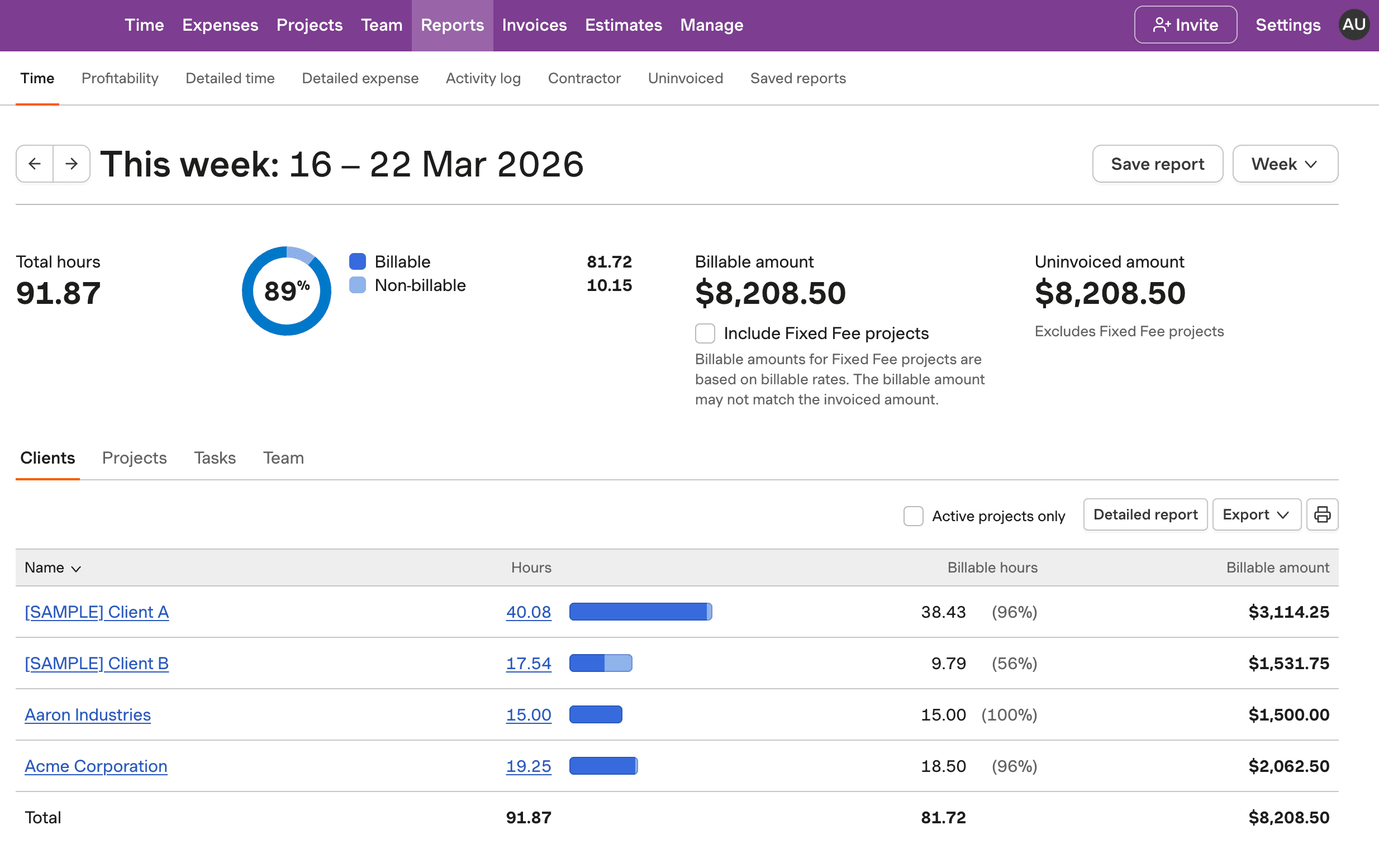
See how Harvest enhances team collaboration with integrated time tracking and invoicing. Perfect for remote and hybrid work setups.

Harvest team collaboration tool interface showcasing time tracking and invoicing features.

Team Collaboration Tool FAQs

  • Essential features in a collaboration tool include real-time communication, task management, and file sharing capabilities. Advanced functionalities like workflows, automation, and cross-platform access are also important. Ensure the tool integrates with your existing systems for seamless workflow continuity.

  • Collaboration tools facilitate remote and hybrid work by enabling virtual meetings, shared workspaces, and asynchronous communication. These tools ensure team members remain connected and productive across different time zones and locations, supporting flexible work arrangements.

  • Challenges include user resistance, tool sprawl, and information overload. Successful implementation requires phased rollout, comprehensive training, and clear governance policies to ensure consistent usage and maximize the tool's benefits.

  • Yes, there are free collaboration tools available, but they often come with limitations such as basic functionality, limited storage, fewer integrations, and user caps. Consider these limitations when evaluating free options for your team's needs.

  • Collaboration tools integrate through APIs and native integrations with productivity suites, ensuring smooth synchronization with existing software and workflows. This integration minimizes context switching and enhances overall productivity.

  • Essential security features include multi-factor authentication (MFA), AES 256-bit encryption, and role-based access control (RBAC). These features protect data and ensure compliance with regulatory standards like GDPR and HIPAA.

  • Yes, Harvest integrates with popular platforms like Slack, Asana, Trello, and more, enhancing its functionality and allowing seamless communication and project management within teams.

  • Harvest supports hybrid teams by integrating with various platforms to centralize communication and task management. This helps teams maintain productivity and coordination, regardless of physical location.

  • Harvest is suitable for team collaboration due to its integration capabilities with popular platforms, robust security features, and focus on enhancing productivity through efficient time tracking and invoicing.