
Harvest
Time Tracking
Sign up free

Team Productivity Tracker

Harvest is a team productivity tracker that addresses challenges like workflow inefficiencies, helping boost team output and engagement through effective time management and invoicing solutions.

Try Harvest Free

How much revenue is your team leaving on the table?

Most agencies run at 55-60% utilization. Even a small improvement means significant revenue. See what closing the gap looks like for your team.

Number of people who track billable time
$
Blended rate across roles (junior, senior, lead)
55%
Percentage of total hours that are billable. Industry average is 55-60%.
75%
A realistic target for service businesses is 70-80%.
Monthly revenue gap $0
Revenue at current utilization $0/mo
Revenue at target utilization $0/mo
Extra billable hours needed per person/day 0h
Annual revenue opportunity $0

Start tracking team utilization

Walk through the entire flow below. Start a timer, check your reports, and create a real invoice — all in three clicks.

Go ahead — start tracking!

One click and you're timing. Try it right here: start a timer, add an entry, edit the details. This is exactly how it feels in Harvest.

  • One-click timer from browser, desktop & mobile
  • Works inside Jira, Asana, Trello, GitHub & 50+ tools
  • Duration or start/end — your call
  • Day, week & calendar views to stay on top of it all
  • Friendly reminders so no hour gets left behind
Acme Corp
Website Redesign
Homepage layout revisions
1:24:09
Content Strategy
Blog calendar planning
1:30:00
SEO Audit
Technical audit report
0:45:00
Brand Guidelines
Color system documentation
2:15:00
Logo Concepts
Initial sketches round 1
1:00:00

Understanding Team Productivity Tracking: Benefits and Challenges

Team productivity tracking involves using software solutions to monitor and analyze team performance metrics. This practice has been shown to increase accountability and efficiency, with 68% of employers reporting enhanced productivity through ethical implementation. However, challenges exist, such as increased stress levels among 56% of tracked workers and potential decreases in morale due to a perceived lack of trust. It's crucial to balance monitoring with employee engagement to avoid negative impacts on productivity and job satisfaction.

Despite the challenges, productivity tracking can significantly improve resource allocation and decision-making by providing insights into workflow inefficiencies. For instance, employees spend an average of 58% of their time on "work about work," which includes unnecessary status updates and excessive communication. Addressing these inefficiencies can enhance overall team output and engagement, leading to a 31% increase in work satisfaction reported by organizations utilizing these tools effectively.
Key Metrics for Measuring Team Performance

Choosing the right metrics is essential for effectively tracking team performance. Outcome-based metrics, rather than mere activity metrics, provide a clearer picture of productivity. Key metrics include the planned-to-done ratio, cycle time, and task completion rate, which reflect both efficiency and output quality. Additionally, tracking employee engagement scores and revenue per employee can offer insights into how team morale and satisfaction correlate with productivity.

Setting clear Key Performance Indicators (KPIs) that align with business objectives ensures that productivity tracking contributes to strategic goals. For remote teams, metrics like focus time ratio and home-office satisfaction are particularly relevant. By focusing on these indicators, organizations can better understand team dynamics and make informed decisions to drive productivity improvements.

Choosing and Implementing the Right Productivity Tracking Solution

Selecting the right productivity tracking tool requires careful consideration of features and team needs. Essential features include real-time tracking, time and activity logging, and actionable reporting. The tool should also be user-friendly to facilitate widespread adoption. For remote and hybrid teams, tools that integrate seamlessly with existing workflows and provide location-independent tracking are particularly beneficial.

A pilot program can help identify the best fit for your organization before full-scale implementation. It's also important to evaluate potential vendors thoroughly, considering factors like ease of use, cost, and industry-specific requirements. While free options are available, they often come with limitations like basic time tracking or restricted user access, making them suitable only for smaller teams or short-term projects.

Strategies for Successful Team Adoption and Ethical Use

Ensuring successful adoption of productivity tracking tools involves fostering trust and transparency within the team. Clear communication about the purpose and benefits of the tool is essential, along with comprehensive onboarding and ongoing training sessions to build confidence and proficiency among team members. Open discussions about data collection and usage help alleviate privacy concerns and foster a culture of trust.

Leaders play a crucial role in modeling the use of productivity tools, promoting a positive environment, and focusing on outcomes rather than minute-by-minute activities. By using data to support and coach employees rather than punish them, organizations can leverage productivity tracking to enhance performance while maintaining a supportive and engaging work environment.

Boost Team Productivity with Harvest

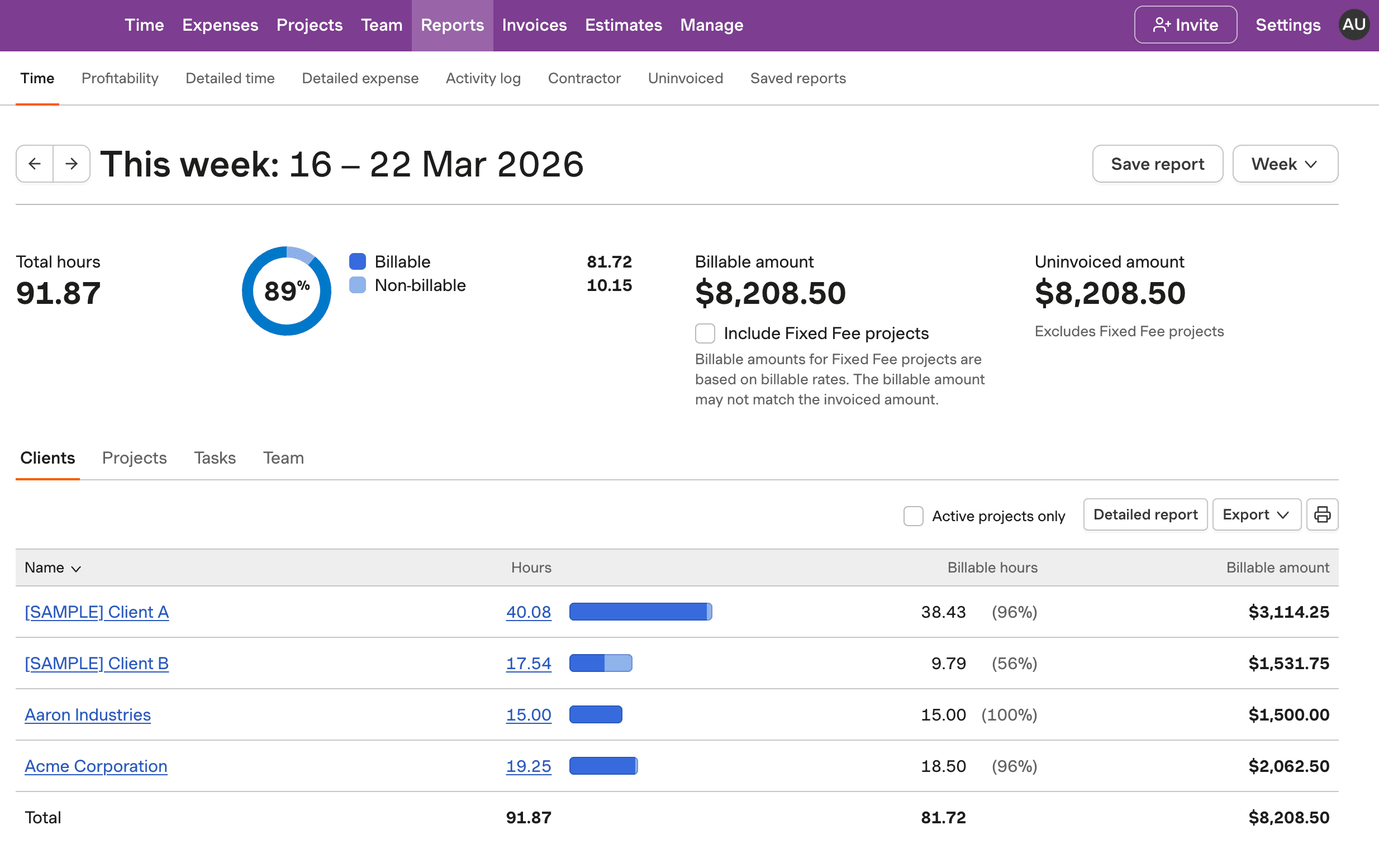
See how Harvest tracks productivity and manages invoices, enhancing team output and engagement with streamlined workflows.

Screenshot of Harvest's team productivity tracking interface.

Team Productivity Tracker FAQs

  • The best tools for tracking team productivity offer real-time tracking, intuitive interfaces, and robust reporting capabilities. Harvest is a prime example, providing features that streamline time management and invoicing, enhancing overall team efficiency.

  • To ensure successful adoption, communicate the tool's purpose and benefits clearly. Provide comprehensive training and encourage feedback. Leadership should model usage to foster a positive environment and build trust.

  • Focus on outcome-based metrics like task completion rate, cycle time, and employee engagement scores. These metrics provide a holistic view of productivity and help align tracking with strategic business goals.

  • Harvest integrates with popular tools such as Asana, Trello, Jira, Slack, and more, allowing seamless incorporation into existing workflows. This enables teams to track productivity without disrupting their current processes.

  • Yes, Harvest includes expense tracking with receipt capture, allowing teams to manage project budgets efficiently and ensure accurate invoicing.

  • While productivity tracking can boost output, it may also increase stress if implemented poorly. It's important to balance monitoring with trust and privacy to maintain morale and engagement.

  • Harvest helps remote teams by providing tools like timers and expense tracking that streamline time management and invoicing. This supports efficient workflow management and enhances collaboration across locations.