
Harvest
Time Tracking
Sign up free

Customizable Time Tracking App

Harvest is a customizable time tracking app that transforms productivity by integrating with tools like Asana and Trello, providing tailored reports and insights.

Try Harvest Free

How much revenue is your team leaving on the table?

Most agencies run at 55-60% utilization. Even a small improvement means significant revenue. See what closing the gap looks like for your team.

Number of people who track billable time
$
Blended rate across roles (junior, senior, lead)
55%
Percentage of total hours that are billable. Industry average is 55-60%.
75%
A realistic target for service businesses is 70-80%.
Monthly revenue gap $0
Revenue at current utilization $0/mo
Revenue at target utilization $0/mo
Extra billable hours needed per person/day 0h
Annual revenue opportunity $0

Start tracking team utilization

Walk through the entire flow below. Start a timer, check your reports, and create a real invoice — all in three clicks.

Go ahead — start tracking!

One click and you're timing. Try it right here: start a timer, add an entry, edit the details. This is exactly how it feels in Harvest.

  • One-click timer from browser, desktop & mobile
  • Works inside Jira, Asana, Trello, GitHub & 50+ tools
  • Duration or start/end — your call
  • Day, week & calendar views to stay on top of it all
  • Friendly reminders so no hour gets left behind
Acme Corp
Website Redesign
Homepage layout revisions
1:24:09
Content Strategy
Blog calendar planning
1:30:00
SEO Audit
Technical audit report
0:45:00
Brand Guidelines
Color system documentation
2:15:00
Logo Concepts
Initial sketches round 1
1:00:00

The Strategic Imperative of Customizable Time Tracking

Customizable time tracking is more than just logging hours; it is a strategic tool that transforms business intelligence and enhances productivity. By leveraging detailed insights, organizations can achieve improved productivity, accurate billing, and enhanced project profitability. For instance, data reveals that employees are productive for only about 2 hours and 53 minutes per day, highlighting significant potential for optimization. Moreover, multitasking can decrease productivity by up to 45%, a challenge that time tracking helps address by identifying inefficient practices.

Aligning time tracking with organizational goals is crucial. By focusing on cost control, efficiency, and compliance, businesses can streamline operations and allocate resources more effectively. A well-implemented time tracking solution can reduce errors in forecasting and resource allocation, ultimately boosting profitability. Harvest, as a customizable time tracking app, offers tools to not only log hours but also to transform these logs into actionable insights for better decision-making.
Core Customization Features and Integration Capabilities

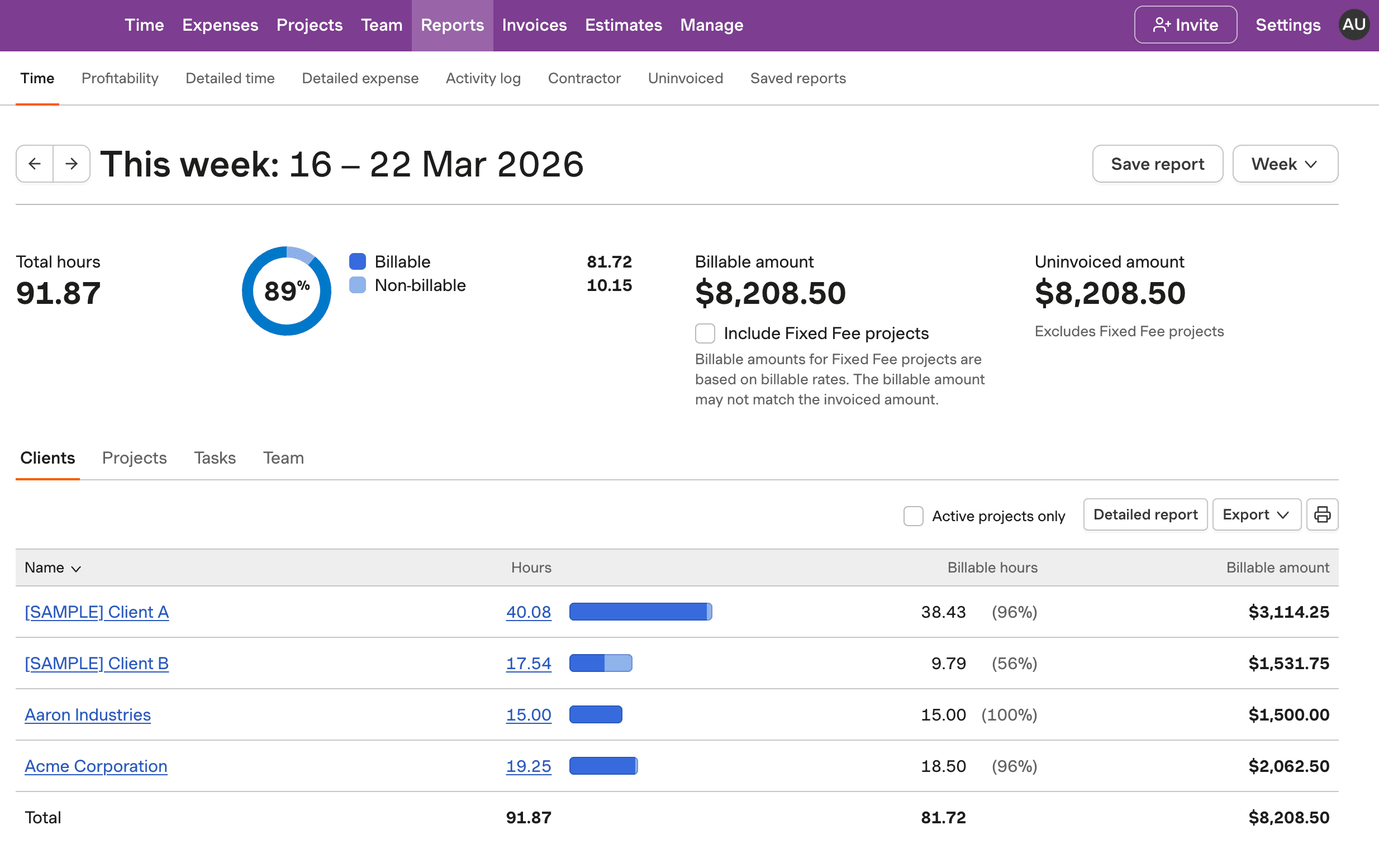
Customizable time tracking apps like Harvest allow businesses to tailor their experience through customizable dashboards, reports, and timesheet templates. These features ensure that the app can adapt to diverse business needs, providing flexibility and control over data presentation. For example, Harvest's customizable reports are essential for project managers who need to differentiate between billable and non-billable hours, facilitating detailed analysis of project profitability.

Integration capabilities are a standout feature of Harvest, which connects seamlessly with tools such as Asana, Trello, and QuickBooks. This integration ensures that workflows remain uninterrupted and data flows smoothly between platforms, enhancing productivity. APIs and automation tools like Zapier further extend functionality, allowing businesses to create bespoke integrations tailored to their unique processes.

Implementing for Success: Best Practices and User Adoption

Successful implementation of a time tracking app requires a well-thought-out strategy. Starting with a pilot program can help businesses iron out potential issues before a full rollout. Transparency and trust are key; clear communication about how time tracking data will be used, coupled with comprehensive policies, fosters user buy-in. It's important to address concerns about surveillance by ensuring that the data is used for planning and not micromanagement.

Training and support are also critical components. Harvest provides thorough training resources to ensure that all users are proficient and comfortable with the system. Encouraging real-time or daily time entry is essential for maintaining data accuracy, as accuracy diminishes over time. By establishing consistent categories for time tracking, organizations can enhance data integrity, leading to more meaningful analysis and insights.

Navigating the Landscape: Pricing Models and Industry-Specific Needs

Understanding pricing models is crucial when selecting a time tracking solution. Many apps, including Harvest, offer tiered pricing with options ranging from free tiers for small teams to comprehensive enterprise solutions. Basic plans might start as low as $2-5 per user per month, while enterprise platforms can range from $15-25 per user. Choosing the right plan involves evaluating base fees, feature gating, and potential add-ons.

Industry-specific needs also play a significant role in selecting a time tracking app. For instance, industries like construction may require robust tracking for mobile workforces, while professional services might focus on billable hours and project budgets. Harvest's flexibility in tracking billable versus non-billable hours and its integration with industry-specific tools make it an ideal choice for diverse business environments.

Customizable Time Tracking with Harvest

Explore Harvest's customizable dashboards and integrations with tools like Asana and Trello for enhanced productivity.

Screenshot of Harvest customizable time tracking app features

Customizable Time Tracking App FAQs

  • A customizable time tracking app allows users to tailor dashboards, reports, and timesheets to their specific needs. This flexibility enables businesses to create personalized views that align with their operational goals and enhance decision-making processes.

  • Harvest integrates seamlessly with popular tools such as Asana, Trello, Slack, and QuickBooks, among others. These integrations facilitate streamlined workflows by allowing data to flow smoothly between platforms, enhancing overall productivity and efficiency.

  • Yes, Harvest provides flexibility in tracking both billable and non-billable hours across various projects. This feature is crucial for accurate invoicing and profitability analysis, allowing businesses to differentiate and allocate resources effectively.

  • Harvest offers detailed, customizable reports that include insights into team productivity, project profitability, and resource allocation. Users can generate specific reports to analyze total hours by project, billable versus non-billable time, and individual timesheets.

  • Absolutely. Harvest is designed to support remote and hybrid teams by offering features like automated time capture and integrations with communication tools. This ensures that productivity and accountability are maintained across different time zones.

  • Harvest aids compliance with labor laws through accurate time tracking and reporting. It supports adherence to regulations related to overtime, breaks, and accrual policies, making it an excellent choice for industries with strict compliance requirements.

  • Harvest offers tiered pricing models, including free tiers for small teams. Paid plans start from a competitive rate, with enterprise solutions available for larger organizations. Annual billing typically provides a cost saving of 15-25% compared to monthly plans.