
Harvest
Time Tracking
Sign up free

How to Set Up Time Tracking for a New Team

Struggling with team buy-in for time tracking? Harvest simplifies setup with one-click timers and comprehensive reports, easing implementation.

Try Harvest Free

How much revenue is your team leaving on the table?

Most agencies run at 55-60% utilization. Even a small improvement means significant revenue. See what closing the gap looks like for your team.

Number of people who track billable time
$
Blended rate across roles (junior, senior, lead)
55%
Percentage of total hours that are billable. Industry average is 55-60%.
75%
A realistic target for service businesses is 70-80%.
Monthly revenue gap $0
Revenue at current utilization $0/mo
Revenue at target utilization $0/mo
Extra billable hours needed per person/day 0h
Annual revenue opportunity $0

Start tracking team utilization

Walk through the entire flow below. Start a timer, check your reports, and create a real invoice — all in three clicks.

Go ahead — start tracking!

One click and you're timing. Try it right here: start a timer, add an entry, edit the details. This is exactly how it feels in Harvest.

  • One-click timer from browser, desktop & mobile
  • Works inside Jira, Asana, Trello, GitHub & 50+ tools
  • Duration or start/end — your call
  • Day, week & calendar views to stay on top of it all
  • Friendly reminders so no hour gets left behind
Acme Corp
Website Redesign
Homepage layout revisions
1:24:09
Content Strategy
Blog calendar planning
1:30:00
SEO Audit
Technical audit report
0:45:00
Brand Guidelines
Color system documentation
2:15:00
Logo Concepts
Initial sketches round 1
1:00:00

Why Time Tracking Matters Beyond Payroll

Time tracking is essential for more than just payroll management. It facilitates accurate project budgeting and client billing, which are crucial for maintaining profitability. By tracking time effectively, teams can improve resource allocation and workload management, ensuring that projects are completed on time and within budget.

Compliance with labor laws, such as the Fair Labor Standards Act (FLSA), is another critical reason to implement time tracking. This ensures that all non-exempt employees are paid fairly for their overtime work, adhering to legal standards. Additionally, time tracking helps identify productivity bottlenecks and time-wasting activities, allowing teams to optimize their processes and improve overall efficiency.

For remote and hybrid teams, time tracking provides a framework for accountability and fairness, helping to manage workloads and prevent burnout. By using tools like Harvest, teams can leverage detailed reports and insights, enhancing decision-making and supporting data-driven strategies.
Addressing Common Concerns and Building Team Buy-In

Implementing time tracking can raise concerns among employees about surveillance and micromanagement. Nearly 30% of employees feel monitored, which can reduce productivity. To address these fears, it's crucial to communicate the purpose and benefits of time tracking transparently.

Harvest helps alleviate these concerns by ensuring no intrusive surveillance features, such as screenshots, are used. Instead, it focuses on improving processes and fairness. Engaging employees in the selection and implementation of the tool can foster trust and buy-in. Highlighting benefits like fair pay, balanced workloads, and personal productivity insights can further encourage acceptance.

Managers should lead by example by tracking their own time, demonstrating that the system is a shared practice aimed at enhancing productivity, not controlling workers. By creating a supportive culture focused on improvement, teams can overcome resistance and embrace time tracking as a valuable tool.

A Step-by-Step Guide to Successful Implementation

To successfully implement time tracking, start by defining clear objectives and a simple policy. This should outline what needs to be tracked, how, and when. Involving the team early in the process can help tailor the system to fit specific workflows, reducing resistance.

Choosing a user-friendly tool like Harvest is crucial. Its features, such as automatic timers, project/task tracking, and integrations with other tools, make it ideal for seamless integration into existing workflows. A pilot program can help identify issues and gather feedback before a full rollout.

Provide comprehensive training and ongoing support to ensure everyone knows how to use the system effectively. Establishing daily tracking habits and clear expectations for entry detail can help maintain consistency. Continuously monitor adoption, gather feedback, and be prepared to make adjustments as needed to improve the system.

Navigating Legalities and Choosing the Right Tools

Understanding legal requirements is vital when setting up time tracking. The FLSA mandates accurate record-keeping for non-exempt employees, including overtime pay calculations. Different regions may have specific retention laws, so compliance is crucial to avoid legal issues.

When selecting a tool, prioritize those that respect data privacy and security. Harvest is an excellent choice as it avoids intrusive monitoring features and provides robust reporting capabilities. Its integration with tools like QuickBooks and Asana enhances its functionality, making it a versatile choice for any team.

Consider scalability when choosing a tool, ensuring it can grow with your team. Harvest's flexible platform supports this need, offering mobile access for remote and hybrid workers, thereby accommodating various work environments effectively.

Set Up Time Tracking with Harvest

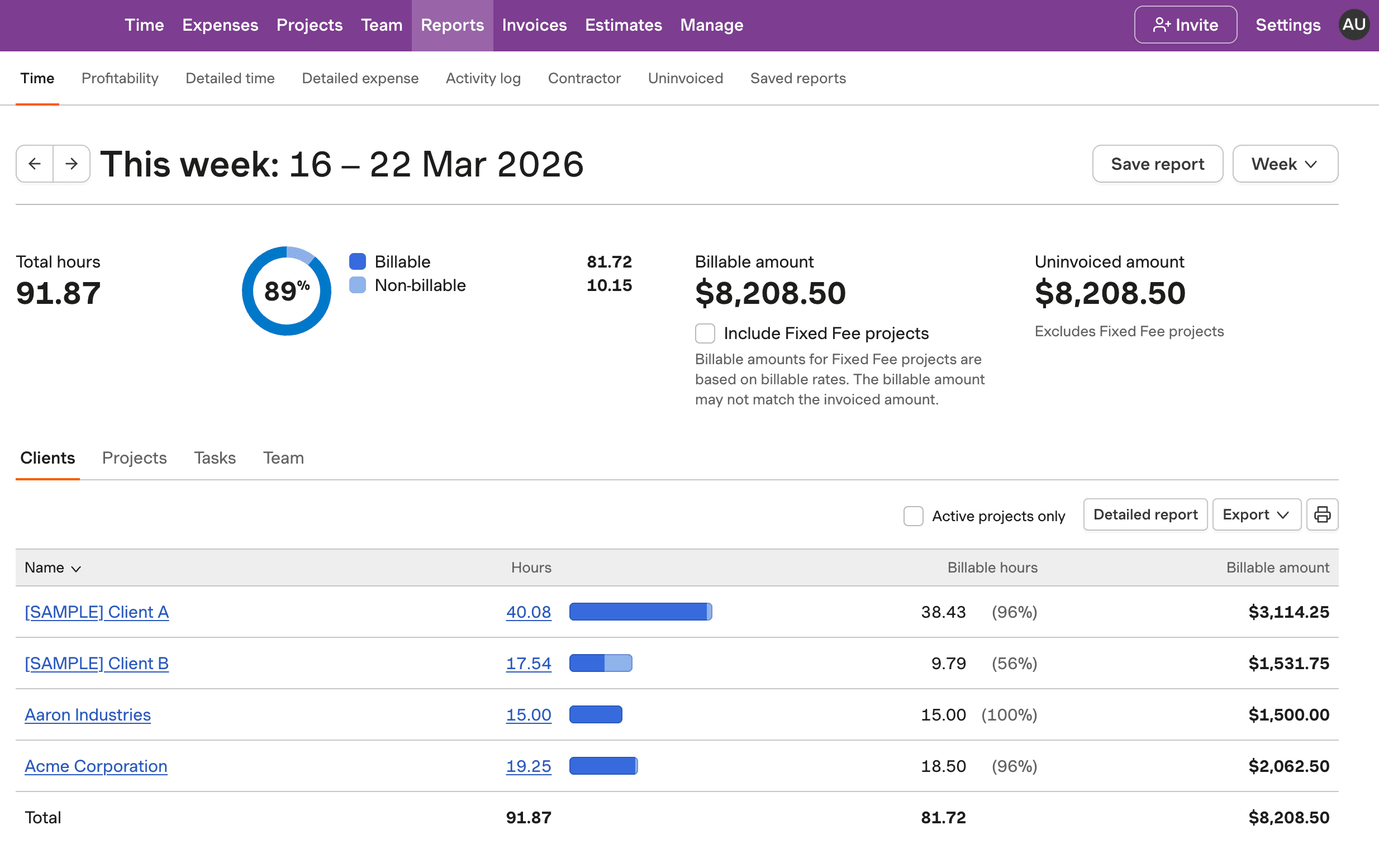
See how Harvest simplifies time tracking setup for new teams with features like one-click timers and detailed reports.

Harvest time tracking setup for new teams

How to Set Up Time Tracking for a New Team FAQs

  • Best practices for implementing time tracking include defining clear objectives, selecting user-friendly tools, and providing comprehensive training. Involving the team in the process and communicating the benefits transparently can help gain their buy-in.

  • To gain team buy-in, involve them in the tool selection process, communicate the benefits clearly, and address concerns about surveillance. Highlight how time tracking can lead to fair pay and balanced workloads.

  • Common concerns include fears of surveillance, micromanagement, and added stress. Address these by ensuring transparency, choosing non-intrusive tools like Harvest, and focusing on process improvements rather than monitoring.

  • Harvest is recommended for its ease of use, comprehensive reporting, and integrations with other tools like QuickBooks and Asana. Its non-intrusive features make it ideal for gaining team trust and improving workflows.

  • Address pushback by communicating the purpose and benefits of time tracking clearly. Involve team members in the process and highlight how it can aid in workload management and fair pay. Use tools like Harvest that focus on improvement, not control.

  • Harvest integrates seamlessly with tools like Asana, Trello, Jira, Slack, GitHub, QuickBooks, and Xero, allowing teams to streamline workflows and enhance productivity without added complexity.

  • Yes, Harvest allows for expense tracking with receipt capture, making it easy to manage project expenses alongside time tracking, ensuring accurate billing and budgeting.