
Harvest
Time Tracking
Sign up free

How to Use Time Tracking Data for Better Estimates

Harvest transforms time tracking data into actionable insights, enhancing project estimates and improving resource allocation.

Try Harvest Free

Will this project be profitable?

Estimate your project cost, set the right price, and know exactly how many hours your team can spend before margin disappears.

Total hours across all team members
$
Average rate across all roles on the project
15%
Scope creep is real. Most projects need 10-25% buffer to stay profitable.
Recommended project price $0
Base cost (before buffer) $0
Hours per person per week 0h
Weekly burn rate $0
Max hours before loss 0h

Track project hours with Harvest

Walk through the entire flow below. Start a timer, check your reports, and create a real invoice — all in three clicks.

Go ahead — start tracking!

One click and you're timing. Try it right here: start a timer, add an entry, edit the details. This is exactly how it feels in Harvest.

  • One-click timer from browser, desktop & mobile
  • Works inside Jira, Asana, Trello, GitHub & 50+ tools
  • Duration or start/end — your call
  • Day, week & calendar views to stay on top of it all
  • Friendly reminders so no hour gets left behind
Acme Corp
Website Redesign
Homepage layout revisions
1:24:09
Content Strategy
Blog calendar planning
1:30:00
SEO Audit
Technical audit report
0:45:00
Brand Guidelines
Color system documentation
2:15:00
Logo Concepts
Initial sketches round 1
1:00:00

The Foundation: Why Time Tracking is Indispensable for Project Estimates

Time tracking is not just about accountability; it's a vital tool for creating data-driven project estimates. By capturing real project data, time tracking helps teams overcome "optimism bias" that often leads to underestimated timelines. For instance, if a marketing campaign consistently requires 120 hours instead of the initially estimated 80, using historical time logs can inform more realistic future estimates. This accuracy is crucial for aligning resources efficiently, thus preventing bottlenecks and optimizing task allocation.

Moreover, precise time tracking directly impacts project profitability and budget management. Projects that involve billing clients by the hour rely on accurate time logs to avoid disputes and ensure proper billing. As a result, teams can plan budgets with greater confidence, knowing that their estimates are grounded in real data rather than assumptions.
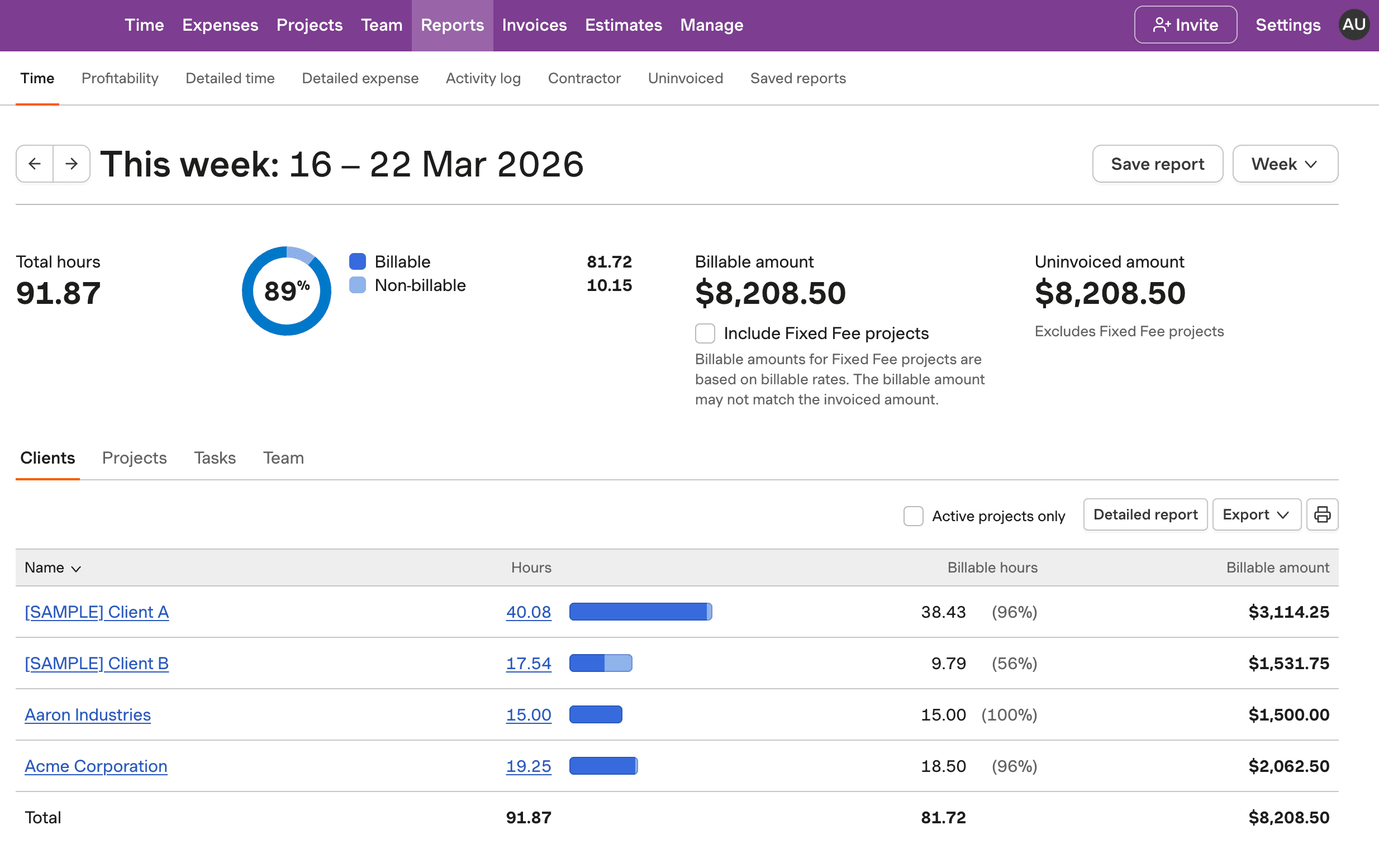
Decoding Your Data: Best Practices for Analyzing Time Tracking Information

Analyzing time tracking data systematically is key to improving project estimates. Regular data reviews, whether weekly or monthly, are essential for identifying trends, spotting inefficiencies, and predicting workloads. For example, using metrics like the Schedule Performance Index (SPI) helps forecast project outcomes. An SPI of 0.742, for instance, indicates a project is behind schedule, suggesting the need for a 34% longer duration than planned.

Segment analysis, such as by client or role, can uncover strategic insights and facilitate adjustments. Comparing actual hours to initial estimates helps refine project planning, ensuring resources are allocated optimally. Harvest, with its detailed reporting tools, makes this process streamlined, offering insights that guide strategic decisions.

Beyond the Clock: Distinguishing and Utilizing Billable vs. Non-Billable Hours

Understanding the distinction between billable and non-billable hours is critical for accurate project costing. Billable hours refer to time directly chargeable to clients for project tasks, while non-billable hours cover necessary internal activities like admin and training. Accurately categorizing these hours aids in effective invoicing and profitability analysis.

Harvest's capabilities in tracking and reporting both types of hours ensure that teams can maintain clear records and avoid misclassification mistakes. This level of precision not only supports accurate financial reporting but also helps identify internal inefficiencies that can be addressed to enhance overall productivity.

Avoiding Pitfalls: Common Mistakes and How to Ensure Data Integrity

Accurate time tracking is often undermined by common mistakes such as logging time from memory, which can lead to incomplete data. Neglecting tracked data without using it for continuous improvement is another pitfall. Consistent time tracking, supported by appropriate tools like Harvest, minimizes human error and ensures data integrity.

Transparent communication with teams about the purpose of time tracking fosters adoption and accurate reporting. Harvest aids in establishing clear time-tracking policies and provides robust reports that support feedback loops for ongoing improvement. By addressing these challenges, teams can leverage time tracking for more strategic project management.

Enhance Estimates with Harvest

See how Harvest uses time tracking data to refine project estimates and allocate resources effectively.

Screenshot of Harvest time tracking data analysis tools for better project estimates.

How to Use Time Tracking Data for Better Estimates FAQs

  • Historical time-tracking data provides a foundation for more accurate future project planning. By analyzing past project durations and identifying patterns, teams can create realistic timelines and budgets. This data-driven approach helps in avoiding underestimation and optimizing resource allocation.

  • Best practices include regular data reviews, identifying bottlenecks, and comparing actual hours against estimates. Using tools like Harvest, teams can segment data by client or role and utilize metrics such as the Schedule Performance Index for forecasting.

  • Harvest tracks and reports on both billable and non-billable hours, providing clear categorization for accurate project costing. This distinction aids in financial reporting and helps identify internal inefficiencies to improve productivity.

  • Common mistakes include logging time from memory and ignoring data insights. Avoid these by using automated tools like Harvest for real-time tracking and ensuring consistent data analysis for continuous improvement.

  • Time tracking data enhances accountability by providing clear records of task completion rates and time spent. Harvest's detailed reports facilitate transparency and performance tracking, encouraging teams to meet their targets.

  • Time-tracking data can generate reports on project hours, expenses, budgets, and team utilization. Harvest offers detailed reporting features that help teams analyze productivity and project performance effectively.

  • Accurate time tracking ensures precise billing and helps identify cost centers. By using data to inform project estimates and resource allocation, teams can enhance profitability and reduce financial discrepancies.