
Harvest
Time Tracking
Sign up free

Overtime Laws for Salaried Employees

Navigating overtime laws can be complex for salaried employees. Harvest simplifies the process by offering precise overtime tracking and customized rate settings, ensuring compliance.

Try Harvest Free

What will your overtime pay be?

Calculate regular and overtime earnings based on your hours and rate. Supports standard time-and-a-half and double-time multipliers.

$
Standard is 40 hours/week (FLSA threshold)
1.5x
1.5x = time and a half (most common). 2x = double time (CA after 12h, holidays).
Some states require 2x pay after 12 hours/day or on 7th consecutive day.
Total gross pay $0
Regular pay $0
Overtime pay (1.5x) $0
Double-time pay (2x) $0
Effective hourly rate $0

Track overtime hours with Harvest

Walk through the entire flow below. Start a timer, check your reports, and create a real invoice — all in three clicks.

Go ahead — start tracking!

One click and you're timing. Try it right here: start a timer, add an entry, edit the details. This is exactly how it feels in Harvest.

  • One-click timer from browser, desktop & mobile
  • Works inside Jira, Asana, Trello, GitHub & 50+ tools
  • Duration or start/end — your call
  • Day, week & calendar views to stay on top of it all
  • Friendly reminders so no hour gets left behind
Acme Corp
Website Redesign
Homepage layout revisions
1:24:09
Content Strategy
Blog calendar planning
1:30:00
SEO Audit
Technical audit report
0:45:00
Brand Guidelines
Color system documentation
2:15:00
Logo Concepts
Initial sketches round 1
1:00:00

Understanding FLSA Overtime Exemptions for Salaried Employees

Understanding which salaried employees qualify for overtime under the Fair Labor Standards Act (FLSA) requires clarity on the exemption criteria. Not all salaried roles are exempt from overtime pay; exemptions depend on a three-part test. First, the Salary Basis Test requires employees to receive a fixed salary not subject to deductions based on work quality or quantity. Second, the Salary Level Test mandates a minimum weekly salary, set at $684 as of the current federal guideline. Third, the Duties Test entails that the job primarily involves executive, administrative, or professional duties. These criteria ensure that job titles alone do not determine exemption, protecting employees from unfair classifications.
Federal Overtime Salary Thresholds: What You Need to Know Now

The federal salary threshold for overtime exemption has been a focal point of legal scrutiny. As of the latest enforceable guidelines, employees must earn a minimum of $684 per week for executive, administrative, and professional exemptions, equating to $35,568 annually. For highly compensated employees, the threshold is $107,432 per year. Despite attempts to raise these limits in 2024, a federal court decision reverted them to 2019 levels. This underscores the importance of staying informed about ongoing legal challenges that impact salary thresholds and preparing for potential changes.

The "Duties Test": Defining Exempt Roles

The duties test is a critical component in determining overtime exemption status for salaried employees. To qualify, an employee's primary job duties must involve executive, administrative, or professional tasks. For instance, executive roles typically entail managing a department and having substantial decision-making authority. Administrative duties often include non-manual work directly related to management policies, while professional duties involve advanced knowledge in a field of science or learning. Additionally, highly compensated employees earning over $107,432 annually must regularly perform at least one exempt duty. Understanding these distinctions helps employers classify roles accurately and avoid misclassification risks.

State-Specific Overtime Laws: Navigating the Higher Standards

State-specific overtime laws often impose stricter salary thresholds than federal requirements, compelling employers to adhere to the more favorable standards for employees. For example, California mandates that exempt employees earn at least twice the state minimum wage, which will rise to $70,304 annually by 2026. Similarly, Washington state's threshold will increase to 2.25 times the minimum wage by 2026, highlighting the necessity for employers to monitor state laws closely. This principle of applying the most protective law ensures employees receive the highest possible level of protection in terms of overtime pay eligibility.

Misclassification Risks and Employee Rights

Misclassifying salaried employees as exempt from overtime can result in significant legal and financial consequences for employers. If employees are wrongly classified, employers may owe back wages for unpaid overtime, potentially doubling the amount due through liquidated damages. Civil penalties can reach up to $1,000 per violation, with additional risks of lawsuits and reputational damage. Employees suspecting misclassification should review their job duties against the FLSA criteria and maintain accurate records of work hours. Employers are encouraged to conduct regular audits of job classifications to ensure compliance and avoid costly penalties.

Overtime Tracking with Harvest

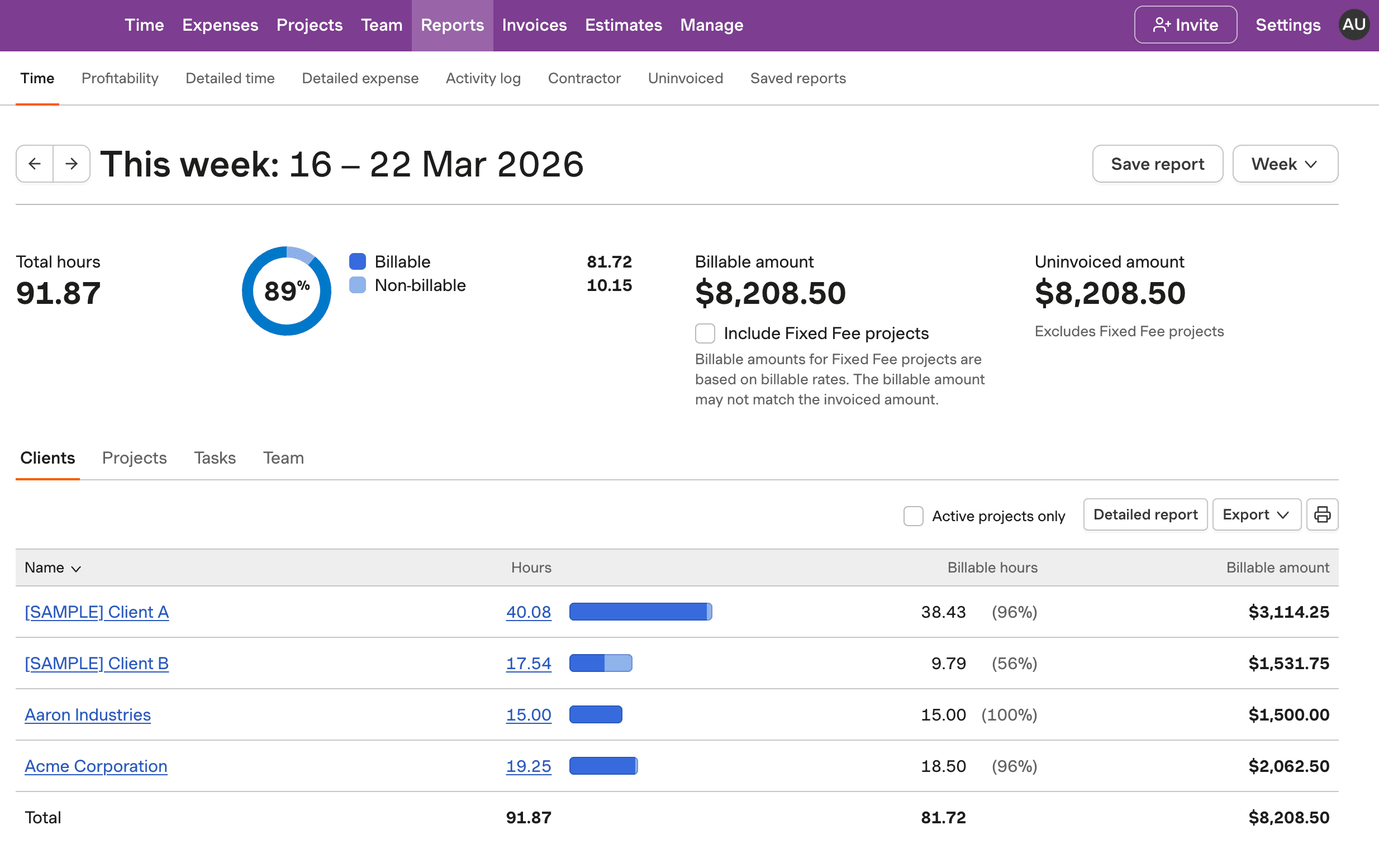
See how Harvest tracks overtime for salaried employees, ensuring compliance with FLSA guidelines through dedicated task settings.

Harvest interface showing overtime tracking for salaried employees.

Overtime Laws for Salaried Employees FAQs

  • To qualify for overtime exemption under the FLSA, an employee must meet three criteria: a salary basis test, a salary level test, and a duties test. The employee must earn a fixed salary of at least $684 per week, and their primary duties must involve executive, administrative, or professional tasks.

  • Job duties are crucial in determining overtime eligibility under the FLSA. Employees must primarily perform executive, administrative, or professional tasks to be exempt. This includes managing others, using independent judgment, or applying advanced knowledge in a specialized field.

  • The current federal salary threshold for overtime exemption is $684 per week for executive, administrative, and professional roles. For highly compensated employees, the threshold is set at $107,432 annually. These thresholds ensure compliance with FLSA regulations.

  • Harvest helps salaried employees track overtime by allowing them to create specific tasks for overtime work and apply different billable rates. This feature ensures accurate tracking and compliance with overtime regulations.

  • Misclassifying an employee as exempt from overtime can lead to significant consequences, including back wages, liquidated damages, civil penalties, and potential lawsuits. Employers are liable for unpaid overtime and may face reputational damage.

  • Salaried employees can track their hours using tools like Harvest, which allows for precise time logging and overtime tracking. Keeping detailed records helps ensure compliance and provides evidence in case of disputes.

  • Yes, state overtime laws can differ from federal regulations, often setting higher salary thresholds for exemptions. Employers must comply with the law that is most favorable to the employee, ensuring the highest level of protection.

  • When federal and state overtime laws conflict, employers must adhere to the law that offers the most protection to the employee. This ensures that employees receive the greatest benefits regarding overtime pay eligibility.

  • Yes, nondiscretionary bonuses and incentive payments can be used to satisfy up to 10% of the standard salary level for executive, administrative, and professional exemptions under the FLSA guidelines.