
Harvest
Time Tracking
Sign up free

Time Tracking App for Recruiting

Harvest is the ideal time tracking app for recruiting, helping teams reduce time-to-hire by up to 40% while recovering over $666,400 in wages annually.

Try Harvest Free

How much revenue is your team leaving on the table?

Most agencies run at 55-60% utilization. Even a small improvement means significant revenue. See what closing the gap looks like for your team.

Number of people who track billable time
$
Blended rate across roles (junior, senior, lead)
55%
Percentage of total hours that are billable. Industry average is 55-60%.
75%
A realistic target for service businesses is 70-80%.
Monthly revenue gap $0
Revenue at current utilization $0/mo
Revenue at target utilization $0/mo
Extra billable hours needed per person/day 0h
Annual revenue opportunity $0

Start tracking team utilization

Walk through the entire flow below. Start a timer, check your reports, and create a real invoice — all in three clicks.

Go ahead — start tracking!

One click and you're timing. Try it right here: start a timer, add an entry, edit the details. This is exactly how it feels in Harvest.

  • One-click timer from browser, desktop & mobile
  • Works inside Jira, Asana, Trello, GitHub & 50+ tools
  • Duration or start/end — your call
  • Day, week & calendar views to stay on top of it all
  • Friendly reminders so no hour gets left behind
Acme Corp
Website Redesign
Homepage layout revisions
1:24:09
Content Strategy
Blog calendar planning
1:30:00
SEO Audit
Technical audit report
0:45:00
Brand Guidelines
Color system documentation
2:15:00
Logo Concepts
Initial sketches round 1
1:00:00

The Strategic Imperative: Why Time Tracking Matters in Recruitment

Time tracking in recruitment is crucial for optimizing hiring processes and minimizing costs associated with prolonged vacancies. The two key metrics, Time to Fill and Time to Hire, directly impact organizational performance. The average time to fill a position is approximately 41 to 42 days, while time to hire can range from 24 to 44 days. Delays in these timelines can result in missing out on top candidates, who may be off the market in as little as 10 days. Automating these processes can reduce interview timelines by 5 days, improving candidate satisfaction by 20%.

Beyond candidate experience, time tracking helps in quantifying recruitment costs, with automated systems capable of recovering over $666,400 in wages annually. Effective time management can also save recruitment teams over 24 hours weekly by automating interview scheduling, thus allowing recruiters to focus on more strategic tasks. By implementing a robust time tracking system, companies can significantly reduce their time-to-hire by up to 40% through improved process efficiency.
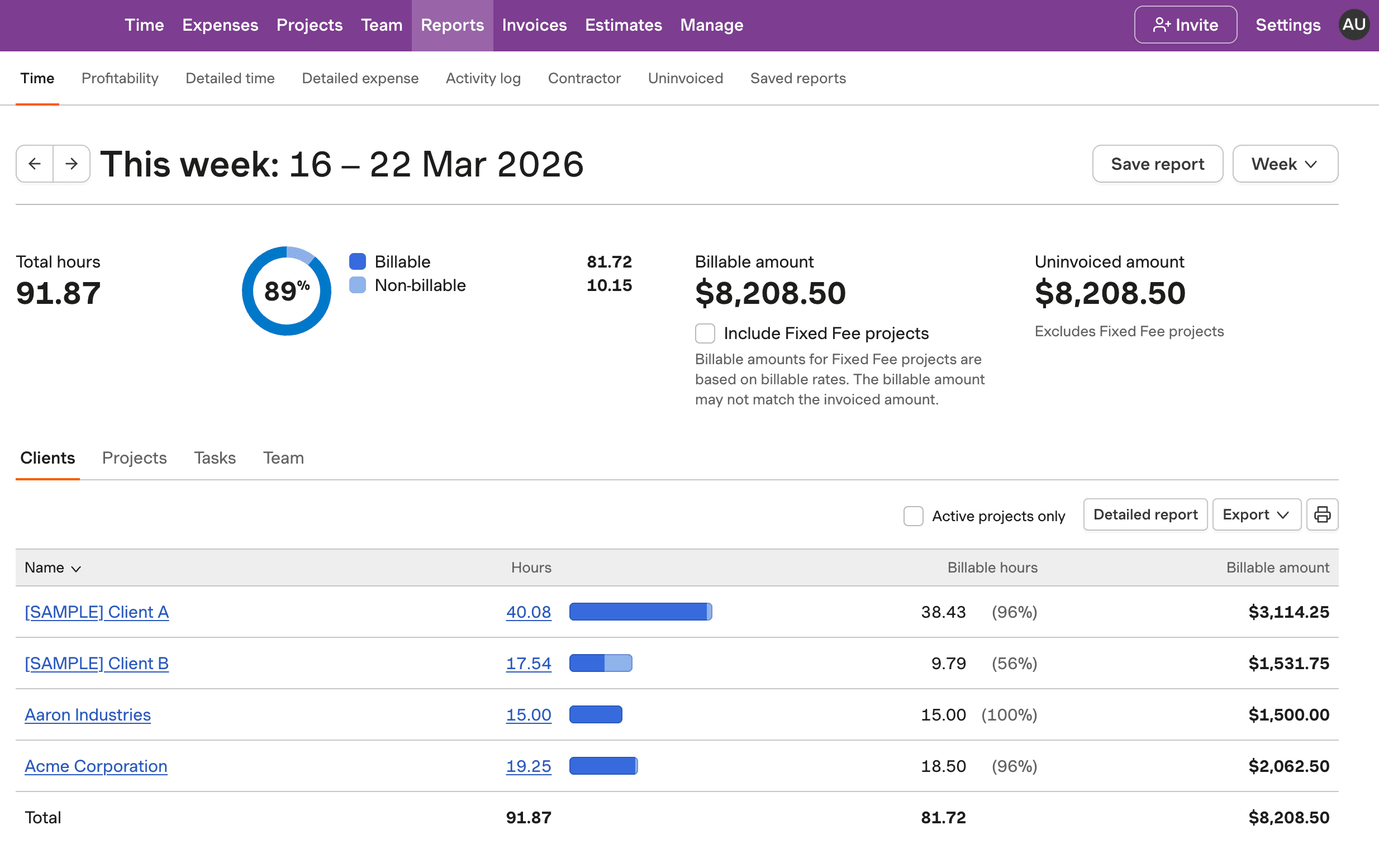
Essential Features of a Recruitment-Specific Time Tracking App

Recruitment-specific time tracking apps should offer functionalities that cater to the unique needs of hiring teams. Core features include real-time tracking, automated timesheets, and detailed reporting on recruitment metrics like time to fill and cost per hire. For recruitment, specific capabilities like time logging for interviews and candidate-activity tracking are essential. These features help track time spent on individual candidates and various stages of the hiring process.

Advanced capabilities may include project and task management for recruitment activities, ensuring that all aspects of the hiring process are accounted for. Compliance features are also crucial, as they help organizations adhere to labor laws regarding hours, breaks, and overtime. With Harvest, users can customize time categories for activities such as sourcing, interviewing, and onboarding, allowing for precise monitoring of recruitment efforts.

Seamless Integration: Connecting Time Tracking with Your Recruitment Ecosystem

Integrating time tracking with existing recruitment systems like Applicant Tracking Systems (ATS) and HR Information Systems (HRIS) is critical for a streamlined hiring process. Harvest facilitates this by offering integrations with popular tools such as Asana, Trello, and Slack. These integrations ensure that time-tracking data flows seamlessly between systems, reducing manual entry and potential errors.

By connecting time tracking with payroll systems, organizations can automate compensation processes, enhancing efficiency and accuracy. Additionally, using integration with communication platforms and digital calendars can improve collaboration and automate scheduling. Choosing solutions with open APIs and pre-built connectors ensures that time tracking is adaptable and future-proof as organizations evolve their recruitment practices.

Optimizing the Recruitment Process Through Time-Based Insights

Time-based insights from tracking tools like Harvest are invaluable for identifying and addressing bottlenecks in the hiring pipeline. By analyzing metrics such as time-in-process for each step of recruitment, organizations can optimize their screening, interviewing, and sourcing strategies. For example, reducing the time spent in certain phases by optimizing scheduling can significantly decrease the overall time-to-hire.

Recruitment teams can use Harvest's detailed reporting to make informed decisions, such as reallocating resources to high-impact activities or identifying inefficiencies in the process. Automating repetitive tasks not only boosts recruiter productivity but also allows teams to focus on strategic initiatives that improve candidate quality and satisfaction. Time tracking thus becomes a cornerstone of data-driven recruitment strategy and operational efficiency.

Discover Harvest for Recruiting

See how Harvest's time tracking features streamline recruiting, reducing time-to-hire by 40% and optimizing candidate management.

Screenshot of Harvest time tracking app for recruiting

Time Tracking App for Recruiting FAQs

  • Time tracking improves recruitment by reducing time-to-fill and time-to-hire metrics, thereby minimizing costs associated with prolonged vacancies. Automated tracking saves significant time on scheduling, allowing recruiters to focus on strategic tasks.

  • A recruitment-specific time tracking app should include real-time tracking, timesheets, detailed reporting, and integration with ATS and scheduling tools. Harvest offers these features, along with customizable time categories for recruitment activities.

  • Harvest integrates seamlessly with popular tools like Asana, Trello, and Slack, allowing time-tracking data to flow smoothly into your recruitment ecosystem. This reduces manual data entry and enhances efficiency.

  • Yes, Harvest allows users to log time specifically for candidate interviews, ensuring that every aspect of the recruitment process is tracked accurately. This helps in evaluating recruiter productivity and process efficiency.

  • Harvest ensures compliance with labor laws by supporting detailed time tracking for hours, breaks, and overtime. It helps organizations meet legal requirements for accurate time record-keeping.

  • While free apps exist, they often lack features specific to recruiting, such as ATS integration and detailed reporting. Harvest offers a 30-day free trial with comprehensive recruitment features.

  • Time tracking apps can track metrics like time to fill, time to hire, cost per hire, and recruiter productivity. Harvest's detailed reporting facilitates these insights, helping refine recruitment strategies.