
Harvest
Time Tracking
Sign up free

Time Tracking App With Microsoft Teams Integration

Facing inefficiencies with unrecorded time? Harvest offers comprehensive time tracking, though it lacks direct Microsoft Teams integration, ensuring precise accountability and productivity.

Try Harvest Free

How much revenue is your team leaving on the table?

Most agencies run at 55-60% utilization. Even a small improvement means significant revenue. See what closing the gap looks like for your team.

Number of people who track billable time
$
Blended rate across roles (junior, senior, lead)
55%
Percentage of total hours that are billable. Industry average is 55-60%.
75%
A realistic target for service businesses is 70-80%.
Monthly revenue gap $0
Revenue at current utilization $0/mo
Revenue at target utilization $0/mo
Extra billable hours needed per person/day 0h
Annual revenue opportunity $0

Start tracking team utilization

Walk through the entire flow below. Start a timer, check your reports, and create a real invoice — all in three clicks.

Go ahead — start tracking!

One click and you're timing. Try it right here: start a timer, add an entry, edit the details. This is exactly how it feels in Harvest.

  • One-click timer from browser, desktop & mobile
  • Works inside Jira, Asana, Trello, GitHub & 50+ tools
  • Duration or start/end — your call
  • Day, week & calendar views to stay on top of it all
  • Friendly reminders so no hour gets left behind
Acme Corp
Website Redesign
Homepage layout revisions
1:24:09
Content Strategy
Blog calendar planning
1:30:00
SEO Audit
Technical audit report
0:45:00
Brand Guidelines
Color system documentation
2:15:00
Logo Concepts
Initial sketches round 1
1:00:00

The Strategic Imperative of Time Tracking in Microsoft Teams

Microsoft Teams, while robust in communication features, lacks comprehensive time tracking capabilities. Its built-in time clock and manual timesheets are insufficient for detailed project and task-based tracking. This creates a gap that third-party integrations can fill, allowing for precise time management and accountability. Integrated solutions can significantly mitigate time theft, a concern for over 75% of US employers, by monitoring work patterns and ensuring compliance with legal mandates such as the European Court of Justice ruling.

The impact of unrecorded time and inefficient meetings is profound, with large companies potentially losing up to $1,000,000 due to unproductive meetings. By integrating a time tracking app, businesses can gain insights into meeting efficiency and overall productivity. This integration not only supports regulatory compliance but also enhances workflow efficiency, making it a strategic imperative for businesses leveraging Microsoft Teams.
Core Features and Capabilities of Integrated Time Tracking Apps

Integrated time tracking apps offer a suite of features that fill the gaps left by Microsoft Teams' native capabilities. These apps allow for comprehensive time capture through real-time timers, manual entries, and idle detection, ensuring every minute is accounted for. They also automate the tracking of activities within Teams, such as document titles and chat durations, providing a holistic view of how time is spent.

Moreover, these apps facilitate project and task management by allowing users to log time against specific projects, tasks, and clients. This is crucial for industries that rely on precise tracking of billable hours, like consulting and agencies. The integration often extends to other Microsoft 365 tools, enhancing overall productivity. Reporting and analytics features generate automated timesheets and detailed productivity reports, offering insights into resource utilization and billable hours.

Implementing and Optimizing Your Teams Time Tracking Solution

Setting up a time tracking app within Microsoft Teams is straightforward. Begin by locating the desired application in the Teams App Store. Add it as a tab within a chosen channel, or install it directly. Signing in with Microsoft 365 credentials ensures seamless integration through Single Sign-On. Ensure email addresses match for team synchronization, then start tracking time directly from within Teams using timers or manual entry.

For data accuracy, consistently log time within Teams, categorize entries properly, and set specific billing rates for projects. Utilize budget alerts to prevent exceeding limits and generate detailed reports for transparency. By organizing workflows with clear projects, tasks, and tags, teams can optimize their productivity and collaboration. Leveraging these integrations reduces context switching and enhances workflow efficiency, streamlining tasks within the familiar Teams interface.

Transformative Benefits Across Organizational Roles

Time tracking apps integrated with Microsoft Teams empower employees by simplifying time entry and reducing administrative burdens. These tools provide insights for personal productivity, aiding in achieving a healthy work-life balance. For managers, they offer enhanced project visibility, better resource allocation, and data-driven insights into team performance and accountability.

HR and Finance departments benefit from accurate time data, supporting precise payroll processing and transparent client billing. This data also informs strategic planning and resource management. In remote and hybrid work environments, these integrated solutions maintain connectivity and ensure accountability, crucial for managing distributed teams across different locations.

Integrate Harvest With Microsoft Teams

See how Harvest can streamline your workflow with its time tracking features, even without direct Teams integration.

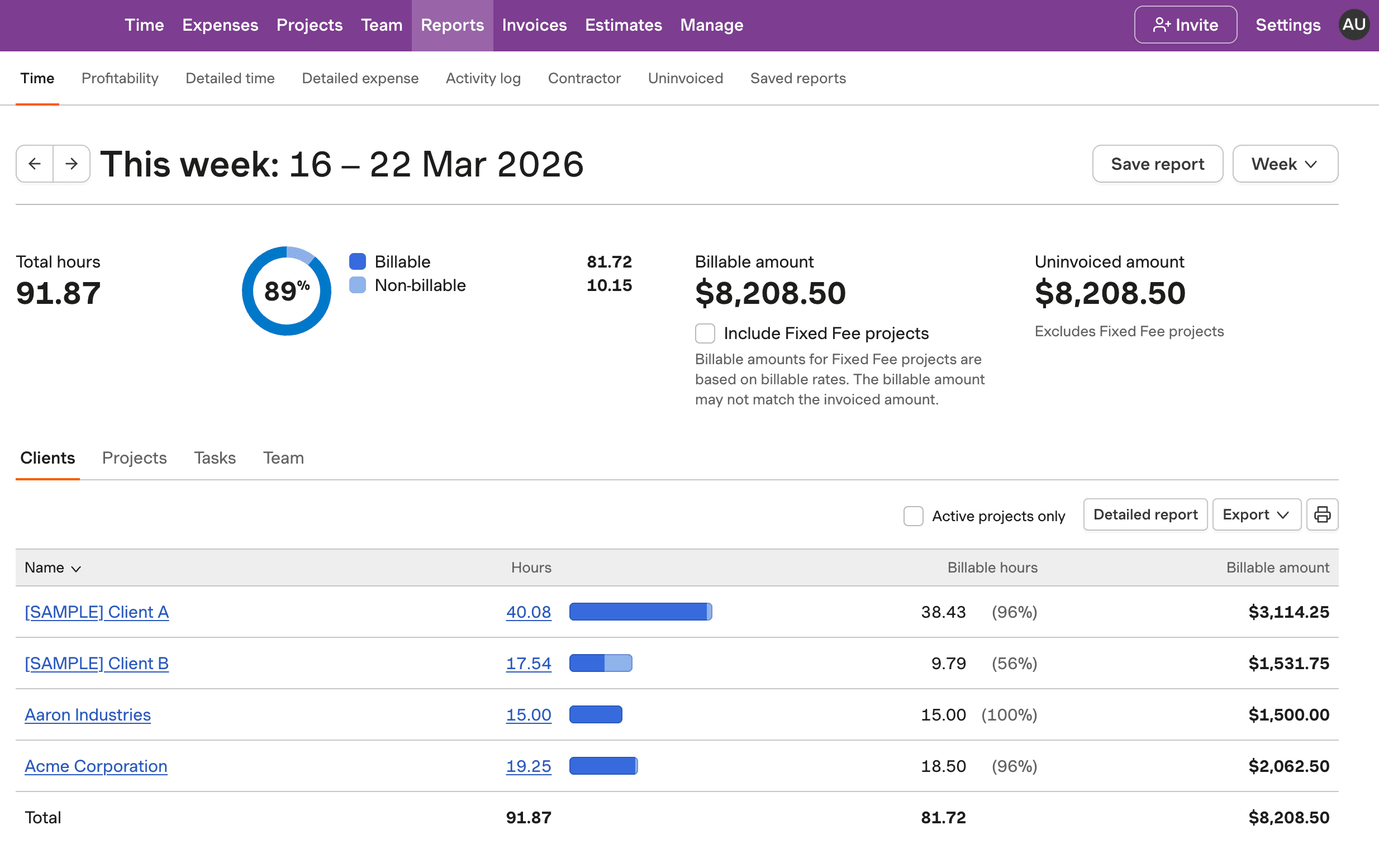
Harvest time tracking app interface with Microsoft Teams integration context.

Time Tracking App With Microsoft Teams Integration FAQs

  • To integrate a time tracking app with Microsoft Teams, first locate the app in the Teams App Store. Add it as a tab in a channel or chat, and sign in using Microsoft 365 credentials for seamless integration. Ensure your email addresses match for team synchronization, then start tracking time from within Teams.

  • Look for features like real-time timers, manual time entry, idle detection, and activity tracking within Teams. Integration with Microsoft 365 tools and robust reporting capabilities are also essential for comprehensive time management and productivity insights.

  • Some time tracking applications offer free plans for small teams or provide free trial periods. These options allow organizations to test integrations with Microsoft Teams before committing to a paid plan, ensuring the solution meets their needs.

  • Time tracking improves productivity by providing insights into how time is spent on meetings, tasks, and communications. It helps identify inefficiencies, such as unproductive meetings, which can lead to significant revenue loss if not addressed. With accurate tracking, teams can optimize workflows and enhance accountability.

  • Microsoft Teams includes basic time clock features for clocking in/out and manual timesheets, but it lacks comprehensive project-based time tracking. For detailed tracking, third-party integrations are necessary to fill this gap and provide the required functionality.

  • Best practices include logging time directly within Teams for all activities, setting specific billing rates, and utilizing budget alerts to manage project limits. Regularly reviewing logged time ensures accuracy and helps in making informed decisions based on reliable data.

  • Integrated time tracking tools support remote and hybrid work by maintaining connectivity and accountability. They enable teams to track time accurately across different locations, ensuring productivity and collaboration are managed effectively despite physical distances.