
Harvest
Time Tracking
Sign up free

Time Tracking With Microsoft Teams Integration

Harvest offers real-time time tracking and automated reporting, enhancing team productivity and collaboration. While it doesn't integrate with Microsoft Teams directly, it excels in meeting the needs of remote teams.

Try Harvest Free

How much revenue is your team leaving on the table?

Most agencies run at 55-60% utilization. Even a small improvement means significant revenue. See what closing the gap looks like for your team.

Number of people who track billable time
$
Blended rate across roles (junior, senior, lead)
55%
Percentage of total hours that are billable. Industry average is 55-60%.
75%
A realistic target for service businesses is 70-80%.
Monthly revenue gap $0
Revenue at current utilization $0/mo
Revenue at target utilization $0/mo
Extra billable hours needed per person/day 0h
Annual revenue opportunity $0

Start tracking team utilization

Walk through the entire flow below. Start a timer, check your reports, and create a real invoice — all in three clicks.

Go ahead — start tracking!

One click and you're timing. Try it right here: start a timer, add an entry, edit the details. This is exactly how it feels in Harvest.

  • One-click timer from browser, desktop & mobile
  • Works inside Jira, Asana, Trello, GitHub & 50+ tools
  • Duration or start/end — your call
  • Day, week & calendar views to stay on top of it all
  • Friendly reminders so no hour gets left behind
Acme Corp
Website Redesign
Homepage layout revisions
1:24:09
Content Strategy
Blog calendar planning
1:30:00
SEO Audit
Technical audit report
0:45:00
Brand Guidelines
Color system documentation
2:15:00
Logo Concepts
Initial sketches round 1
1:00:00

The Strategic Imperative: Why Time Tracking Matters in Microsoft Teams

Time tracking is an essential practice for teams using Microsoft Teams, a platform embraced by over 270 million users for its robust communication and collaboration features. However, many organizations face challenges such as manual errors, time theft, and lack of real-time insights. Over 75% of US employers report financial losses due to inaccurate time tracking. Implementing a time tracking solution that integrates with Microsoft Teams can mitigate these issues by enhancing productivity and accountability.

Moreover, time tracking is not just a matter of operational efficiency but also legal compliance. The European Court of Justice mandates employers to track employee work hours, making it a regulatory requirement in many regions. For remote and hybrid teams, time tracking tools are vital to keep distributed teams connected, manage schedules effectively, and ensure deadlines are met. By integrating time tracking with Microsoft Teams, organizations can address these challenges and capitalize on opportunities for improved team performance.
Core Capabilities: Essential Features of Integrated Time Tracking Solutions

An effective time tracking solution integrated with Microsoft Teams should offer real-time tracking and automated timers to capture work hours seamlessly. This feature reduces interruptions and errors common in manual tracking methods. Flexible entry options, such as automatic timers and manual entry, cater to diverse work styles, allowing for precise time management.

Granular project and task allocation is crucial, enabling teams to link time directly to specific projects, tasks, and activities. This detail is essential for accurate invoicing and financial analysis, differentiating between billable and non-billable hours. Automated reminders and notifications ensure consistent time logging, while comprehensive reporting and analytics provide actionable insights into productivity and resource utilization. These capabilities collectively enhance the functionality of Microsoft Teams, ensuring efficient time management and improved business outcomes.

Integrating for Success: A Practical Guide to Setting Up Time Tracking in Teams

Setting up a time tracking solution within Microsoft Teams involves a straightforward process that enhances team productivity. First, locate the desired time tracking application in the Microsoft Teams App Store. Then, add it as a tab to the relevant Teams channel or chat. This integration allows team members to start tracking time directly from the Teams interface using start/stop timers or manual entries.

Ensuring that team members' email addresses or user IDs match between the time tracking app and Microsoft Teams is crucial for seamless integration. This step facilitates accurate data synchronization and user onboarding. By extending Teams’ native functionality with third-party time tracking integrations, organizations can overcome the limitations of built-in features and unlock advanced capabilities tailored to their specific needs.

Beyond the Clock: Maximizing Productivity and Business Outcomes

Time tracking within Microsoft Teams is more than recording hours; it is about maximizing productivity and improving business outcomes. By cultivating a culture of transparency and clearly communicating the purpose of time tracking, teams can reduce resistance and gain buy-in. Encouraging daily time entry as a routine practice enhances accuracy and data quality.

Utilizing time tracking data enables organizations to make data-driven decisions, such as optimizing resource allocation and balancing workloads. This practice improves project estimates and enhances financial health by increasing project profitability and streamlining client billing. Furthermore, time tracking fosters collaboration and visibility, reducing communication overhead and improving team coordination, ultimately leading to better business performance.

Time Tracking With Microsoft Teams Integration Using Harvest

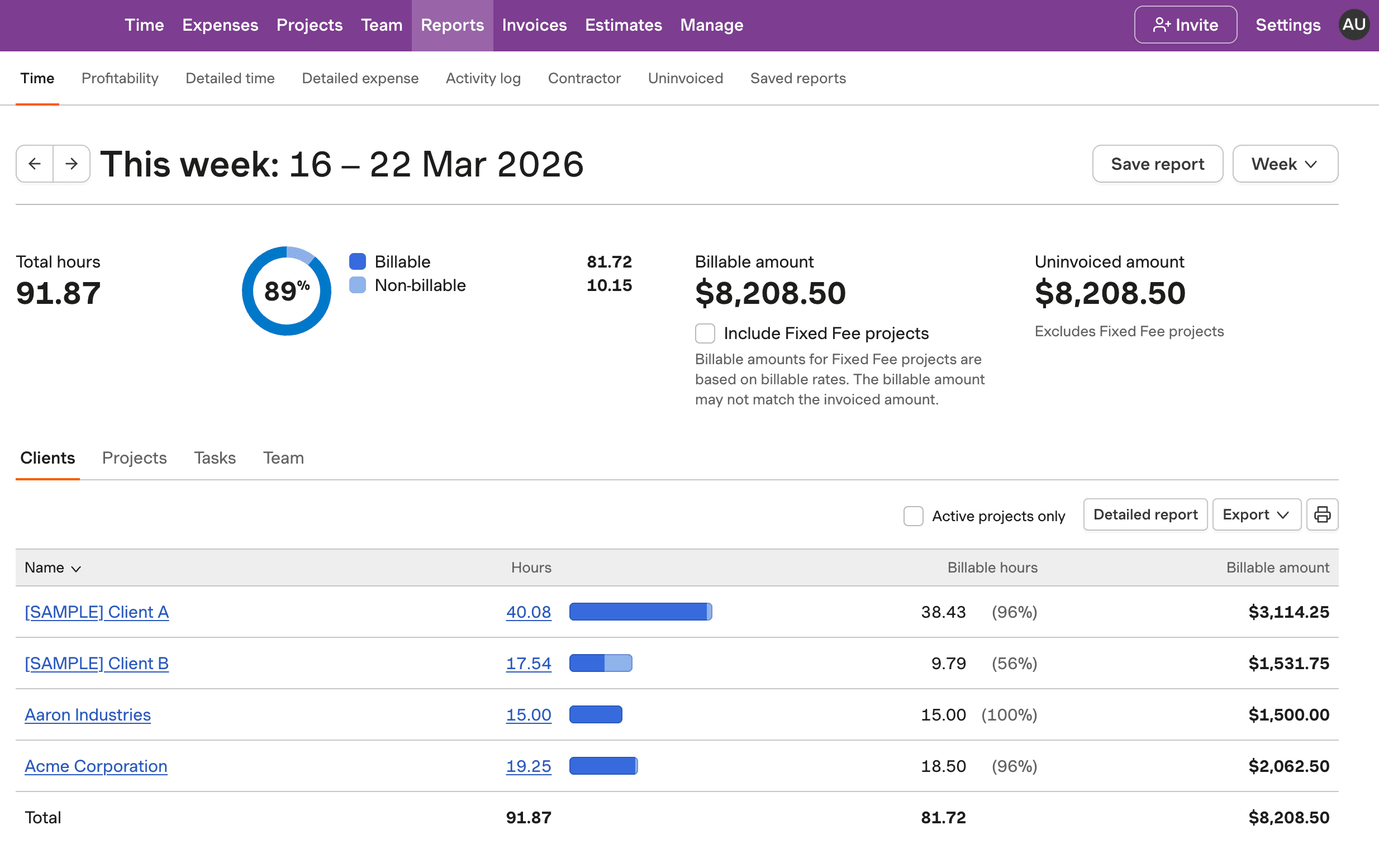
See how Harvest enhances productivity with real-time tracking and automated reporting, ideal for remote teams even without Teams integration.

Harvest time tracking with Microsoft Teams integration screenshot

Time Tracking With Microsoft Teams Integration FAQs

  • To integrate a time tracking app with Microsoft Teams, first find the app in the Teams App Store. Add it as a tab in the desired channel or chat, then configure it to match user IDs between Teams and the app for seamless data flow.

  • Look for features like real-time tracking, automated timers, flexible entry options, project and task allocation, and comprehensive reporting. These ensure accurate time management and enhance productivity.

  • Yes, some time tracking solutions offer free plans that include core features and Microsoft Teams integration, making them accessible for smaller teams or those with basic needs.

  • Time tracking enhances productivity by providing real-time insights, reducing manual errors, and ensuring accurate project management. It also helps teams focus on tasks and meet deadlines more efficiently.

  • Microsoft Teams offers basic time management features, like Shifts for clock-in/out. However, these features are limited, and integrating third-party apps can provide advanced time tracking capabilities.

  • Time tracking data enables accurate project estimates, optimized resource allocation, and balanced workloads. It provides insights into project progress and ensures client billing accuracy.

  • Best practices include clear communication about the benefits, establishing daily time entry habits, providing training, and reviewing data regularly to identify trends and make informed decisions.