
Harvest
Contracts
Sign up

Contract Template for Demolition Contractors

For demolition contractors, managing complex projects requires clear and comprehensive contracts. Harvest supports this process with time tracking and invoicing tools that streamline project management.

Start from a template

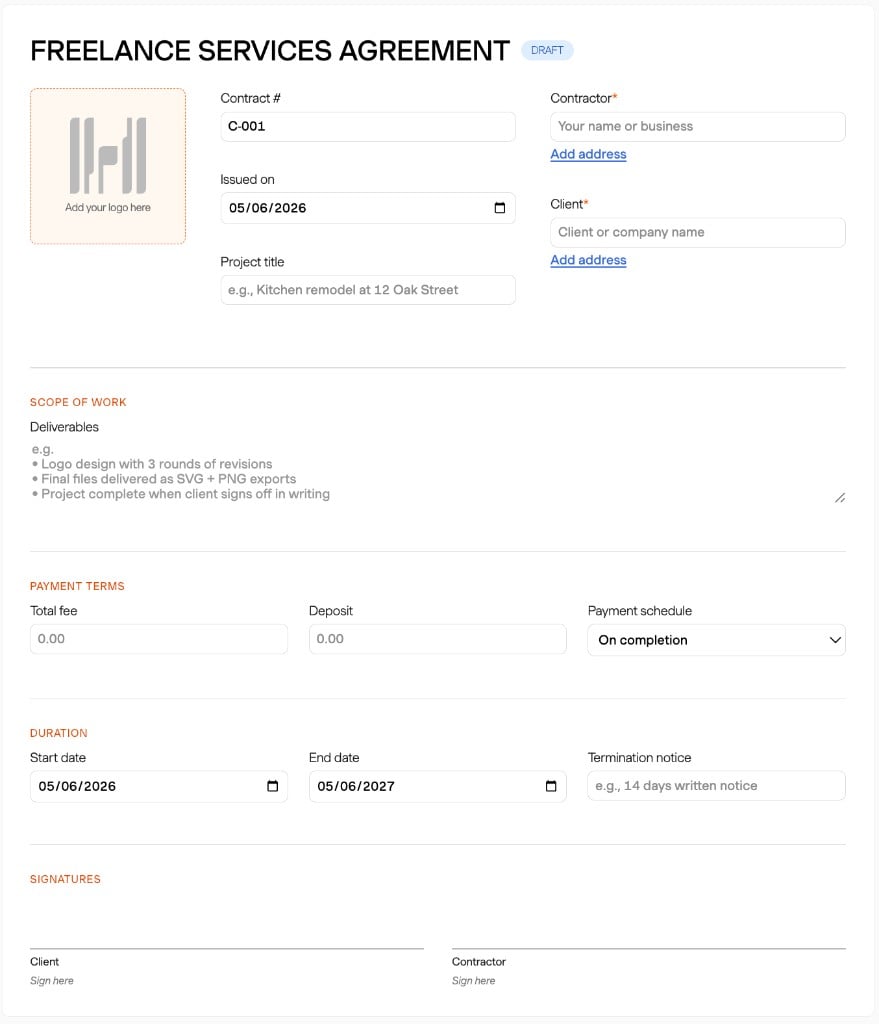
AGREEMENT DRAFT

Add your logo here

Scope of work

Payment terms

Duration

Signatures

Client

Sign here

Contractor

Sign here

Get paid via:
Credit card / Debit card
ACH
Wire transfer

Customize contract

Appearance

Add a logo
Show contract title

Contract settings

Include payment terms Total fee, deposit, and schedule
Include termination clause Notice required to end the contract
Include signature blocks Both parties sign at the bottom

Essential Elements of a Demolition Contract Template

Creating a comprehensive demolition contract template is crucial for ensuring smooth project execution and minimizing risks. A well-structured contract should clearly define the parties involved, outline the scope of work, and include essential details such as the project location and timeline. For demolition contractors, the scope of work typically includes site preparation, hazardous material removal, and debris management. This specificity helps to prevent misunderstandings and disputes that can arise from vague descriptions.

Payment terms are another critical component of a demolition contract. These should detail the total contract amount, any deposits, and the schedule for progress payments. Clear termination clauses and breach provisions are also vital, outlining the conditions under which the contract may be terminated and the consequences of non-performance. This clarity protects both parties and ensures that each understands their obligations and rights under the contract.

Safety and Compliance in Demolition Contracts

Safety and compliance are paramount in demolition projects, making them key elements of any contract template. The contract should specify safety measures that align with OSHA and NDA standards, as these organizations provide guidelines to protect workers and ensure site safety. This not only safeguards workers but also helps avoid costly legal issues arising from non-compliance.

Additionally, the contract should address the handling and disposal of hazardous materials, such as asbestos and lead, which are often present in demolition projects. This includes obtaining necessary permits and ensuring that all hazardous materials are properly removed before demolition begins. Clear documentation of these steps within the contract can prevent legal complications and project delays.

Customizing the Contract for Specific Demolition Projects

Customization is essential when using a demolition contract template to address the unique needs of each project. Generic boilerplate clauses may lead to gaps and potential disputes if not tailored to specific circumstances. For instance, defining terms like "completion date" with precise timelines and including a "Definitions" section can eliminate ambiguity and ensure mutual understanding.

Customization also involves specifying which state's laws will govern the contract and where disputes will be resolved. This is crucial for avoiding jurisdictional issues and ensures that any legal proceedings are conducted in a known location. Including site-specific details, such as unique safety challenges or environmental considerations, further enhances the contract's relevance and effectiveness.

Mitigating Risks Through Effective Contract Management

Effective contract management is vital for mitigating risks and safeguarding project profitability in demolition work. Poor contract management can lead to financial losses, with some companies losing up to 9% of their annual revenue due to mismanaged contracts. By ensuring that contracts are clear and comprehensive, demolition contractors can avoid costly disputes and delays.

Incorporating clauses that address potential changes in scope, such as additional demolition work or unforeseen site conditions, can protect against unexpected costs. Additionally, maintaining clear lines of communication with all stakeholders throughout the project can help manage expectations and reduce the likelihood of disputes. This proactive approach to contract management not only protects financial interests but also enhances project outcomes.

The Role of Harvest in Supporting Demolition Contractors

While Harvest does not provide contract templates, it offers tools that can streamline other aspects of demolition projects. Harvest's time tracking and invoicing capabilities help contractors manage project timelines and ensure accurate billing for services rendered. This is particularly important in the demolition industry, where project delays and cost overruns are common.

By using Harvest to track time and expenses, demolition contractors can gain better insights into project profitability and ensure timely payments. This financial clarity supports effective contract management by providing reliable data that can be used to justify progress payments and address any billing disputes. Harvest thus plays a supportive role in enhancing overall project efficiency and financial management.

Streamline with Harvest

Harvest supports demolition contractors with time tracking and invoicing tools, complementing customized contract templates.

Screenshot of Harvest's contract template for demolition contractors.

Contract Template for Demolition Contractors FAQs

  • A demolition contract template should include the parties involved, a detailed project description, specific payment terms, and safety measures. It's essential to define the scope of work and include necessary permits and licenses to ensure compliance and avoid disputes.

  • Customization involves tailoring the contract to the specific needs of your project. This includes defining terms clearly, specifying relevant laws, and addressing site-specific safety and environmental considerations. Avoid using generic clauses without modification.

  • Safety measures in a demolition contract should align with OSHA and NDA guidelines, including protocols for hazardous material removal and site safety procedures. These measures ensure worker safety and legal compliance.

  • Harvest supports demolition contractors with tools for time tracking and invoicing, helping manage project timelines and ensure accurate billing. This financial clarity is crucial in managing project costs and improving profitability.

  • Common pitfalls include vague language, poorly defined suspension clauses, and reliance on generic boilerplate clauses. These can lead to disputes and financial losses, highlighting the need for clear, customized contracts.

  • Yes, demolition contracts must comply with federal, state, and local regulations, including obtaining necessary permits and addressing hazardous materials. Failure to comply can lead to legal issues and project delays.

  • Effective contract management is crucial for mitigating risks and avoiding financial losses. Poor management practices can lead to disputes, project delays, and up to 9% loss in annual revenue.