
Harvest
Contracts
Sign up

Pest Control Contract Template

Harvest simplifies administrative tasks for pest control businesses, allowing them to focus on service delivery by effectively managing time tracking and invoicing.

Start from a template

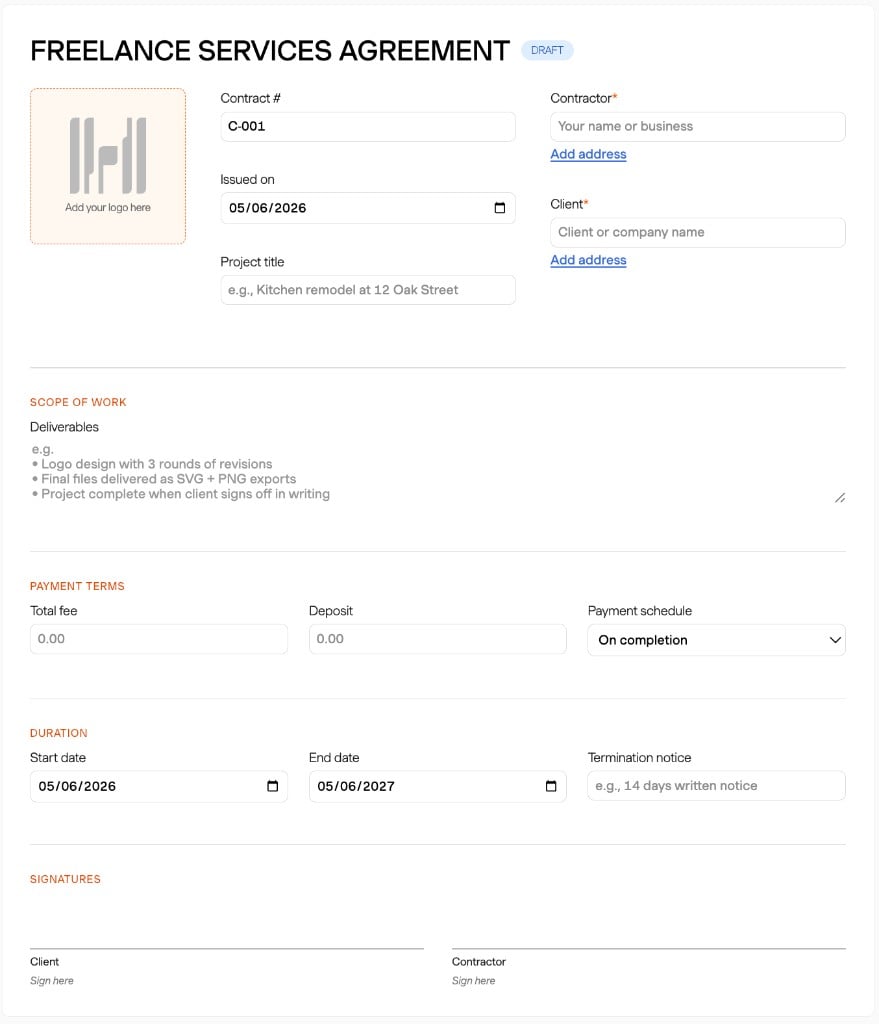
AGREEMENT DRAFT

Add your logo here

Scope of work

Payment terms

Duration

Signatures

Client

Sign here

Contractor

Sign here

Get paid via:
Credit card / Debit card
ACH
Wire transfer

Customize contract

Appearance

Add a logo
Show contract title

Contract settings

Include payment terms Total fee, deposit, and schedule
Include termination clause Notice required to end the contract
Include signature blocks Both parties sign at the bottom

Essential Clauses in a Pest Control Contract

Creating a comprehensive pest control contract is essential for both service providers and clients. Such a contract should ideally cover essential clauses that ensure clarity and compliance. Key clauses include service frequency, specifying how often treatments will occur, and liability, outlining responsibilities and potential risks. Additionally, it should list the specific pest types covered, as well as the treatment methods and products used.

It’s important to define the scope of work clearly. This includes detailing treatment areas, service duration, and any warranties or guarantees. Payment terms must be transparent, including due dates, accepted methods, and penalties for late payments. By clearly defining these aspects, pest control businesses can avoid disputes and ensure smooth operations.

Always consult with a local attorney to review contracts for compliance with state and federal regulations. This helps prevent legal issues and ensures that the contract adheres to all necessary laws, such as the Federal Insecticide, Fungicide, and Rodenticide Act (FIFRA).

Customizing Pest Control Contracts for Different Needs

Customizing pest control contracts is crucial for addressing the unique needs of residential and commercial clients. Residential contracts often focus on standard service offerings, whereas commercial contracts may require additional customization to meet industry-specific standards and regulations.

For commercial clients, especially those in regulated sectors like food processing or healthcare, contracts may need to include provisions for specialized certifications, such as QualityPro accreditation. These ensure compliance with higher standards and regulations, which is critical in maintaining client trust and satisfaction.

Using digital contract management tools can facilitate customization and streamline the process. Such tools allow businesses to easily edit and update contracts, ensuring that they meet the specific needs of each client while maintaining compliance with relevant laws.

Leveraging Digital Tools for Contract Management

The use of digital tools in pest control contract management can significantly enhance efficiency and accuracy. Automated contract management systems can increase contract retention rates by 25-30% by providing renewal alerts and usage tracking. These systems help prevent missed renewals and enhance customer satisfaction.

Moreover, integrating contract management with field service management software can automate workflows such as scheduling, invoicing, and customer communication. This integration reduces manual processes and administrative workload, allowing pest control businesses to focus more on service delivery.

Digital reporting capabilities are also becoming essential. They enable pest control companies to provide clients with detailed compliance documentation and treatment evidence, which is particularly important for commercial clients who require comprehensive service records.

Legal Requirements for Pest Control Contracts

Adhering to legal requirements is crucial when drafting pest control contracts. In the U.S., pest control businesses must comply with various federal and state regulations, such as the Federal Insecticide, Fungicide, and Rodenticide Act (FIFRA). This act mandates that all pesticide applications adhere strictly to label instructions, treating the label as law.

Each state also has its own licensing requirements. For instance, all commercial pest control operators must have a state-issued business license and usually a certified applicator as a qualifying agent. Failure to comply with these requirements can result in significant penalties, including fines averaging $10,000 per incident for non-compliance.

Contracts should also specify compliance with state-specific requirements, such as advance notice for pesticide applications or specific terms for termite treatments. These legal stipulations help safeguard both the service providers and their clients.

Tips for Effective Pest Control Contracts

To draft effective pest control contracts, it's important to incorporate practical strategies that enhance clarity and compliance. First, specify the scope of work in detail, covering target pests, treatment areas, and service frequency. This prevents misunderstandings and sets clear expectations for both parties.

Including well-defined payment terms is crucial. This should cover payment schedules, accepted methods, and any late fees. Such clarity helps avoid payment disputes and ensures timely transactions.

Leveraging digital tools can also streamline the contract management process. By integrating contract management with CRM and scheduling software, pest control businesses can automate workflows, enhance customer communication, and improve retention rates. This integration helps in centralizing data and providing seamless service to clients.

Pest Control Contracts with Harvest

Explore how Harvest helps pest control businesses manage contracts efficiently, focusing on key clauses and customization for clients.

Harvest contract management for pest control businesses.

Pest Control Contract Template FAQs

  • A pest control contract should include clauses for service frequency, liability, specific pest types covered, and treatment methods. It should also define the scope of work, payment terms, and any warranties or guarantees.

  • Customization involves tailoring the contract to fit residential or commercial needs, specifying service frequency, treatment areas, and pest types. Using digital tools can simplify the customization process by allowing easy edits and updates.

  • Pest control contracts must comply with federal regulations like FIFRA and state-specific licensing requirements. Contracts should also address compliance with application notice laws and terms for specific treatments like termites.

  • Yes, residential contracts focus on standard services, while commercial contracts may need additional clauses for industry-specific standards and certifications. This ensures compliance and meets client expectations.

  • Digital contract management increases efficiency by automating renewal alerts and usage tracking, reducing manual processes, and enhancing customer communication. It helps streamline contract creation and management.

  • Digital tools integrate contract management with scheduling and invoicing, automating workflows and reducing administrative load. This allows pest control businesses to focus on service delivery and customer satisfaction.

  • Automated systems can increase contract retention rates by 25-30% through renewal alerts and usage tracking, reducing administrative workload and enhancing customer satisfaction.