
Harvest
Contracts
Sign up

Contract Template for Flooring Contractors

Navigating the complexities of flooring contracts can be daunting for contractors. Harvest simplifies this with tools for managing budgets, tracking time, and handling invoicing, ensuring financial clarity and efficiency.

Start from a template

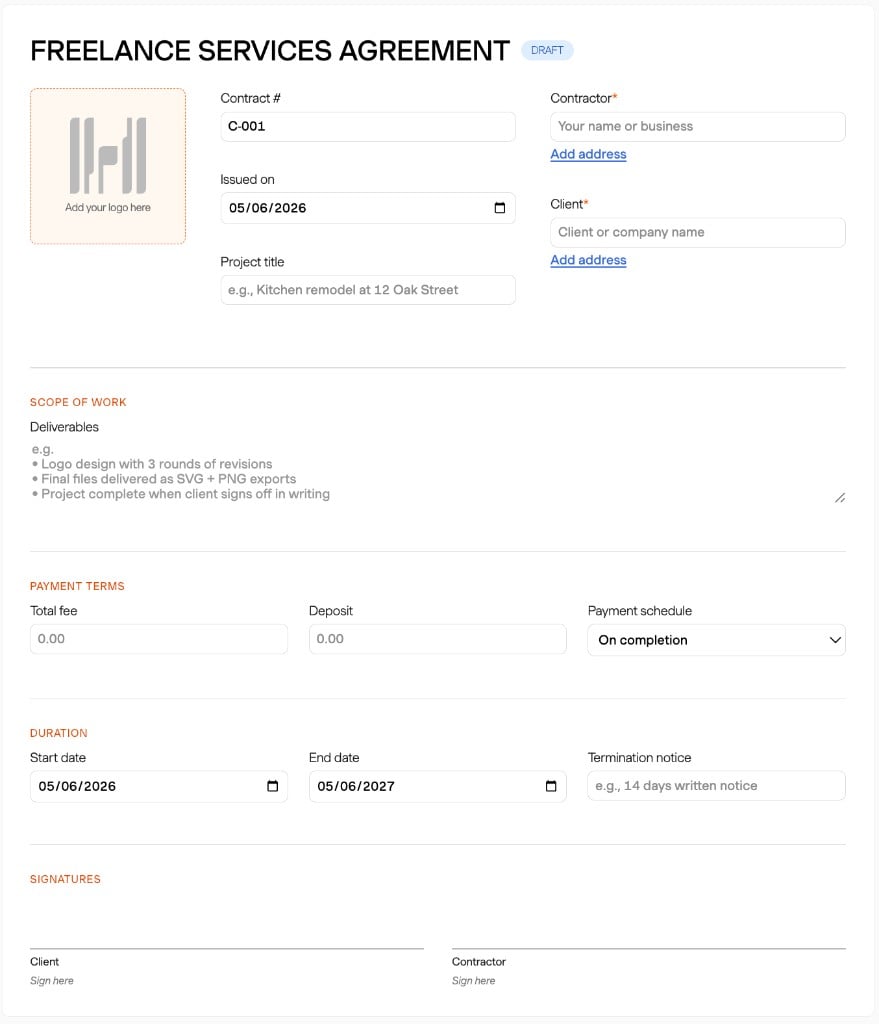
AGREEMENT DRAFT

Add your logo here

Scope of work

Payment terms

Duration

Signatures

Client

Sign here

Contractor

Sign here

Get paid via:
Credit card / Debit card
ACH
Wire transfer

Customize contract

Appearance

Add a logo
Show contract title

Contract settings

Include payment terms Total fee, deposit, and schedule
Include termination clause Notice required to end the contract
Include signature blocks Both parties sign at the bottom

Key Clauses in Flooring Contracts

When drafting a flooring contract, it's crucial to include specific clauses that ensure clarity and legal protection. Essential elements include a thorough scope of work, detailing the type of flooring, installation methods, and any preparatory work required. This helps prevent misunderstandings and disputes down the line. Additionally, payment terms should outline the total project cost, deposit amounts, progress payments, and final payment conditions. According to industry research, unclear payment terms can lead to a 15-20% loss in billable income due to disputes.

Another critical component is the timeline, specifying start and end dates along with key milestones. This helps manage expectations and avoid delays, which can be costly. Industry experts also recommend including a change order process, allowing for modifications in project scope or pricing. While Harvest does not provide specific contractual clauses, it supports managing change orders, tracking alterations in project scope, and ensuring accurate billing.

Legal Considerations for Flooring Contractors

Understanding the legal framework is essential for flooring contractors, as non-compliance with state regulations can lead to severe penalties. For instance, in California, any construction work over $500 requires a licensed contractor, with violations resulting in fines and potential jail time. Furthermore, many states mandate a three-day "right of rescission" period in residential contracts, allowing homeowners to cancel without penalty.

While Harvest does not offer direct support for legal compliance, it aids in managing project budgets and tracking expenses, which can be crucial for adhering to financial regulations. Contractors should consult legal experts to ensure their contracts meet local requirements. In addition, Harvest facilitates detailed financial tracking, including deposits and progress payments, which can help maintain compliance with state-specific financial regulations.

Customizing Your Flooring Contract Template

Customizing a flooring contract template to match the specifics of your project is vital for minimizing risks and ensuring all parties are aligned. Start by clearly defining the scope of work, including the type of flooring and installation process. Misunderstandings often arise from vague descriptions, with 80% of contract disputes linked to poorly defined project details.

It's also important to tailor the payment schedule to the project's unique demands. Harvest can support this by allowing you to set specific payment terms in your invoicing process, accommodating deposits and milestone payments. While Harvest doesn't offer detailed project descriptions, its budgeting and expense tracking capabilities can help ensure financial accuracy throughout the project.

Avoiding Common Pitfalls in Flooring Contracts

To avoid common pitfalls in flooring contracts, contractors should prioritize clarity and thoroughness in their agreements. A common mistake is relying on verbal agreements or undocumented changes, which can lead to disputes and financial losses. Instead, obtain written approval for any changes to the original contract. Harvest helps manage such changes by tracking alterations in project scope, ensuring accurate billing and project management.

Another pitfall is neglecting to specify indemnity clauses. While Harvest does not provide specific liability or indemnity clauses, it supports project cost tracking, which can mitigate some financial risks associated with project management. By maintaining organized documentation and using tools like Harvest for tracking financials, contractors can reduce misunderstandings and manage projects more effectively.

Flooring Contractor Contracts with Harvest

Explore how Harvest supports flooring contractors with project budget management and invoicing. Enhance your contract processes today.

Harvest platform with contract template for flooring contractors

Contract Template for Flooring Contractors FAQs

  • A flooring contract should include a detailed scope of work, payment terms, timeline, and clauses for changes or cancellations. This ensures clarity and reduces disputes.

  • Customize your template by clearly defining the project's scope, payment schedule, and timeline. Tailor these elements to your specific project's needs for better alignment.

  • Yes, many states have legal requirements such as licensing for projects over a certain value and a three-day right of rescission. Check local regulations to ensure compliance.

  • Harvest aids flooring contractors by managing project budgets, tracking time, and handling invoicing, providing financial clarity and efficiency for projects.

  • A change order process is crucial as it allows for documented changes in project scope or pricing, reducing misunderstandings and ensuring accurate billing.

  • Common pitfalls include vague project descriptions, undocumented changes, and unclear payment terms. Clear documentation and written approvals can mitigate these issues.

  • Consult legal experts to ensure your contract meets local requirements, and use Harvest to track financial aspects like payments and budgets to maintain compliance.