
Harvest
Contracts
Sign up

Contract Template for Junk Removal Contractors

Harvest supports junk removal contractors by offering customizable contract templates that streamline service agreements, ensuring clear terms and conditions tailored to your business needs.

Start from a template

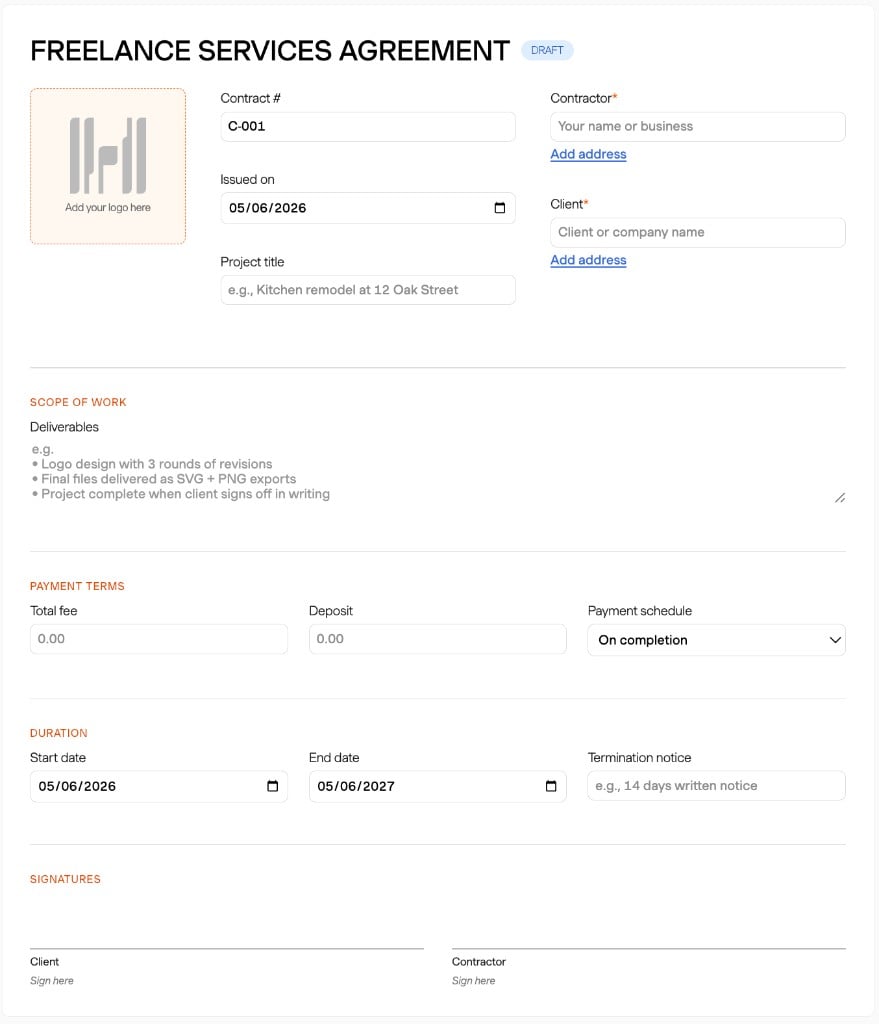
AGREEMENT DRAFT

Add your logo here

Scope of work

Payment terms

Duration

Signatures

Client

Sign here

Contractor

Sign here

Get paid via:
Credit card / Debit card
ACH
Wire transfer

Customize contract

Appearance

Add a logo
Show contract title

Contract settings

Include payment terms Total fee, deposit, and schedule
Include termination clause Notice required to end the contract
Include signature blocks Both parties sign at the bottom

Key Clauses in a Junk Removal Contract

When drafting a contract for junk removal services, it is crucial to include specific clauses that address the unique aspects of the industry. Scope of work should be clearly defined, detailing what items will be removed, how they will be transported, and the disposal methods. This ensures both parties have a shared understanding of the services provided.

The pricing and payment terms must outline any deposits required, the balance due upon completion, and accepted payment methods. This transparency helps prevent disputes over charges. Additionally, a liability waiver is essential to protect the junk removal contractor from legal responsibility for potential issues, such as accidental damage to property or disposal of items that were not identified by the client as valuable.

Finally, don't forget to include indemnification clauses. These clauses protect the contractor from claims arising from the client’s failure to disclose hazardous materials or required permits. By ensuring these elements are present, contractors can safeguard their operations and foster trust with clients.

Understanding Legal Requirements for Junk Removal Contracts

Legal compliance is a critical factor when drafting junk removal contracts. In the U.S., the Resource Conservation and Recovery Act (RCRA) governs the handling of hazardous and solid waste, necessitating that contractors understand regulations around materials that cannot be landfilled. State-specific requirements also play a role; for instance, California requires a business license and a waste hauler permit, while Florida mandates a contractor's license for those hiring subcontractors.

Moreover, insurance requirements are stringent, with general liability insurance often needing coverage of $1 million per occurrence to protect against potential claims. Workers' compensation insurance is also mandatory in most states once a contractor hires employees, with penalties for non-compliance reaching up to $10,000 per employee.

By adhering to these legal standards, junk removal contractors not only avoid penalties but also build a professional reputation. Ensuring compliance with both federal and state laws fosters trust and reliability, which are vital in this competitive industry.

Customizing Your Junk Removal Contract Template

Customizing a junk removal contract template is an essential step for aligning services with your business model. Start by tailoring the scope of services to reflect the specific items and types of junk you handle, whether it's residential cleanouts, construction debris, or commercial waste. Clearly specifying these details helps avoid disputes over service expectations.

Next, adjust the pricing structure to reflect your business's cost model. This could include flat-rate pricing or tiered rates based on volume or type of material. Incorporating digital tools like e-signature platforms can streamline the signing process, making it easy for clients to approve contracts quickly.

Finally, consider integrating CRM systems to manage client data and track contracts effectively. This integration can enhance customer relationship management and ensure that service agreements are fulfilled efficiently. By personalizing your contract template, you not only meet client needs but also streamline your operational processes.

Addressing Liability and Insurance in Junk Removal Contracts

Liability and insurance are pivotal considerations in junk removal contracts. Including a well-defined liability waiver shields your business from claims related to accidental damage or the disposal of unidentified valuable items. This clause is crucial for managing risk and maintaining professional integrity.

Additionally, general liability insurance requirements often necessitate coverage of $1 million per occurrence to protect against potential claims, especially when working with commercial clients or property managers. Workers' compensation insurance is also mandatory in most states when employees are involved, providing protection against workplace injuries.

Ensuring that your contract addresses these insurance requirements not only protects your business financially but also assures clients of your professionalism and commitment to responsible service delivery.

Common Payment Terms in Junk Removal Contracts

Establishing clear payment terms in junk removal contracts is essential for financial management and client satisfaction. Typically, contracts specify a deposit requirement before services commence, with the remaining balance due upon completion. This ensures that both parties are committed to the agreement.

Additionally, specifying accepted payment methods—such as credit cards, checks, or digital payments—can streamline the transaction process, making it more convenient for clients. Some contracts also include clauses for late payment penalties to encourage timely settlements.

By clearly defining these payment terms, junk removal contractors can manage cash flow effectively and reduce the risk of payment disputes. Transparent pricing and payment structures build trust and facilitate smoother business operations.

Harvest Contract Templates

Harvest offers customizable contract templates tailored for junk removal contractors, helping you manage service terms effectively.

Junk removal contract template for Harvest users.

Contract Template for Junk Removal Contractors FAQs

  • A junk removal contract should include clauses for the scope of work, pricing and payment terms, liability waivers, and indemnification. These elements ensure a clear understanding between parties and protect against potential disputes.

  • To customize a junk removal contract template, adjust the scope of services to align with your business model, modify pricing structures, and incorporate digital tools for streamlined processes. This ensures the contract meets your specific needs.

  • Legal requirements for junk removal contracts include compliance with the Resource Conservation and Recovery Act and state-specific licenses. Insurance, such as general liability and workers' compensation, is also crucial to protect your business.

  • Liability insurance protects junk removal contractors from claims related to property damage or accidents during service delivery. It is essential for financial protection and assures clients of your professionalism.

  • Common payment terms include a deposit before service commencement and the balance due upon completion. Clearly specifying accepted payment methods and penalties for late payments can streamline transactions and reduce disputes.

  • Harvest offers customizable contract templates that help junk removal contractors streamline service agreements, manage liability, and ensure compliance. These templates can be tailored to meet specific business needs effectively.

  • Junk removal contractors must comply with federal and state regulations, obtain necessary licenses, and ensure appropriate insurance coverage. Compliance is vital for avoiding penalties and maintaining a professional reputation.