
Harvest
Contracts
Sign up

Contract Template for Carpentry Contractors

Harvest helps carpentry contractors streamline project budgets, time tracking, and invoicing, aligning with diverse payment structures to prevent disputes and ensure timely payment.

Start from a template

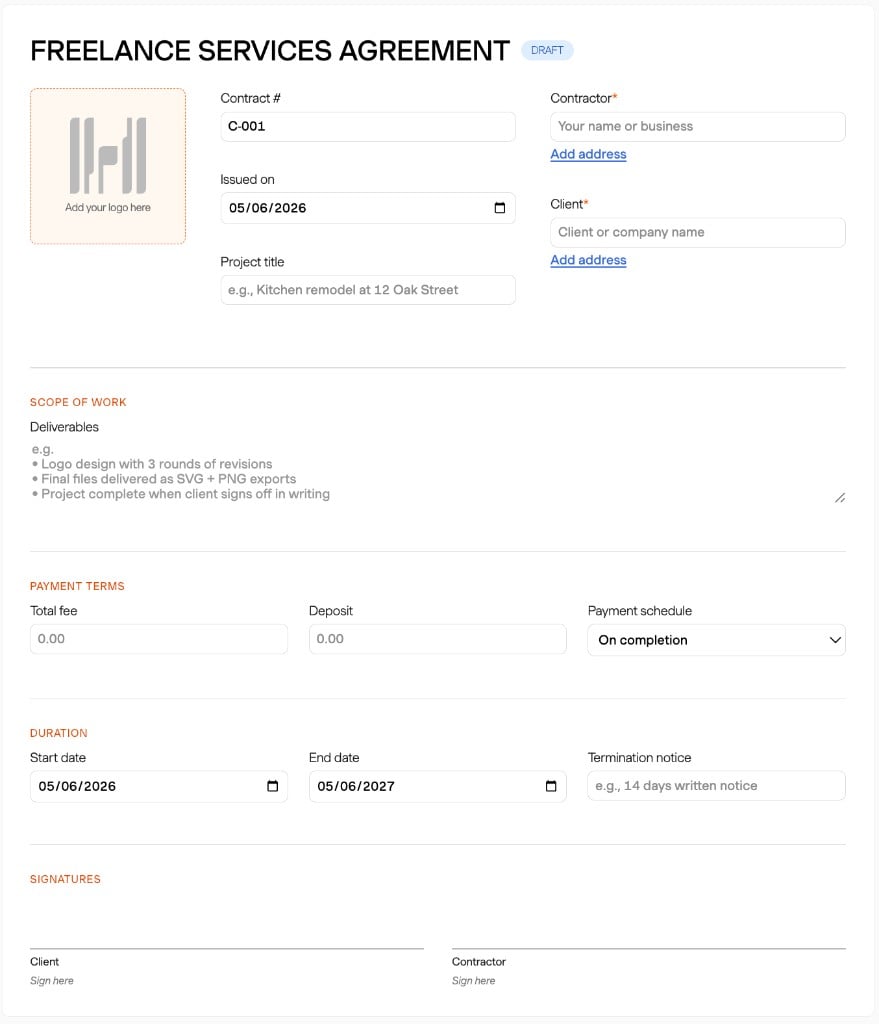
AGREEMENT DRAFT

Add your logo here

Scope of work

Payment terms

Duration

Signatures

Client

Sign here

Contractor

Sign here

Get paid via:
Credit card / Debit card
ACH
Wire transfer

Customize contract

Appearance

Add a logo
Show contract title

Contract settings

Include payment terms Total fee, deposit, and schedule
Include termination clause Notice required to end the contract
Include signature blocks Both parties sign at the bottom

The Essential Clauses in Carpentry Contracts

Carpentry contracts serve as the backbone for successful project execution, ensuring both parties are aligned on expectations and responsibilities. A well-structured contract should include key clauses such as the scope of work, which details the specific tasks and materials involved, and payment structures like fixed price or cost-plus. These elements are crucial for avoiding disputes and ensuring smooth project flow.

Industry research shows that implementing standardized contract templates can lead to significant productivity gains, with a reported 6.1% increase in construction productivity in 2024 alone. This is where Harvest comes in, as it supports carpentry contractors by allowing them to track expenses and include materials as invoice line items. Although Harvest isn't a legal software providing template clauses, it aids in managing project budgets and tracking time effectively, supporting the detailed execution of a scope of work.

How to Customize a Carpentry Contract Template

Customizing a carpentry contract template to fit specific project needs is crucial for ensuring that all project variables are considered. Start by clearly outlining the project scope, materials, and equipment, ensuring all parties agree on what's included and what's not. This prevents misunderstandings and disputes during the project lifecycle.

Harvest can facilitate this customization by providing tools to track project budgets and time, which indirectly supports the execution of detailed scopes of work. By using Harvest's expense tracking capabilities, contractors can effectively manage materials and their costs, ensuring accurate invoicing and budgeting. While Harvest does not provide contract templates, its robust project management features can help contractors stay organized and focused on project milestones.

Understanding Payment Structures in Carpentry Contracts

Payment structures in carpentry contracts can vary significantly, impacting how projects are funded and completed. Common structures include fixed price contracts, where a single lump sum is agreed upon, and cost-plus contracts, where contractors are reimbursed for actual costs plus a fee. These structures must be clearly defined within the contract to ensure smooth financial transactions.

Harvest supports these payment structures by allowing contractors to invoice for both fixed fee and time & materials projects. This flexibility ensures that carpentry contractors can accurately bill clients according to the specific terms of their contracts. By tracking expenses and project time, Harvest helps minimize disputes and ensures that contractors are paid accurately and on time.

Legal Considerations for Carpentry Contracts

Legal considerations in carpentry contracts are vital for compliance and protection against disputes. Key elements include compliance with state-specific licensing requirements and understanding retention periods and penalties. In states like California, for instance, reforms mandate retention caps and specific payment timelines.

While Harvest does not provide legal advice or specific contract templates regarding permits, licenses, or mechanics lien rights, its tools can support contractors in maintaining clear project budgets and timelines. This indirect support helps contractors meet legal obligations by ensuring transparency and accountability in financial transactions.

Avoiding Common Mistakes in Carpentry Contracts

Common mistakes in carpentry contracts include failing to define a clear scope of work, overlooking payment schedules, and ignoring the need for formal change orders. Such oversights can lead to costly disputes and delays.

Harvest helps mitigate these risks by supporting detailed project tracking and clear invoicing practices. While Harvest doesn't handle change order documentation directly, its project management features allow for precise tracking of budget and time changes, providing the necessary transparency for managing project alterations effectively.

Carpentry Contracts with Harvest

See how Harvest assists carpentry contractors in managing project budgets, tracking time, and invoicing clients effectively.

Screenshot of Harvest platform showing carpentry contract management.

Contract Template for Carpentry Contractors FAQs

  • A carpentry contract should include key clauses such as the scope of work, payment structures, and timelines. It's also important to include any warranties, dispute resolution methods, and legal compliance details specific to the project location.

  • To customize a carpentry contract template, start by clearly defining the scope of work, materials, and payment structures. Ensure all terms are tailored to the specific project and consult with a legal professional to ensure compliance with local laws.

  • Common payment structures for carpentry contracts include fixed price agreements, where a set amount is paid regardless of costs, and cost-plus contracts, which reimburse expenses plus a fee. These structures should be clearly outlined in the contract.

  • Harvest supports carpentry contractors by providing tools to manage project budgets, track time, and invoice clients efficiently. It allows for flexible invoicing based on different payment structures and helps ensure accurate billing.

  • Carpentry contractors should be aware of local licensing requirements, retention periods, and any state-specific regulations affecting contract terms. It's advisable to consult with a legal professional to ensure all legal obligations are met.

  • Handling disputes in carpentry agreements typically involves having clear dispute resolution clauses in the contract. These can outline steps for negotiation, mediation, or arbitration, helping to resolve issues without resorting to legal action.

  • Yes, Harvest allows contractors to track material costs by including them as invoice line items. This helps ensure accurate billing and budget management throughout the project lifecycle.