
Harvest
Contracts
Sign up

Contract Template for General Contractors

Poor contract management can lead to significant revenue leakage, costing companies up to 9.2% of their annual revenue. Harvest helps general contractors manage project budgets, track expenses, and facilitate invoicing, ensuring financial accuracy.

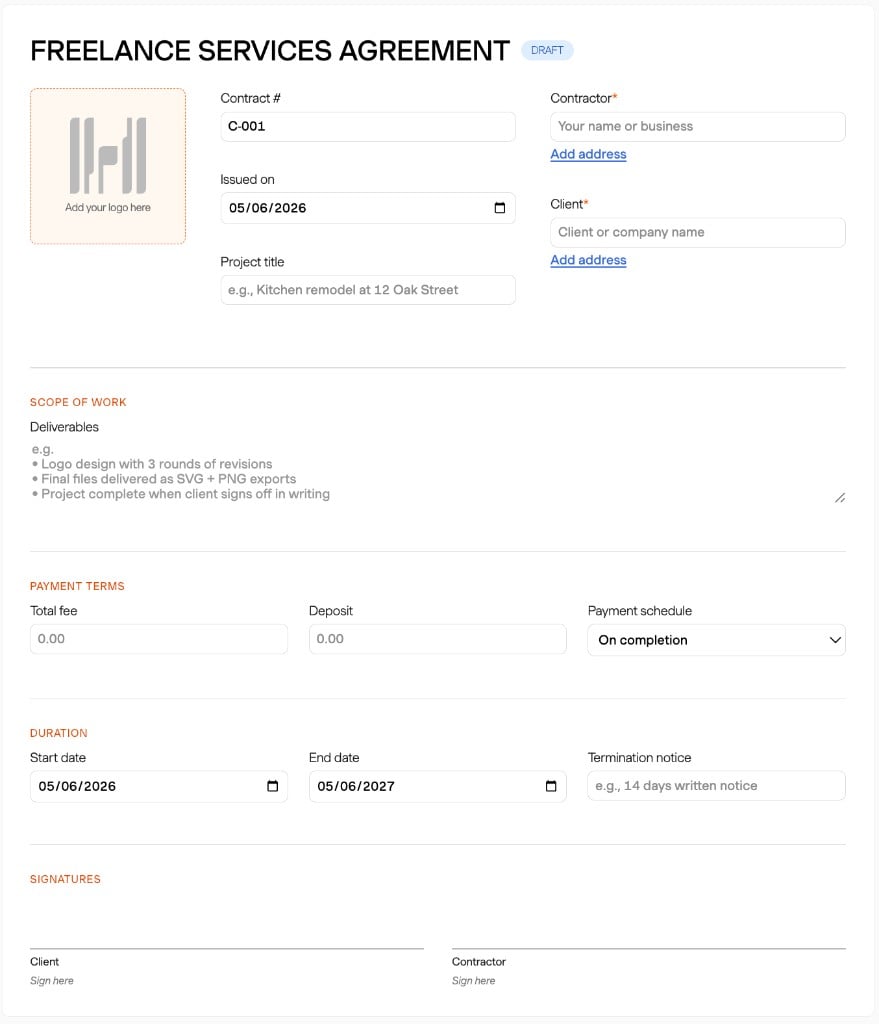
Start from a template

AGREEMENT DRAFT

Add your logo here

Scope of work

Payment terms

Duration

Signatures

Client

Sign here

Contractor

Sign here

Get paid via:
Credit card / Debit card
ACH
Wire transfer

Customize contract

Appearance

Add a logo
Show contract title

Contract settings

Include payment terms Total fee, deposit, and schedule
Include termination clause Notice required to end the contract
Include signature blocks Both parties sign at the bottom

Understanding Essential Clauses in Contractor Contracts

General contractor contracts are a cornerstone of successful project management, ensuring expectations are clear and risks are minimized. Essential clauses include payment terms, scope of work, and dispute resolution. Payment terms, for example, dictate the schedule and conditions under which payments are made, which are crucial for cash flow management. The scope of work outlines the specific tasks and responsibilities of each party, reducing the risk of misunderstandings that could lead to costly disputes.

Dispute resolution clauses are also vital, providing a process for resolving disagreements without resorting to litigation, which can be time-consuming and expensive. Industry research indicates that standardized contracts, such as those offered by ConsensusDocs, are effective in improving project outcomes by clearly defining these aspects. While Harvest does not offer legal contract templates, it supports contractors by facilitating precise invoicing and expense management, ensuring financial aspects are accurately handled.

Customizing Contract Templates for General Contractors

Customizing contract templates allows general contractors to address specific project needs and comply with legal requirements. It is important to consider state-specific laws, such as California's retention caps and prompt payment penalties, when drafting contracts. These legal frameworks ensure that contractors are paid on time and protect against financial penalties.

While Harvest doesn't provide customized contract templates, it helps contractors manage their projects efficiently by tracking time and expenses. By using Harvest's tools, contractors can focus on the operational aspects of project management, ensuring that financial data is accurately captured and reported. This support can indirectly aid in contract customization by providing clear financial insights needed for informed decision-making.

Avoiding Common Pitfalls in Construction Contracts

Construction contracts are complex documents that require careful attention to detail to avoid common pitfalls. One major risk is the inappropriate use of clauses such as "pay-if-paid" versus "pay-when-paid," which affects subcontractor payment. These clauses can lead to disputes if not clearly defined and understood by all parties involved.

Another pitfall is the reliance on verbal agreements, which often lack the enforceability of written contracts. Industry experts suggest that all agreements be documented to avoid ambiguity. Harvest supports contractors by providing tools to manage project budgets and expenses, ensuring financial transparency and accountability. This can help contractors avoid financial missteps that arise from poorly managed contract terms.

Harnessing Technology for Improved Contract Management

The adoption of digital tools in construction has transformed contract management, enhancing efficiency and reducing risks. Automating contract processes can cut negotiation cycles by up to 50%, allowing contractors to capitalize on opportunities swiftly. The use of AI in reviewing contracts can reduce review time from 92 minutes to just 26 seconds, highlighting the potential for time savings.

While Harvest doesn’t automate contract drafting, it provides robust tools for managing project modifications, such as change orders. By tracking these changes, contractors can ensure that all aspects of the contract are up-to-date, minimizing the risk of disputes. Harvest also supports the financial aspects of project management, which are critical to effective contract execution.

Streamline Contracts with Harvest

See how Harvest empowers general contractors to manage project budgets, track expenses, and streamline invoicing for better contract management.

Screenshot of Harvest's contract management features for general contractors.

Contract Template for General Contractors FAQs

  • Key clauses in a general contractor contract include payment terms, scope of work, and dispute resolution. These clauses help ensure clear expectations and reduce risks. Payment terms define how and when payments will be made, while the scope of work specifies the responsibilities of each party. Dispute resolution clauses provide a framework for resolving disagreements efficiently.

  • Customizing a contract template involves adding specific details relevant to the project, such as unique payment terms, special conditions, and compliance with local laws. It is crucial to ensure that the contract aligns with state-specific legal requirements to avoid penalties. Harvest assists by providing precise financial management tools, which can support informed customization decisions.

  • Common pitfalls include unclear payment clauses like "pay-if-paid" and verbal agreements that lack enforceability. To avoid these, contractors should ensure all agreements are documented and understand the implications of contract terms. Harvest helps by offering tools to manage financial aspects, providing transparency and reducing the risk of disputes.

  • Technology streamlines contract management by reducing time spent on manual processes. For example, AI can significantly cut contract review times, while digital tools enhance the overall efficiency of contract cycles. Harvest aids contractors by managing project changes and financial tracking, which are essential for maintaining accurate contract terms.

  • Harvest supports contractors by tracking project budgets, managing expenses, and facilitating invoicing. These capabilities help ensure that financial data is accurate and up-to-date, contributing to more effective project management. While Harvest doesn't draft contracts, it provides the financial transparency needed for informed decision-making.

  • Dispute resolution clauses are crucial as they provide a clear process for handling disagreements, potentially preventing costly litigation. A well-structured contract with defined resolution mechanisms can help resolve issues quickly and maintain project momentum. This clarity is essential for smooth project execution and financial stability.

  • Standardized contracts, like those from ConsensusDocs, help improve project outcomes by clearly defining roles, risks, and expectations. These documents are crafted with input from various industry stakeholders, reducing errors and conflicts. Harvest, while not offering standardized contracts, supports the financial management crucial to maintaining these agreements.