
Harvest
Contracts
Sign up

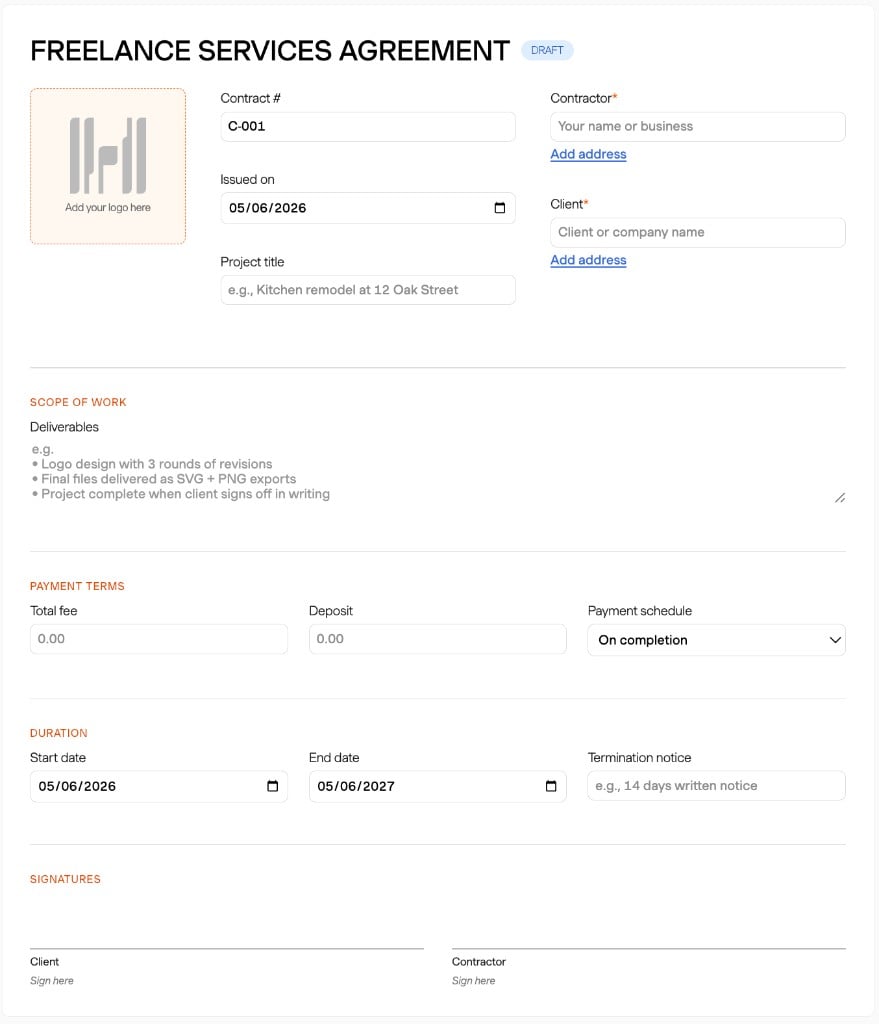
Contract Template for Cabinet Contractors

Construction disputes often arise from unclear contracts. Harvest helps cabinet contractors manage project budgets, track time, and streamline invoicing.

Start from a template

AGREEMENT DRAFT

Add your logo here

Scope of work

Payment terms

Duration

Signatures

Client

Sign here

Contractor

Sign here

Get paid via:
Credit card / Debit card
ACH
Wire transfer

Customize contract

Appearance

Add a logo
Show contract title

Contract settings

Include payment terms Total fee, deposit, and schedule
Include termination clause Notice required to end the contract
Include signature blocks Both parties sign at the bottom

Why Cabinet Contractors Need Detailed Contracts

For cabinet contractors, having a well-documented contract is essential to safeguarding against disputes and ensuring smooth project execution. Construction disputes are on the rise, often due to payment issues, timeline overruns, and ambiguous scope of work. A comprehensive contract can mitigate these risks by clearly outlining roles, responsibilities, and expectations.

Contracts should include specific clauses tailored to cabinetry work, such as material specifications, payment terms, and warranty conditions. For instance, a study shows that time and cost overruns are leading causes of disputes, making precise scope and payment schedules crucial. In California, new laws mandate a 5% cap on retention in private contracts starting in 2026, indicating a shift towards more contractor-friendly terms.

While Harvest does not provide legal contract templates, it supports cabinet contractors by managing project budgets, tracking time, and handling expenses. This allows contractors to focus on delivering quality work while keeping financial and project data organized and accessible.

Key Clauses to Include in Cabinet Contracts

Cabinet contractors should include several key clauses in their contracts to ensure clarity and legal compliance. First, define the scope of work in detail, specifying tasks, materials, and timelines. This clarity prevents misunderstandings and sets clear expectations for both parties involved.

Payment terms must also be outlined clearly, with a schedule tied to project milestones. According to industry data, contractors often face cash flow issues, with payments taking an average of 83 days. Including a detailed payment schedule helps manage cash flow and avoid delays. California's SB 61 law, which caps retention at 5%, further underscores the importance of fair payment terms.

Finally, all contracts should cover change order procedures, dispute resolution mechanisms, and warranty terms. Harvest can assist in tracking change orders and managing associated time and expenses, ensuring that any project modifications are documented and accounted for.

How Harvest Supports Cabinet Contractors

While Harvest does not offer legal contract templates, it plays a crucial role in managing the financial aspects of cabinetry projects. Harvest helps contractors track time, manage expenses, and streamline invoicing—all vital elements in executing successful projects.

By using Harvest, contractors can create invoices tied to project milestones, such as design approval and installation completion. This feature helps ensure that payments align with project progress, reducing the risk of delayed payments and cash flow issues.

Additionally, Harvest supports contractors in managing change orders effectively. By tracking time and expenses for modifications requested during a project, contractors can maintain transparency and ensure that changes are reflected in the project's budget and timeline. This comprehensive approach helps contractors focus on quality craftsmanship without financial distractions.

Avoiding Common Contract Pitfalls

Cabinet contractors should be aware of common pitfalls when drafting contracts. One major issue is failing to put agreements in writing; a verbal agreement can lead to costly disputes. Always use a written contract, even for small jobs, to create a legally binding record of expectations.

Another common mistake is a vague scope of work, which can lead to misunderstandings and disputes. It's essential to detail the scope, including materials, finishes, and exclusions. This clarity helps prevent disputes and ensures all parties are aligned.

Finally, contractors should ensure compliance with local laws and licensing requirements. For example, contractors in California must adhere to specific statutory requirements, including the new SB 61 retention law. By staying informed and compliant, contractors can avoid legal issues and focus on delivering quality results. Harvest aids this process by keeping financial and project data organized, allowing contractors to focus on compliance and quality work.

Harvest for Cabinet Contractors

See how Harvest helps cabinet contractors manage budgets, track time, and streamline invoicing for cabinetry projects.

Harvest contract template for cabinet contractors screenshot.

Contract Template for Cabinet Contractors FAQs

  • A cabinet contractor contract should include the scope of work, payment terms, timelines, change order procedures, and warranty conditions. These elements help prevent disputes and ensure clarity.

  • Payment terms are vital because they manage cash flow and set expectations for both parties. Contractors often face delays, with payments taking up to 83 days on average. Clear terms help mitigate these issues.

  • Harvest assists by tracking time and expenses related to project modifications. This ensures any changes are documented and reflected in the project's budget and timeline, maintaining transparency and control.

  • Common pitfalls include not having a written contract, vague scope of work, and non-compliance with local laws. Address these by detailing scope, using written agreements, and staying informed on legal requirements.

  • Harvest helps manage project budgets by tracking time and expenses and streamlining invoicing. This allows contractors to focus on quality work while keeping financial data organized.

  • While verbal agreements can be binding, they often lead to disputes. A written contract is preferred as it provides a clear, legally binding record of the project's terms and expectations.

  • A vague scope of work can lead to misunderstandings and disputes. Clearly defining tasks, materials, and timelines helps ensure all parties understand and agree on the project's expectations.