
Harvest
Contracts
Sign up

Contract Template for Solar Contractors

Solar installation projects demand precise contract management amid rapid industry growth. Harvest helps solar contractors manage budgets and track project timelines effectively.

Start from a template

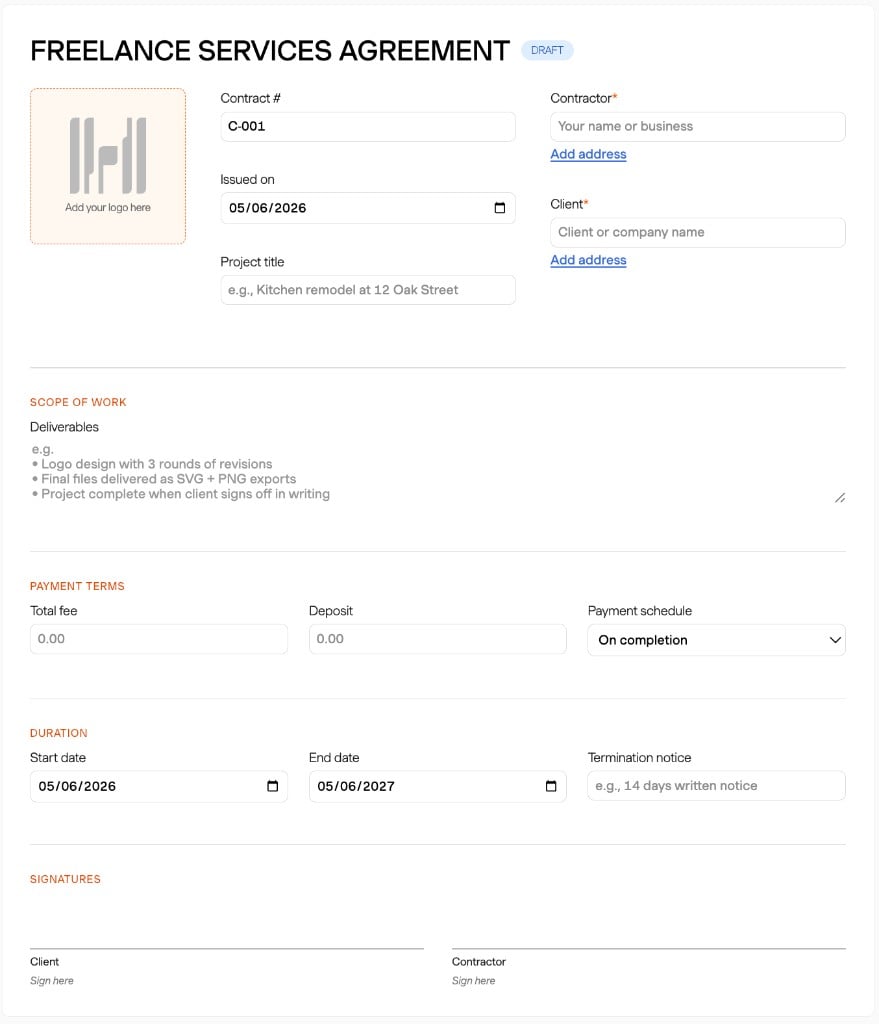
AGREEMENT DRAFT

Add your logo here

Scope of work

Payment terms

Duration

Signatures

Client

Sign here

Contractor

Sign here

Get paid via:
Credit card / Debit card
ACH
Wire transfer

Customize contract

Appearance

Add a logo
Show contract title

Contract settings

Include payment terms Total fee, deposit, and schedule
Include termination clause Notice required to end the contract
Include signature blocks Both parties sign at the bottom

Understanding Solar Contractor Contracts

A well-structured contract is crucial for solar contractors to navigate the complex landscape of solar installation projects. This document should clearly outline the scope of work, payment schedules, and compliance with local regulations, ensuring all parties are aligned on expectations and obligations. Industry growth, projected at 25% by 2026, coupled with a 70% labor shortage, underscores the importance of efficient contract management to mitigate risks and enhance project success.

Solar contracts also face high cancellation rates, with approximately one-third of agreements in the U.S. being terminated, often before permit submissions, increasing pre-installation costs by 25%. Incorporating transparent agreements can help mitigate such risks. Although Harvest does not provide specific contract templates, it supports solar contractors by managing project budgets and tracking time, ensuring financial aspects are handled efficiently.

Key Elements of a Solar Contract Template

A comprehensive solar contract template should include several critical elements to safeguard both contractors and clients. These elements include detailed payment schedules, which are pivotal as over 40% of consumers focus on upfront costs. Additionally, clear warranty provisions are essential to limit future financial exposure due to performance issues or non-conforming work. Harvest aids in establishing payment schedules by allowing solar contractors to set up recurring invoice templates, ensuring financial clarity.

Contract templates should also address cancellation clauses and compliance with local regulations, such as the FTC's Cooling-Off Rule. However, Harvest does not handle specific legal aspects or compliance requirements. Instead, it focuses on project budget management and expense tracking, streamlining the financial operations involved in solar installations.

Customizing Your Solar Contract Template

Customizing a contract template for solar projects involves aligning the document with the unique needs of each installation. It is crucial to verify that the contract aligns with prior proposals, including system size, costs, and the installer's responsibilities. This step ensures that all parties are on the same page before work commences, reducing the risk of costly disputes.

While Harvest does not directly create customized solar contract templates, it can support the financial elements by managing project budgets and tracking time and expenses. This ensures that the financial terms of the contract are accurately reflected and managed throughout the project's lifecycle.

Navigating Legal and Compliance Challenges

Legal compliance is a critical component of solar contracts, with state-specific laws and evolving regulations posing challenges. For example, Texas will implement new registration and disclosure requirements in 2026, and non-compliance can result in severe penalties. Although Harvest does not manage legal compliance, it helps contractors organize project budgets and expenses efficiently, allowing them to focus resources on meeting these legal requirements.

It is essential for contractors to integrate necessary legal clauses and stay informed of regulatory changes, such as California's NEM 3.0 decision reducing payments for excess power. By leveraging tools like Harvest for financial management, solar contractors can better allocate their efforts towards ensuring compliance while maintaining control over their project's budget and timeline.

Streamline Solar Contracts with Harvest

Harvest helps solar contractors manage project budgets and payment schedules, ensuring streamlined operations.

Screenshot of Harvest managing solar contractor project budgets.

Contract Template for Solar Contractors FAQs

  • A solar contractor agreement should include a detailed scope of work, payment schedules, warranties, insurance requirements, and compliance with local regulations. Transparent financial terms and clear cancellation clauses are also crucial to prevent disputes.

  • To customize a solar contract template, ensure alignment with prior proposals, verify system specifications, and include project-specific details like timelines and costs. This helps tailor the agreement to the unique needs of each project.

  • Common payment terms in solar contracts often include a down payment, followed by milestone payments tied to project phases like permitting, installation, and final inspection. Harvest can help organize these payments through recurring invoice templates.

  • Yes, legal requirements for solar contracts vary by state and may include licensing, compliance with consumer protection laws, and specific disclosure mandates. Contractors should stay informed of these regulations to ensure legal compliance.

  • Solar contracts should include warranties for panels and inverters, covering workmanship and performance. These warranties help protect against future issues, offering peace of mind to clients and contractors alike.

  • Harvest supports solar contractors by managing project budgets, tracking time and expenses, and setting up payment schedules. This helps ensure streamlined financial operations throughout the project lifecycle.

  • Solar contractors often face high cancellation rates, leading to increased costs. Clear and transparent contracts, along with effective project management tools like Harvest, can help mitigate these challenges.