
Harvest
Contracts
Sign up

Contract Template for Tile Contractors

Harvest helps tile contractors manage financial aspects of projects by tracking time, monitoring budgets, and invoicing clients efficiently, ensuring smooth operations.

Start from a template

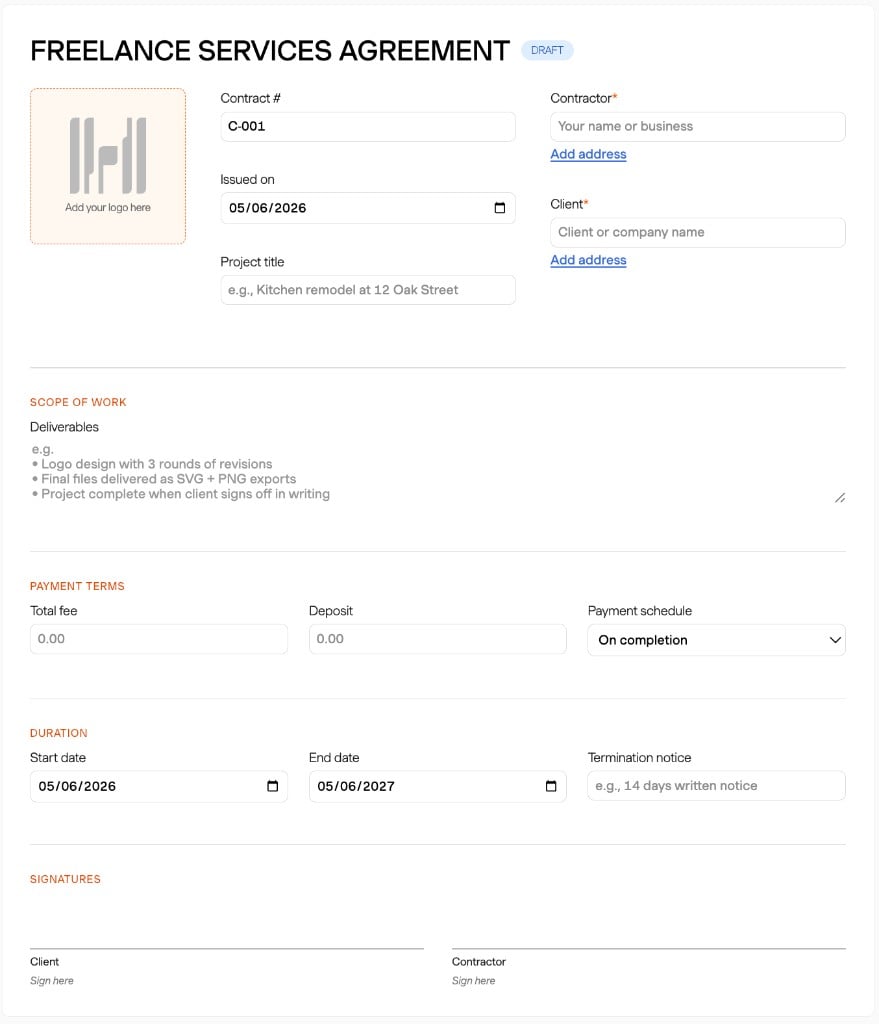
AGREEMENT DRAFT

Add your logo here

Scope of work

Payment terms

Duration

Signatures

Client

Sign here

Contractor

Sign here

Get paid via:
Credit card / Debit card
ACH
Wire transfer

Customize contract

Appearance

Add a logo
Show contract title

Contract settings

Include payment terms Total fee, deposit, and schedule
Include termination clause Notice required to end the contract
Include signature blocks Both parties sign at the bottom

Key Considerations for Tile Contractor Contracts

When crafting a contract template for tile installation projects, several critical elements must be considered. First, a detailed scope of work is essential to prevent misunderstandings. This should include specifications such as the type of tile, the area to be covered, and any additional materials like grout or underlayment. It's also vital to define who is responsible for supplying these materials, as a lack of clarity can lead to disputes.

Payment terms are another crucial component. Many tile contractors utilize a mix of fixed-price and time-and-materials contracts. Payment schedules should clearly outline deposits and milestone payments to ensure cash flow throughout the project. For instance, a 10% deposit upon signing, 40% after initial work, and the remaining balance upon completion is a common structure.

Lastly, change order procedures should be included to address any project alterations. This ensures that any additional work or changes in scope are documented and agreed upon, avoiding unexpected costs. While Harvest does not provide specific contract terms, it helps by supporting invoicing that reflects these payment structures, enhancing financial management.

Legal and Compliance Requirements

Tile installation contracts must comply with relevant legal and compliance requirements. In the U.S., contracts should adhere to federal and state-specific regulations. For example, California's Business and Professions Code §7159 outlines specific requirements for home improvement contracts. Failure to comply can render a contract voidable and lead to severe penalties.

It is also important to be aware of local building codes and regulations, which vary by state and can affect project execution. Ensuring compliance not only protects contractors from legal repercussions but also enhances client trust. While Harvest does not manage compliance, it aids contractors in organizing their project budgets and tracking time effectively.

Incorporating legal guidance into the contract drafting process can help identify potential risks and align contract terms with legal standards. Experts suggest using standard contracts like ConsensusDocs, which incorporate best practices and fairly allocate risks. Though Harvest focuses on time tracking and invoice management, such legal frameworks can complement its capabilities.

Managing Project Changes and Client Expectations

Effective management of project changes and client expectations is critical in tile installation contracts. Changes during a project are common, and without a clear process for handling them, contractors risk performing extra work without compensation. A robust change order clause that requires written approval for any modifications is essential.

Setting realistic timelines and communicating potential delays can also help manage expectations. Factors such as substrate issues or material availability can impact project timelines. It's advisable to include a clause addressing how delays will be handled to protect against unforeseen circumstances.

Harvest supports contractors by facilitating budget tracking and time management, which are crucial when dealing with project changes. While it does not provide specific clauses for managing delays, it enables contractors to keep projects on track financially, ensuring that changes are accounted for in the overall project budget.

Customizing Your Tile Installation Contract

Customizing a contract to suit specific tile installation projects is essential for both legal protection and operational success. Begin by outlining the scope of work in detail, specifying areas, materials, and tasks involved. This reduces ambiguity and prevents disputes over deliverables.

Standard clauses should include detailed payment terms, a change order procedure, and provisions for potential delays. Including clauses for liability and warranty can also protect your business. While Harvest does not offer these templates, it aids in managing the financial aspects of contracts, such as invoicing and tracking payments.

Review your contract regularly to ensure it reflects current regulations and industry standards. Engaging a legal professional can provide insights into tailoring contracts to specific needs, thereby minimizing risk. Although Harvest does not handle contract customization, its tools for time and expense management can significantly support project execution.

Leveraging Harvest for Financial Management

While crafting a comprehensive contract template is crucial, managing the financial aspects of a tile installation project is equally important. Harvest aids tile contractors by providing tools for tracking time, monitoring project budgets, and invoicing clients efficiently. This ensures that financial management aligns with contract terms.

By using Harvest, contractors can set up payment schedules that reflect contract milestones, ensuring timely cash flow. Additionally, Harvest's invoicing capabilities allow for detailed billing that includes deposits and final payments, supporting the financial structures outlined in contracts.

Overall, while Harvest does not provide specific contract templates, it enhances project management by integrating time tracking and budgeting tools, helping contractors maintain financial clarity and client satisfaction throughout the project lifecycle.

Streamline with Harvest

Harvest aids tile contractors in managing project budgets, tracking time, and invoicing clients, enhancing financial clarity.

Harvest time tracking and invoicing for tile contractors

Contract Template for Tile Contractors FAQs

  • A tile contractor contract should include a detailed scope of work, payment terms, and change order procedures. It should specify materials, timelines, and responsibilities, such as who supplies materials and cleanup duties.

  • To customize a tile installation contract, start with a clear scope of work and include specific clauses for payment terms, change orders, and potential delays. Consulting a legal professional can help tailor the contract to your needs.

  • Common payment terms for tile installation include an initial deposit upon signing, progress payments at milestones, and a final payment upon project completion. These terms ensure cash flow and align with project progress.

  • Change orders in tile contracts should require written approval for any modifications to the scope of work. This process helps manage additional costs and ensures all parties agree on changes before work proceeds.

  • A detailed scope of work is crucial to prevent disputes over project deliverables. It defines the specific tasks, materials, and areas involved, ensuring both parties have clear expectations and reducing misunderstandings.

  • Harvest helps tile contractors by providing tools to track time, manage project budgets, and invoice clients efficiently. This supports financial management and ensures projects stay on track and within budget.

  • Legal requirements for tile contractor contracts vary by state and include compliance with local building codes and regulations. Consulting with a legal expert can ensure your contract meets all necessary legal standards.