
Harvest
Contracts
Sign up

Software Development Contract Template

Navigating the complexities of software development contracts is essential. Harvest supports your projects by managing time tracking and budgets, ensuring smooth execution.

Start from a template

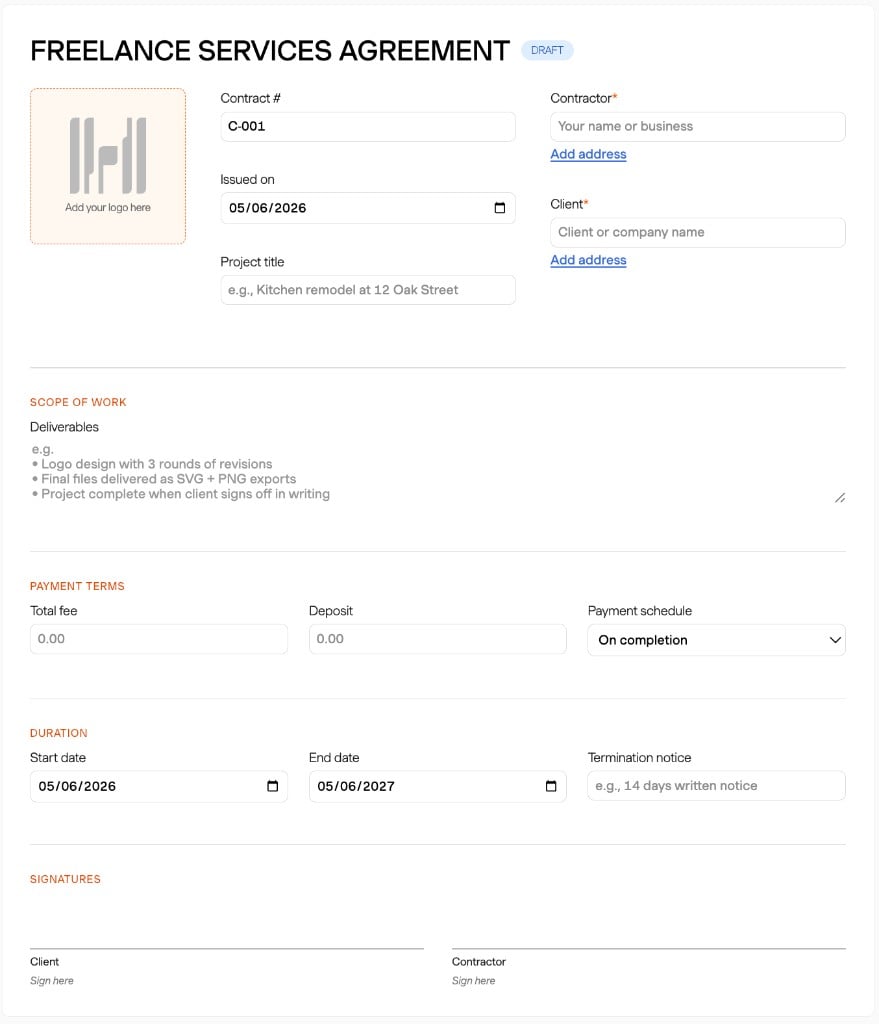
AGREEMENT DRAFT

Add your logo here

Scope of work

Payment terms

Duration

Signatures

Client

Sign here

Contractor

Sign here

Get paid via:
Credit card / Debit card
ACH
Wire transfer

Customize contract

Appearance

Add a logo
Show contract title

Contract settings

Include payment terms Total fee, deposit, and schedule
Include termination clause Notice required to end the contract
Include signature blocks Both parties sign at the bottom

Understanding Software Development Contract Essentials

A software development contract is a critical document that outlines the terms and conditions between a developer and their client. At its core, this contract needs to address several key components: project scope, payment terms, intellectual property rights, and confidentiality clauses. The global software development outsourcing market is projected to reach USD 977.04 billion by 2031, emphasizing the growing necessity for clear and comprehensive contracts. Approximately 64% of companies outsource software development, underscoring the importance of well-defined agreements.

Ambiguities in project scope are a common challenge, often leading to "scope creep" and contractual disputes. A precise description of requirements and deliverables is essential to avoid misunderstandings. Moreover, with 73% of tech companies facing IP disputes, it's crucial to explicitly define intellectual property ownership within the contract. This includes "work made for hire" provisions and assignment clauses that clarify when ownership transfers to the client. While Harvest can assist in managing project budgets and tracking time, it does not offer tools for creating these detailed legal components.

Customizing a Software Development Contract Template

Customizing a software development contract template ensures it meets the specific needs of the project and the parties involved. The template should be tailored to address unique project requirements, payment structures, and intellectual property considerations. Developers often earn 20-40% more per hour on contract work, highlighting the financial stakes involved in these agreements. As such, establishing clear payment terms is vital. Harvest's invoicing features can accommodate both fixed-price and time-and-materials contracts, ensuring flexible financial arrangements.

To effectively customize a template, one must also consider regional legal requirements, such as GDPR and CCPA compliance for data privacy. Including confidentiality and non-disclosure clauses is essential to protect sensitive information, although Harvest does not provide tools for managing these legal aspects. Instead, Harvest excels in supporting the financial and organizational components of software projects, offering tools to manage change orders and project budgets.

Leveraging Harvest for Software Project Management

While Harvest does not create legal contracts, it plays a pivotal role in managing the operational aspects of software development projects. Harvest supports change order processes, which are crucial for adapting to evolving project specifications. This capability helps keep projects aligned with client expectations and mitigates the risk of disputes over deliverables.

In addition, Harvest offers robust invoicing solutions that accommodate both fixed-price and time-and-materials contracts. This flexibility is particularly important in an industry where contract developers can earn significantly more than full-time employees, sometimes exceeding $200,000 annually. By managing project budgets and tracking time, Harvest ensures that financial aspects of the project are transparent and well-organized, ultimately contributing to smoother project execution.

Legal Considerations for Software Development Contracts

Legal considerations are paramount when drafting a software development contract. Key elements such as intellectual property rights, confidentiality, and compliance with data privacy regulations must be addressed comprehensively. The GDPR and CCPA impose stringent requirements on data handling, necessitating careful contract drafting to avoid substantial fines and reputational damage.

While Harvest does not handle the legal drafting of contracts, it supports the financial and project management aspects. For example, by enabling change order tracking and flexible invoicing, Harvest facilitates adherence to contractual terms related to payment and project scope adjustments. As experts recommend standardizing contracts to streamline processes, integrating Harvest’s tools can enhance the efficiency and transparency of managing software development projects.

Best Practices for Effective Contract Management

Effective contract management involves more than just drafting an agreement; it requires ongoing oversight and adaptation to project dynamics. A well-structured contract should define project scope, payment terms, and intellectual property rights clearly. However, managing these elements effectively also involves regular monitoring and adjustment as projects evolve.

Harvest assists with this by offering tools for tracking project budgets and time, thereby providing transparency and accountability throughout the project's lifecycle. This ensures that developers and clients are aligned on financial expectations and project milestones. Although Harvest does not offer legal contract drafting, its capabilities in managing change orders and invoicing are invaluable for maintaining the integrity of the contract throughout the project.

Explore Software Development Contracts with Harvest

Harvest helps manage time tracking and budgets for software projects, ensuring smooth execution and compliance.

Harvest software development contract template interface

Software Development Contract Template FAQs

  • A software development contract should include a clear project scope, payment terms, intellectual property rights, and confidentiality clauses. It should detail deliverables and timelines to avoid disputes.

  • Customizing a template involves tailoring it to the specific needs of your project. This includes defining project scope, payment terms, and IP rights, and ensuring compliance with relevant laws like GDPR.

  • Harvest supports software development projects by managing time tracking, project budgets, and invoicing. It accommodates change orders and different contract types, such as fixed-price and time-and-materials.

  • Intellectual property rights are crucial because they define who owns the software and related assets. Clear IP clauses prevent disputes and ensure that clients receive the rights they expect.

  • Common mistakes include ambiguous project scopes and unclear IP ownership. To avoid disputes, ensure contracts are detailed and reviewed by legal professionals.

  • Yes, Harvest supports change order processes, helping manage adjustments to project specifications and keeping both developers and clients aligned on any changes.

  • GDPR requires that contracts include data privacy provisions, ensuring that data handling complies with regulations. This involves privacy by design and user rights facilitation.