
Harvest
Contracts
Sign up

Scope of Work Template

Managing project scope is crucial to prevent scope creep and budget overruns. Harvest helps contractors and service businesses by providing tools to manage time, budgets, and expenses efficiently.

Start from a template

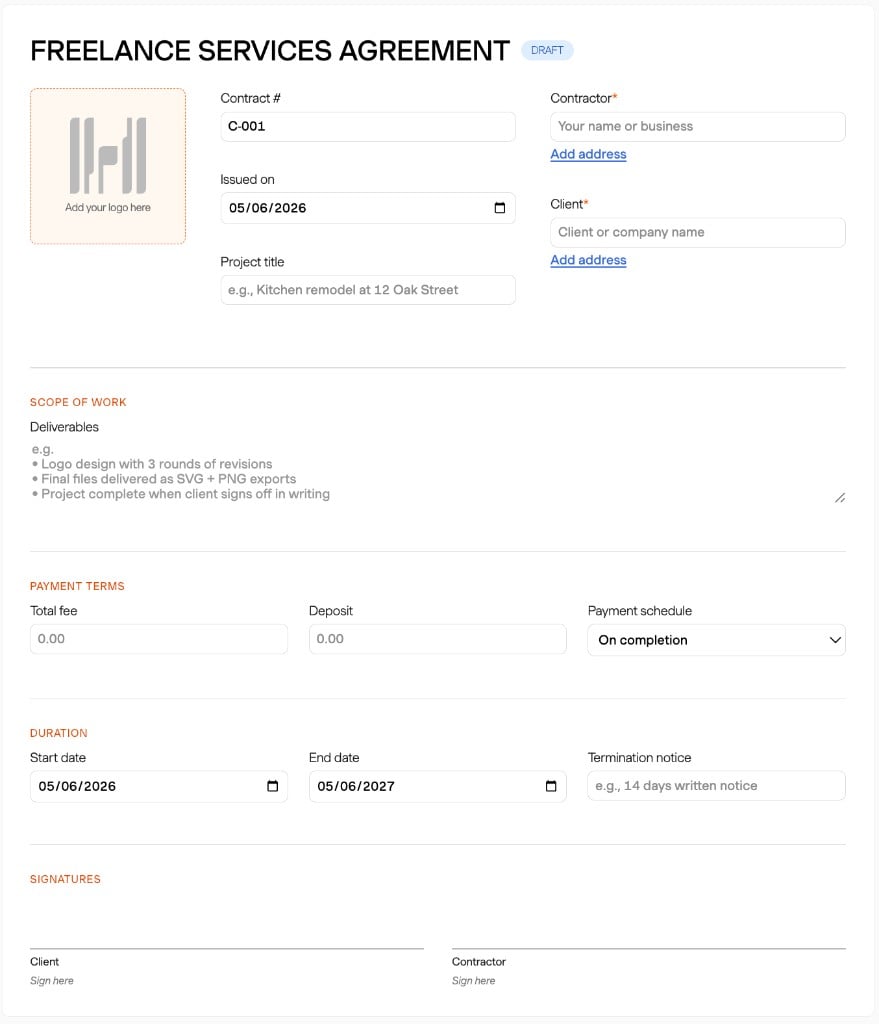
AGREEMENT DRAFT

Add your logo here

Scope of work

Payment terms

Duration

Signatures

Client

Sign here

Contractor

Sign here

Get paid via:
Credit card / Debit card
ACH
Wire transfer

Customize contract

Appearance

Add a logo
Show contract title

Contract settings

Include payment terms Total fee, deposit, and schedule
Include termination clause Notice required to end the contract
Include signature blocks Both parties sign at the bottom

Understanding the Scope of Work Template

A Scope of Work (SOW) template is a critical tool for defining project boundaries and expectations, helping to prevent the common problem of scope creep. Industry studies show that 52% of organizations experience scope creep due to poorly defined project parameters, often leading to increased revisions and missed deadlines. A well-structured SOW is essential for aligning stakeholders and ensuring everyone is on the same page, which can significantly boost project success rates.

Incorporating clear project objectives, deliverables, and timelines into your SOW can reduce overspending risks. For instance, optimized SOW processes have been shown to accelerate project approvals by up to 40%, demonstrating their impact on productivity and cost savings. By providing a single source of truth, a well-defined SOW template can align team members and facilitate smoother onboarding for new participants.

Key Components of an Effective Scope of Work

A comprehensive Scope of Work template should include several key components to ensure clarity and prevent misunderstandings. First, a project overview should be provided, outlining the objectives and goals. This is crucial in industries like construction, where a SOW details everything from site preparation to final inspections, helping to avoid frequent variations and disputes.

Additionally, a detailed breakdown of tasks and timelines is essential for managing expectations. For example, the construction industry often specifies tasks like plumbing or electrical work with clear deadlines and quality standards. Research indicates that projects without clear directives can run 45% over budget, underscoring the importance of precise task management.

Finally, including sections on deliverables, payment terms, and change order procedures can further safeguard against scope creep and legal disputes. Ambiguity in these areas can lead to legal liabilities and budget overruns. Therefore, aligning these elements with project management practices can enhance both efficiency and compliance.

Customizing Your Scope of Work Template with Harvest

Customizing a Scope of Work template to fit specific project needs can greatly enhance its effectiveness. Harvest provides tools that support contractors and service businesses by managing time, budgets, and expenses, making it easier to tailor SOWs to unique project requirements.

While Harvest does not handle detailed specifications or compliance issues, it excels in providing a clear view of project objectives and managing the financial aspects. This can be particularly beneficial for nonprofit or educational projects, where clarity in project objectives is vital.

By using Harvest, you can ensure that your SOW aligns with your project's financial and time constraints, helping to maintain focus and prevent scope creep. This integration of time and budget management tools into your SOW templates can streamline project execution and improve overall project outcomes.

Best Practices for Writing a Scope of Work

Creating a robust Scope of Work involves several best practices to ensure it serves its purpose effectively. One of the most crucial steps is involving all stakeholders in the creation process to gather comprehensive requirements and expectations from the outset. This collaborative approach helps in defining project boundaries and avoiding vague language.

Experts recommend setting clear project goals and breaking them down into individual tasks with specific deliverables and acceptance criteria. This step-by-step process not only clarifies expectations but also helps in setting realistic timelines and budgets. According to industry research, projects with clear scopes of work experience fewer revisions, leading to a 40% faster approval process.

Avoiding common pitfalls like rushing the planning process and not updating documentation as changes occur is vital. Using tools like Harvest to track time and expenses can support these best practices by providing real-time insights into project progress, helping to adjust plans as necessary and maintain alignment with the original SOW.

Integrating a Scope of Work with Project Management

Integrating a Scope of Work with broader project management processes can ensure a cohesive approach to project execution. A well-crafted SOW acts as the backbone of any project, supporting planning, scheduling, budgeting, and monitoring efforts.

Harvest plays a pivotal role in this integration by assisting with time tracking and budget management, providing crucial insights into project performance. By using a Work Breakdown Structure (WBS) in conjunction with Harvest, you can break down the SOW into smaller, manageable tasks, making it easier to track progress and assign responsibilities.

Furthermore, the SOW should seamlessly integrate with change management processes. This ensures that any modifications are properly documented and assessed, minimizing their impact on the project. With Harvest, managing these changes becomes more straightforward, allowing for better control over project scope and preventing potential overruns.

Explore Harvest's Scope of Work Integration

See how Harvest integrates with Scope of Work templates to manage time and budgets efficiently.

Screenshot of Harvest showing a scope of work template integration

Scope of Work Template FAQs

  • A Scope of Work (SOW) template is a document that outlines the project objectives, deliverables, timelines, and responsibilities. It serves as a framework for managing and controlling project scope, helping to prevent scope creep and ensuring that all stakeholders have a shared understanding of the project.

  • A Scope of Work is crucial for project management as it defines the project's boundaries and expectations, reducing the risk of scope creep. Research indicates that 52% of organizations experience scope creep due to poorly defined project parameters, leading to increased costs and delays.

  • Customizing a Scope of Work template involves tailoring it to fit the specific needs and objectives of your project. Tools like Harvest provide support by managing time, budgets, and expenses, allowing you to align the SOW with your financial and time constraints.

  • Key components of a Scope of Work include a project overview, detailed task breakdowns, timelines, deliverables, and payment terms. These elements help in setting clear expectations and managing project scope effectively, reducing the risk of misunderstandings and legal disputes.

  • Harvest assists with managing a Scope of Work by providing tools for tracking time, budgets, and expenses. This helps contractors and service businesses maintain focus on project objectives and prevent scope creep, ensuring efficient project execution.

  • Common mistakes include using vague language, not defining "in-scope" and "out-of-scope" deliverables, and failing to update documentation as changes occur. It's important to involve stakeholders in the process and use tools like Harvest to track progress and manage changes effectively.

  • A Scope of Work integrates with project management processes by supporting planning, scheduling, budgeting, and monitoring. Harvest aids this integration by providing insights into time and budget management, helping to maintain control over project scope and execution.