
Harvest
Contracts
Sign up

Service Agreement Template in Korean

Service agreements in Korea can be complex, with unique legal requirements. Harvest helps contractors manage time tracking and expenses but doesn't provide legal templates.

Start from a template

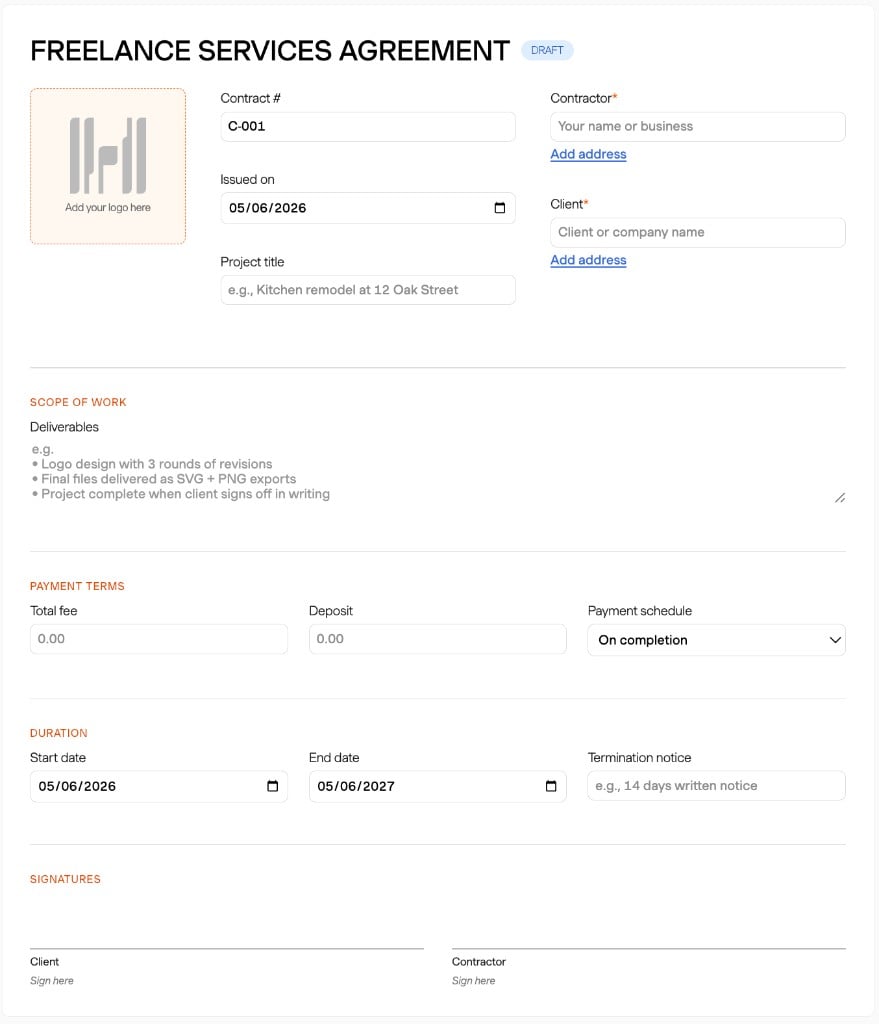
AGREEMENT DRAFT

Add your logo here

Scope of work

Payment terms

Duration

Signatures

Client

Sign here

Contractor

Sign here

Get paid via:
Credit card / Debit card
ACH
Wire transfer

Customize contract

Appearance

Add a logo
Show contract title

Contract settings

Include payment terms Total fee, deposit, and schedule
Include termination clause Notice required to end the contract
Include signature blocks Both parties sign at the bottom

Understanding Service Agreement Templates in Korea

Service agreements in South Korea are crucial for establishing clear expectations and legal protections between contractors and their clients. Unlike some common law jurisdictions, Korean contract law does not require "consideration" for an agreement to be enforceable, yet written contracts are still preferred for clarity and enforceability. In South Korea, contracts are predominantly drafted in Korean, and even if a foreign party does not understand the language, the Korean version is legally binding. It's essential to have a bilingual version to prevent misunderstandings, especially in international dealings. Additionally, South Korean law mandates that employment contracts specify terms like job duties, wages, and termination conditions under the Labour Standards Act.

For those looking to draft service agreements, starting with a pre-drafted template developed by legal professionals is advisable to ensure compliance with local laws and inclusion of necessary provisions. Given the complex landscape of Korean labor law, seeking expert advice when drafting or reviewing these agreements is highly recommended, particularly for foreign entities entering the market.

Key Clauses in Korean Service Agreements

Service agreements in Korea must include specific clauses to effectively manage expectations and legal obligations. A well-drafted agreement should clearly define the scope of work, deliverables, payment terms, and invoicing procedures. It is crucial to address intellectual property rights, particularly in sectors like IT and software development, where ownership of created works and licensing terms are common points of contention. Consulting and professional services agreements should specify professional liability insurance and deliverables to mitigate risks.

Ensuring accurate classification of workers as independent contractors or employees is vital to avoid penalties under South Korean law, which strictly governs employment relationships through the Labour Standards Act. Misclassification can lead to significant legal and financial repercussions. Therefore, consulting with legal experts to correctly draft these clauses is advisable. Additionally, including clear dispute resolution mechanisms and termination conditions will safeguard both parties' interests.

Practical Tips for Customizing Service Agreements

Customizing a service agreement to fit specific needs and industry requirements in South Korea involves several practical steps. Start by using a legally vetted template, ensuring it includes all essential clauses such as payment terms, invoicing schedules, and tax obligations. Industry-specific considerations, like those in public procurement or IT, should be tailored to reflect the unique challenges and regulatory requirements of each sector.

For agreements involving foreign parties, creating a bilingual contract in both Korean and English is crucial to avoid misinterpretations. Regularly reviewing and updating contracts to comply with current South Korean laws and industry standards is also important. By meticulously outlining key terms, such as working hours, vacation days, and overtime compensation, businesses can prevent misunderstandings and foster trustful relationships.

Navigating Legal Compliance and Avoiding Pitfalls

Legal compliance in South Korean service agreements requires careful attention to local labor laws and contract drafting norms. The Labour Standards Act sets the framework for employment relationships, mandating detailed documentation of job duties, wages, and termination conditions. Businesses must be vigilant about correctly classifying workers to avoid the pitfalls of misclassification, which can lead to severe penalties.

Common pitfalls in service agreements include unclear scopes of work and automatic renewal provisions that can result in unintended contract extensions. To mitigate these risks, contracts should be clear and concise, with well-defined roles and responsibilities. Additionally, maintaining accurate records of independent contractor engagements, including hours worked and payments made, is critical in minimizing compliance risks. Engaging with legal professionals for contract review and compliance advice is a best practice for businesses operating in South Korea.

The Role of Harvest in Supporting Contractors

While Harvest does not provide legal templates or compliance guidance for service agreements in Korea, it plays a significant role in supporting contractors with time tracking, expense management, and invoicing. Harvest helps contractors efficiently organize their workflows, ensuring accurate billing and expense tracking to maintain profitability and transparency.

Harvest's capabilities allow contractors to track project hours and expenses, generate detailed invoices, and manage budgets effectively. This support can be invaluable for contractors who must focus on maintaining compliance with Korean labor laws while efficiently managing their operations. By providing a streamlined platform for managing these essential business functions, Harvest helps contractors focus on delivering high-quality services without being bogged down by administrative tasks.

Discover Harvest's Contractor Tools

Explore how Harvest helps contractors with time tracking and invoicing, ensuring efficient project management.

Platform screenshot showing time tracking and invoicing tools by Harvest.

Service Agreement Template in Korean FAQs

  • In South Korea, service agreements must comply with the Labour Standards Act, detailing terms like job duties, wages, and termination conditions. Written contracts are preferred for clarity and enforceability.

  • Key clauses include scope of work, payment terms, invoicing procedures, and intellectual property rights. Consulting legal experts is advisable to ensure compliance with Korean laws.

  • Start with a legally vetted template, then tailor it to include industry-specific clauses. Bilingual contracts can prevent misinterpretations, especially for international agreements.

  • Common pitfalls include unclear scopes of work and misclassification of workers. Ensuring clear terms and correct classification can help avoid legal penalties.

  • Harvest aids contractors by providing tools for time tracking, expense management, and invoicing, allowing them to focus on compliance and delivering quality services.

  • A bilingual contract helps prevent misunderstandings between Korean and foreign parties. It's crucial for clarity and ensuring both parties understand the terms.

  • Proper classification as an employee or contractor ensures compliance with Korean labor laws. Misclassification can lead to significant legal and financial repercussions.