
Harvest
Contracts
Sign up

Nda Template in Korean

Harvest helps contractors streamline time tracking and invoicing, though it does not provide NDA templates. Focus on ensuring your NDAs are legally compliant in Korea for effective protection.

Start from a template

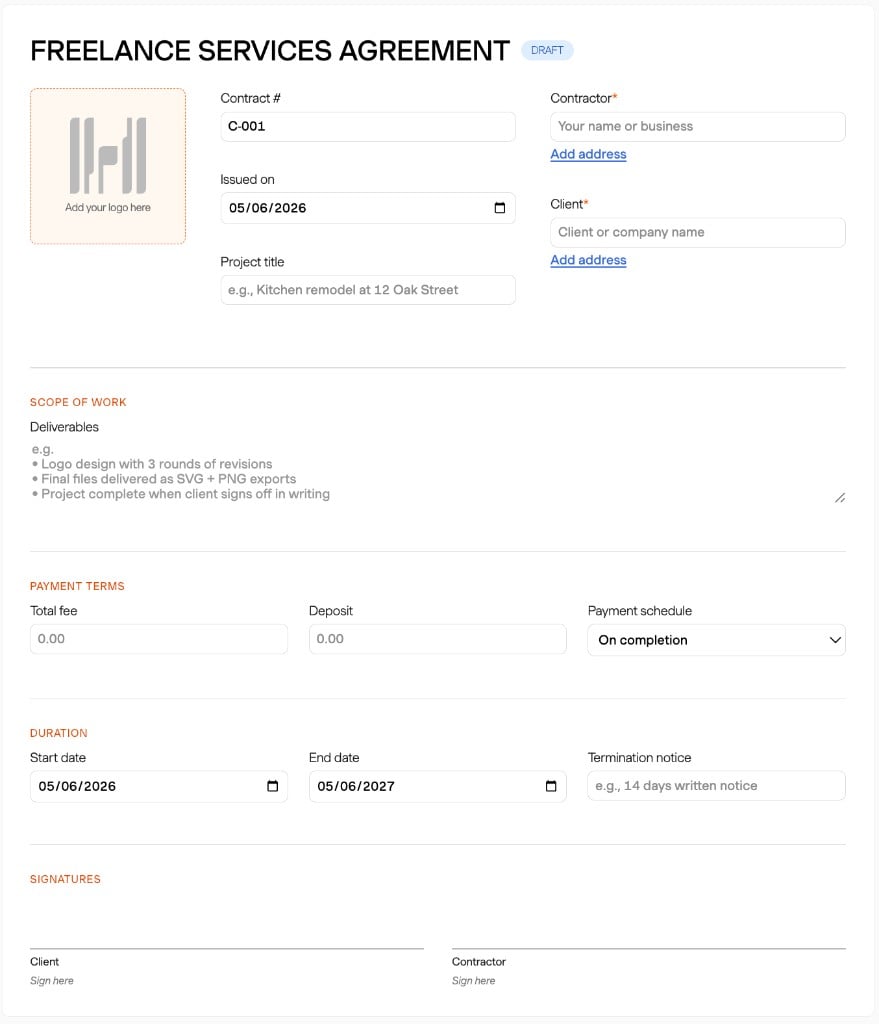
AGREEMENT DRAFT

Add your logo here

Scope of work

Payment terms

Duration

Signatures

Client

Sign here

Contractor

Sign here

Get paid via:
Credit card / Debit card
ACH
Wire transfer

Customize contract

Appearance

Add a logo
Show contract title

Contract settings

Include payment terms Total fee, deposit, and schedule
Include termination clause Notice required to end the contract
Include signature blocks Both parties sign at the bottom

Understanding Key Clauses in a Korean NDA

A Non-Disclosure Agreement (NDA) is essential for protecting confidential business information. In South Korea, NDAs, or 비밀유지계약서, must be tailored to the local legal environment to be enforceable. According to the Korea Fair Trade Commission, essential clauses should include a precise definition of what constitutes confidential information, exclusions for information that is not considered confidential, and a reasonable duration for confidentiality obligations. Industry experts warn that overly broad definitions can render an NDA unenforceable in court.

Additionally, NDAs should specify remedies for breaches, such as liquidated damages or injunctive relief, and include a dispute resolution mechanism agreed upon by all parties. It's crucial to ensure the NDA is not one-sided and provides balanced obligations and remedies to both signatories. Recent trends also suggest including clauses for electronic signatures and digital document management to streamline agreements while maintaining legal integrity.
Ensuring Legal Compliance in South Korean NDAs

For an NDA to be legally enforceable in South Korea, it must comply with national laws such as the Korean Civil Code, the Unfair Competition Prevention and Trade Secret Protection Act, and the Personal Information Protection Act (PIPA). The NDA should clearly state that it adheres to these legal frameworks and define the consequences of breaches. Under the UCPA, trade secrets must not be publicly known and should be actively managed as confidential to qualify for protection.

Violations of NDAs can lead to significant penalties, including potential criminal charges if trade secrets are involved. In severe cases, fines can reach up to 500 million KRW (approximately $365,000 USD). Moreover, recent amendments to PIPA have increased fines for high-severity data breaches to 10% of a company's total revenue. Therefore, it's imperative for companies to not only craft a robust NDA but also to maintain stringent internal security practices to prevent unauthorized disclosures.

Cultural Considerations and Customization of NDAs

In South Korea, cultural norms can significantly impact the effectiveness of an NDA. Informal sharing of ideas is common, and if an NDA does not explicitly include verbal communications or informal disclosures, it may fail to protect sensitive information. A Silicon Valley company's experience highlighted this when their rigid NDA template conflicted with a Korean partner's cultural expectations, leading to a failed joint venture.

To avoid such issues, NDAs should be customized to reflect cultural nuances and legal requirements. Including a clause that recognizes oral agreements as confidential information can prevent misunderstandings. Engaging legal counsel familiar with both local and international practices can ensure the NDA is both legally sound and culturally appropriate. Additionally, professional translation services can help bridge language gaps, ensuring all parties have a clear understanding of the agreement's terms.

Explore Korean NDA Templates with Harvest

Harvest assists in time tracking and invoicing, offering indirect support for managing contractual obligations alongside tailored Korean NDA templates.

Screenshot of a Korean NDA template with highlighted clauses.

Nda Template in Korean FAQs

  • Essential clauses in a Korean NDA include a clear definition of confidential information, exclusions, a reasonable duration for confidentiality, and specified remedies for breaches like liquidated damages. Including a dispute resolution mechanism is also crucial.

  • To ensure enforceability, align your NDA with the Korean Civil Code and the Unfair Competition Prevention and Trade Secret Protection Act. Define confidential information precisely and outline clear breach consequences.

  • Yes, electronic signatures are increasingly accepted in South Korea for NDAs, reflecting a trend towards digital document management. Ensure your NDA includes a clause permitting electronic signatures for legal compliance.

  • Penalties for NDA breaches in Korea can include liquidated damages, injunctions, and in severe cases involving trade secrets, criminal charges up to 10 years imprisonment or fines up to 500 million KRW.

  • Cultural factors such as informal idea sharing can impact NDAs. Ensure your NDA explicitly includes verbal communications as confidential to align with Korean business practices and prevent information leaks.

  • To tailor an NDA for Korean business, consider engaging local legal counsel, include clauses for oral disclosures, and ensure a mutual understanding of terms through professional translation services.

  • Adding a "No-AI Training" clause prevents disclosed data from being used in AI model training, protecting trade secrets from becoming part of a third-party AI's training set, which is crucial for maintaining confidentiality.