
Harvest
Expenses
Sign up

Credit Card Expense Tracker Excel

Harvest provides a streamlined alternative to Excel for manual expense tracking, reducing the time spent on manual data entry and error correction.

  • Attach receipts to projects & tasks
  • Turn tracked expenses into client invoices
  • Free 30-day trial, no credit card needed

or drag & drop • Images and PDFs, max 10 MB

Challenges of Excel-Based Credit Card Expense Tracking

Tracking credit card expenses using Excel is a common practice, especially for small businesses and individuals. However, this method is not without its challenges. A study indicates that 88% of spreadsheets contain errors, which can lead to significant financial discrepancies. The manual nature of Excel means that finance teams might spend up to 24 hours per month just updating and verifying spreadsheets. Moreover, each manual expense report costs an average of $58 to process, with error correction adding another $52 per report.

Despite these challenges, Excel remains popular due to its accessibility and flexibility. However, the lack of automation can divert valuable time away from core business activities. Organizations that transition to automated systems have reported significant productivity gains. For example, one company reduced its expense processing time from 1.5 days to just 1.5 hours per month by adopting digital solutions. The need for a more efficient system is clear, making Harvest a viable alternative for streamlined expense tracking.
Harnessing Excel for Expense Tracking: Best Practices

While Excel can be a starting point for tracking credit card expenses, certain best practices can optimize its usage. Begin by setting up a clear template with essential columns such as date, description, category, payment method, and amount. This helps ensure consistency and avoids vague categorizations that obscure spending patterns. Implementing formulas for automation, like SUM for totals and VLOOKUP for categorizing expenses, can also streamline the process.

To prevent common mistakes, regularly update your spreadsheet and avoid overcomplicating the template with excessive columns or formulas. Security is another consideration; protect your files with passwords and store backups securely. Although Excel lacks real-time visibility and can be prone to errors, using these strategies can help mitigate some of the inherent limitations, preparing users for a smoother transition to more advanced software like Harvest in the future.

Transitioning from Excel to Harvest for Expense Management

The limitations of Excel in tracking credit card expenses often lead users to seek more efficient solutions. Harvest offers a robust alternative with its focus on manual expense tracking and invoicing, particularly advantageous for project-based expense management. Although Harvest doesn't automate credit card statement imports or track rewards points, it excels in providing clear project expense tracking without the need for Excel's manual data entry.

By switching to Harvest, users can benefit from streamlined processes that reduce the time spent on managing expenses. Unlike Excel, which requires extensive manual input and verification, Harvest's tools are designed to facilitate easy expense entry and invoicing, leading to significant time savings. For businesses looking to move beyond the constraints of Excel, Harvest presents a reliable option for efficient and accurate expense tracking.

Optimizing Financial Insights with Harvest

While Excel allows for some degree of financial insight through manual data entry, the lack of automated features can hinder real-time visibility into spending patterns. Harvest, on the other hand, offers a more structured approach to expense management, enabling users to track project-based expenses with greater accuracy and efficiency.

Unlike Excel, Harvest does not integrate with credit cards for automatic transaction tracking. However, it does provide comprehensive tools for manual expense management, making it easier for businesses to keep track of their financial activities. With Harvest, users can overcome the limitations of Excel spreadsheets, such as error-prone data entry and the absence of real-time updates, ultimately leading to more informed financial decisions.

Track Credit Card Expenses with Harvest

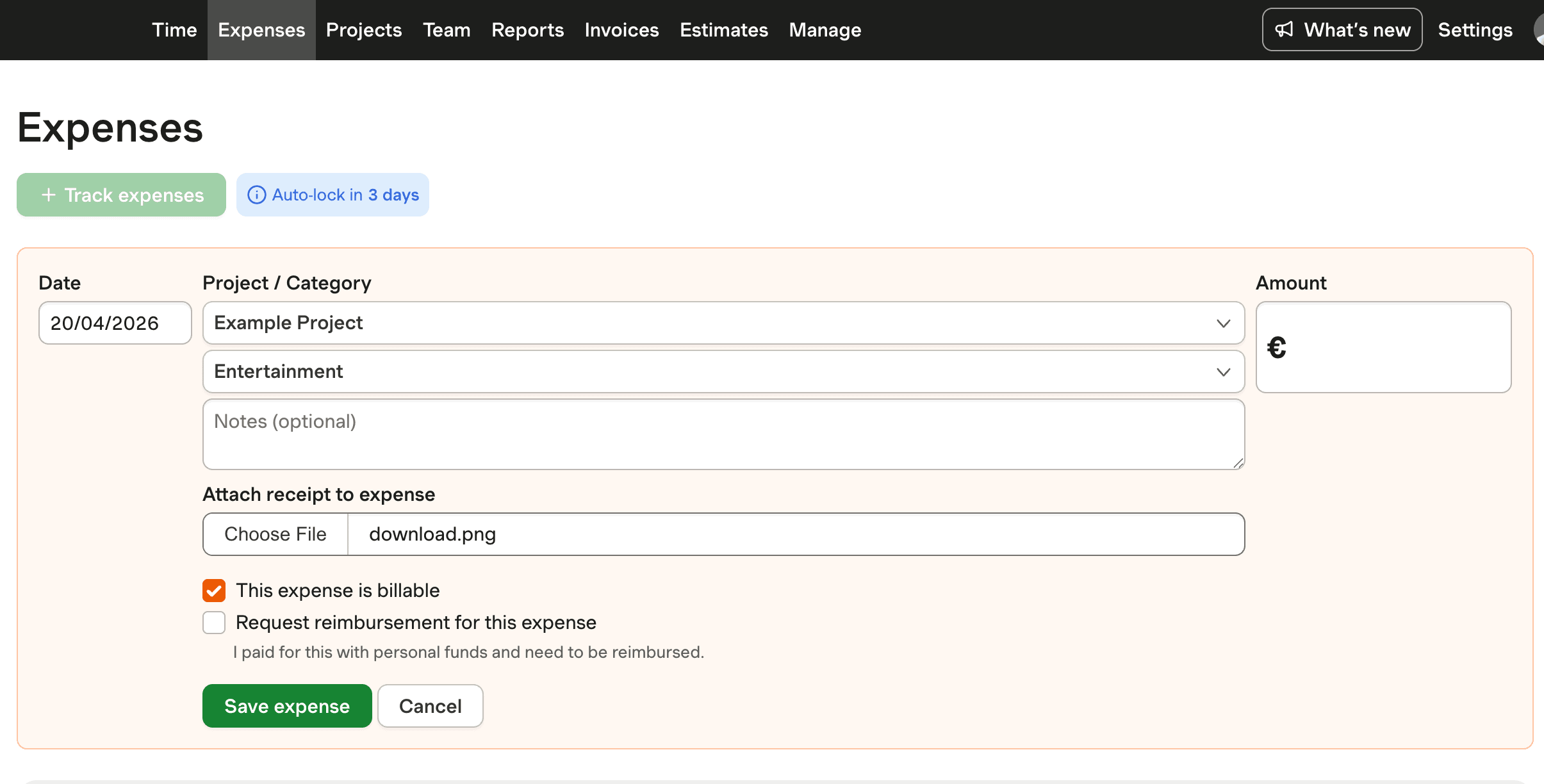
See how Harvest streamlines manual expense tracking, reducing errors and simplifying project-based management.

Screenshot of Harvest's expense tracking interface for credit card expenses

Credit Card Expense Tracker Excel FAQs

  • A good credit card expense tracker template should include essential columns for date, description, category, payment method, and amount. Automation through formulas, such as SUM for totals and VLOOKUP for categorizing expenses, enhances functionality. Security features like password protection are also crucial.

  • To categorize credit card expenses in Excel, set up a column specifically for categories. Use predefined categories tailored to your business needs, avoiding vague terms like "miscellaneous." Implement VLOOKUP or similar formulas to automate the categorization process based on transaction descriptions.

  • Yes, Harvest offers robust manual expense tracking and invoicing solutions that eliminate the need for Excel. It allows for efficient project-based expense management without the manual data entry and error risks associated with spreadsheets.

  • Common pitfalls include high error rates, with up to 88% of spreadsheets containing errors. Manual data entry is time-consuming, and without automation, real-time insights are limited. Over-complication of templates and insecure file handling are also frequent issues.

  • To visualize spending trends, create a summary dashboard in Excel with charts like pie charts for category breakdowns and line charts for spending over time. Use Excel's charting tools to turn data into visual insights, helping identify patterns and control costs.

  • To secure Excel expense trackers, use password protection for files, restrict access to essential collaborators, and store backups in secure cloud storage. These measures help safeguard sensitive financial data from unauthorized access.