
Harvest
Expenses
Sign up

Expense Report Compliance

Harvest simplifies project-based expense tracking, helping businesses maintain accurate records and reduce fraud-related revenue losses by 5%.

EXPENSE REPORT DRAFT

Drop your receipts here or click to upload

Images and PDFs (max 10 MB each)

Date
Category
Merchant
Description
Amount
Total
$0.00

Customise report

Appearance

Show report title

Report settings

Understanding Expense Report Compliance

Expense report compliance is essential for businesses to ensure financial accountability and avoid potential fines. Companies lose approximately 5% of their annual revenue to fraud, often due to inadequate expense management. Implementing a robust compliance framework helps in mitigating such risks. The IRS requires detailed records for business expenses, with penalties for poor documentation potentially reaching 20% of the expense amount. This underscores the need for immediate and accurate documentation, especially for categories like travel and entertainment.

While manual processes are prone to errors, automation offers a promising solution. By adopting automated systems, businesses can reduce processing time by 60% and cut costs by 35%. Such systems not only ensure compliance but also enhance accuracy and efficiency. Harvest, while focusing on project-based expense tracking, provides a user-friendly interface for small-to-medium businesses to manage expenses effectively.
Best Practices for Ensuring Compliance

Implementing clear and enforceable expense policies is crucial for compliance. A well-defined policy serves as a roadmap, outlining allowable expenses and required documentation. This clarity prevents misunderstandings and ensures that employees adhere to the rules. For example, vague policy language can lead to costly reimbursements, such as a $1,200 dinner being reimbursed under 'team-building'.

Regular audits are another best practice for maintaining compliance. By auditing expense reports, companies can track discrepancies and identify fraudulent claims, ensuring that expenses are properly categorized. It's also important to integrate expense management systems with accounting software for real-time visibility and improved decision-making. Although Harvest does not provide automated policy enforcement, it allows businesses to manually track and categorize expenses, offering a straightforward solution for maintaining expense records.

Leveraging Technology for Compliance

Automation is transforming expense management, making compliance more manageable. By 2025, 87% of CFOs prioritize expense automation to enhance compliance. Automated systems offer features like receipt scanning and real-time policy enforcement, reducing manual entry errors and speeding up reimbursements. For instance, businesses that automate their processes can save an average of $75 per expense report.

While Harvest does not offer automated compliance features, it helps small-to-medium businesses track project-related expenses with ease. The integration with accounting software like QuickBooks and Xero allows for seamless invoicing and better financial oversight. Harvest enables businesses to maintain accurate records, a crucial step toward achieving compliance.

The Legal Landscape of Expense Reporting

Understanding the legal requirements for expense reporting is critical for compliance. For instance, the California Labor Code Section 2802 mandates reimbursement for all necessary employee expenses, with penalties for non-compliance. Similarly, the UK requires employers to report reimbursed expenses on a P11D form unless specific exemptions apply.

Compliance with these regulations requires meticulous record-keeping and adherence to tax laws. Businesses must retain records for at least three years in the UK and six years in Canada. While Harvest does not handle legal compliance, its expense tracking features help businesses keep accurate records, a fundamental aspect of meeting legal obligations.

Expense Report Compliance with Harvest

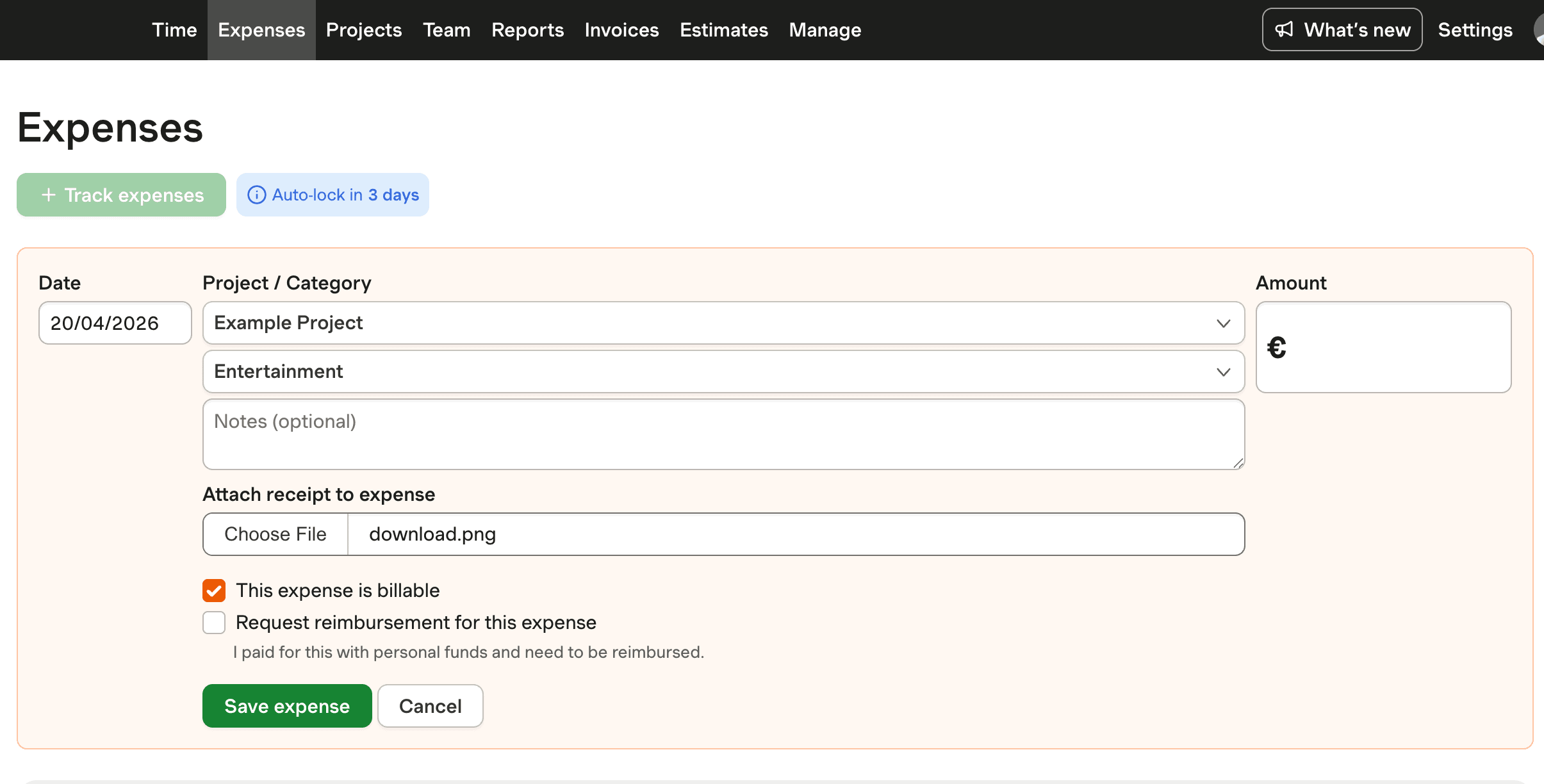
View how Harvest helps businesses track project-based expenses, ensuring compliance and reducing errors.

Screenshot of Harvest's expense report tracking features for compliance.

Expense Report Compliance FAQs

  • An effective expense policy should clearly define allowable expenses, set spending limits, and specify documentation requirements. Regular updates and employee training ensure compliance and understanding.

  • Automation reduces processing time by 60% and cuts costs by 35%, enhancing accuracy and compliance. Features like receipt scanning and real-time policy enforcement minimize errors and expedite reimbursements.

  • The IRS requires detailed documentation for business expenses, with potential penalties for poor record-keeping. Immediate documentation is especially critical for travel and entertainment expenses.

  • Regular audits, clear policies, and automation help prevent expense report fraud. For example, companies lose 5% of revenue to fraud, but automation and audits can reduce such risks significantly.

  • Harvest offers project-based expense tracking, allowing businesses to manually categorize and track expenses. While it doesn't automate policy enforcement, it provides accurate record-keeping for compliance.

  • Expense reporting is evolving with automation and real-time visibility becoming priorities. Post-pandemic trends include increased home office expenses and dynamic policy adjustments due to inflation.

  • Integration ensures consistent data, automates workflows, and provides real-time financial insights, aiding in better decision-making and compliance. Harvest integrates with QuickBooks and Xero for seamless invoicing.