
Harvest
Expenses
Sign up

Expense Report in Danish

Harvest simplifies expense tracking by allowing Danish terminology input while maintaining English interface, addressing digital bookkeeping needs.

  • Attach receipts to projects & tasks
  • Turn tracked expenses into client invoices
  • Free 30-day trial, no credit card needed

or drag & drop • Images and PDFs, max 10 MB

Understanding Expense Reports in Denmark

Expense reports in Denmark, or udgiftsrapport/udlægsrapport, require adherence to specific regulations and standards. A significant change is the mandatory digital bookkeeping law that requires digital storage of all documentation related to financial transactions by July 1, 2024. This law impacts how expense reports are created, managed, and stored, particularly as businesses aim to meet these compliance requirements. In Denmark, digital solutions are increasingly adopted to streamline these processes, reducing common errors such as missing receipts and duplicate submissions.

Specifically, businesses must ensure that all expense reports include key details like the issue date, nature of delivery, amount, sender and recipient information, and payment details. The law also stipulates that companies must retain these documents for five years. Non-compliance can result in significant fines, aligned with the public revenue lost due to incorrect bookkeeping, highlighting the importance of precise and compliant reporting.
Leveraging Digital Solutions for Expense Reporting

As Denmark leads Europe in digitalization, with 42% of companies expected to use AI by 2025, the push towards digital solutions in expense reporting is strong. This digital transformation helps businesses save time and minimize errors. Manual processes are often fraught with inefficiencies, leading to issues like misplaced receipts and incorrect entries. Digital tools provide a solution by automating these workflows, ensuring accuracy and compliance with Danish regulations.

Harvest offers an effective way to manage expense reports digitally, allowing users to input data in any language, including Danish, while maintaining an English interface. This flexibility means that while the software does not provide Danish-specific templates, users can customize their reports to include Danish terminology, ensuring they meet local standards. By using Harvest, businesses can streamline their expense management processes, reduce time spent on corrections, and enhance overall efficiency.

Key Components of Danish Expense Reports

Creating a compliant expense report in Denmark involves several critical components. Reports must detail the date of the expense, its purpose, the amount, and associated receipt numbers. This structured approach aids in accurate accounting and compliance with the Danish Bookkeeping Act, requiring detailed documentation for all financial transactions. Moreover, companies must clearly distinguish between "udlæg," or disbursements, and regular expenses, especially for re-invoicing purposes.

Harvest allows users to organize these components effectively within its platform. Although the interface is in English, users can enter descriptions and categories in Danish, aligning with local standards. Such flexibility ensures that businesses can maintain compliance while benefiting from the streamlined processes that digital reporting provides. Harvest empowers businesses to manage their expenses efficiently, aiding in the reduction of common reporting errors.

The Role of Automation in Expense Reporting

Automation plays a pivotal role in transforming expense reporting in Denmark. As businesses shift towards digital solutions, automated systems help reduce common errors like missing receipts and incorrect amounts. For instance, digital tools can automate VAT calculations and manage reporting deadlines, which are crucial under the Danish Bookkeeping Act's requirements.

Harvest's digital platform supports these needs by allowing expense data to be captured and processed efficiently. While it does not offer specific features for Danish regulations, it supports data entry in Danish, enabling users to incorporate local terminology effortlessly. This capability, coupled with automated features, ensures that businesses not only keep up with digital trends but also maintain robust compliance with local laws.

Streamline Expense Reports with Harvest

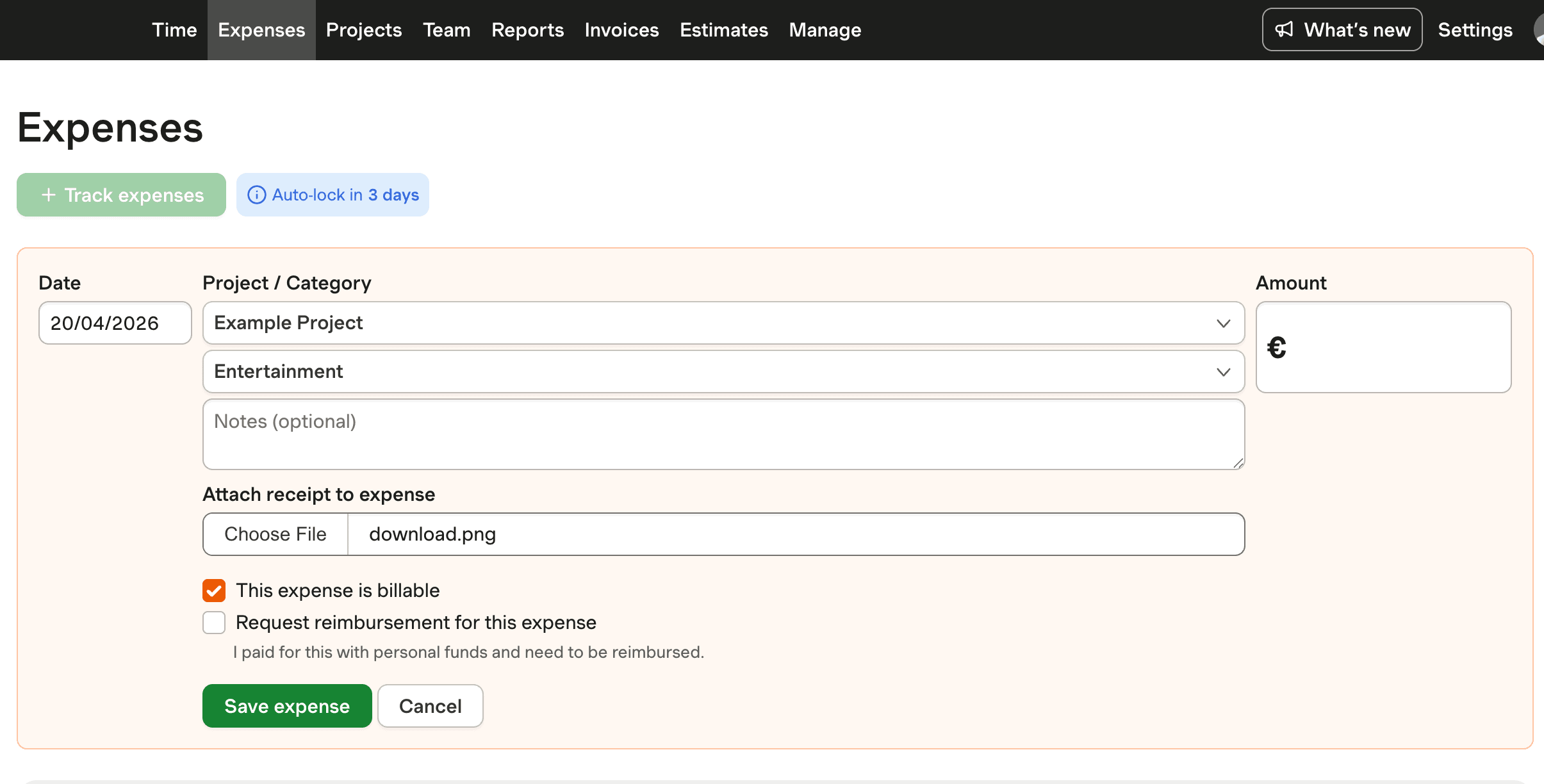
Harvest supports Danish terminology input while maintaining an English interface, simplifying expense tracking in Denmark.

Harvest interface for Danish expense report tracking

Expense Report in Danish FAQs

  • An expense report in Denmark should include the date, purpose, amount, and associated receipt numbers. This ensures compliance with the Danish Bookkeeping Act, which mandates detailed documentation for financial transactions.

  • Digitalization streamlines expense reporting by automating workflows and reducing errors. More Danish companies are adopting digital solutions, aligning with mandatory digital bookkeeping laws.

  • The Danish Bookkeeping Act requires digital storage of all transaction-related documentation, including expense reports, by July 1, 2024, for a retention period of five years.

  • Harvest allows users to input expense data in Danish, supporting local terminology while maintaining an English interface, thus helping businesses manage expenses efficiently and compliantly.

  • Yes, expenses treated as disbursements ("udlæg") must meet specific VAT rules, including being incurred in the final customer's name and re-invoiced without profit.

  • Automation reduces errors by capturing data accurately, automating VAT calculations, and managing deadlines, which are common issues in manual reporting processes.

  • While Harvest's interface is in English, users can input data, including categories and notes, in Danish, ensuring reports align with local standards.

  • AI aids in automating expense reporting processes, which helps in reducing manual errors and aligning with Denmark's digitalization trends in financial management.