
Harvest
Expenses
Sign up

Expense Tracker for Government Contractors

Government contractors face stringent compliance challenges in expense tracking. Harvest provides a robust platform to manage projects and expenses efficiently, aiding in overall financial management.

EXPENSE REPORT DRAFT

Drop your receipts here or click to upload

Images and PDFs (max 10 MB each)

Date
Category
Merchant
Description
Amount
Total
$0.00

Customise report

Appearance

Show report title

Report settings

The Challenge of Expense Tracking for Government Contractors

Government contractors face unique challenges in tracking expenses due to stringent compliance and regulatory requirements. According to industry research, 37% of government contractors report that their current travel and expense solutions lack the real-time visibility needed to prevent budgetary overruns and errors. Additionally, many organizations are still reliant on manual data entry, which can lead to processing delays of up to 54 days, significantly slower than the average. These issues not only hinder efficiency but also pose risks of non-compliance with federal regulations such as the Federal Acquisition Regulation (FAR) Part 31.

Manual systems remain prevalent, with some companies spending up to 40 hours a month managing spreadsheets. This manual approach increases the risk of errors, missing receipts, and incorrect expense categorization, all of which can lead to penalties under the FAR's Penalties for Unallowable Costs Clause. To navigate these challenges, contractors need tools that provide clarity and accuracy, ensuring that all expenses are tracked and categorized correctly.
How Harvest Supports Expense Tracking Needs

While Harvest does not specialize in government contract compliance, it offers a robust platform for tracking time and expenses, helping contractors manage projects and invoicing efficiently. Harvest's expense tracking capabilities simplify the process by integrating with other business processes, ensuring data accuracy and reliability across different functions. This integration can help streamline overall financial management, even if specific compliance features are not present.

By using Harvest, contractors can reduce manual data entry errors, a common issue that contributes to compliance risks. Furthermore, organizations that implement automated systems like Harvest can experience significant administrative time savings, with some reporting reductions of 40 to 70 hours per month. While Harvest doesn't provide DCAA compliance features, its comprehensive tracking capabilities allow contractors to maintain detailed records, a crucial element in preparing for audits and ensuring accountability.

Adopting Best Practices for Compliance and Efficiency

Adopting best practices in expense tracking can significantly enhance compliance and efficiency for government contractors. Industry experts recommend establishing clear guidelines for time reporting and expense categorization, which can be facilitated through tools like Harvest. Although Harvest doesn't provide specific features for DCAA compliance, its time and expense tracking capabilities can be part of a larger compliance strategy.

Key practices include training employees to log hours daily, maintaining precise records with audit trails, and planning for changes to ensure accountability. Contractors should also maintain separate accounts for allowable and unallowable costs to simplify tracking and reporting. By integrating Harvest into their workflow, contractors can enhance their financial management processes, ultimately reducing the risk of errors and improving their readiness for audits.

The Role of Automation in Transforming Expense Management

Automation in expense management has become increasingly crucial for government contractors looking to improve compliance and efficiency. Automated systems can reduce manual data entry errors and cut month-end close processes by nearly 50%. Despite this, many organizations still rely on manual systems, highlighting the potential benefits of adopting tools like Harvest.

While Harvest may not offer specialized compliance features, its automation capabilities can transform traditional expense management processes. By reducing reliance on manual systems, contractors can focus more on strategic tasks and less on administrative burdens. Additionally, creating a central data warehouse, as some organizations have done, can simplify integration across platforms and reduce the need for legacy tools, further enhancing efficiency.

Harvest's Role in Enhancing Financial Management

For government contractors, effective financial management extends beyond compliance to include accurate expense tracking and reporting. Harvest provides a platform that integrates time and expense tracking, helping contractors manage their projects and invoicing more efficiently. While it doesn’t specialize in compliance for government contracts, Harvest's features can support a contractor's broader financial management strategy.

By offering detailed time and expense reports, Harvest aids in maintaining accurate and compliant financial records. This is essential for government contractors who need to prepare for audits and ensure all costs are allocable and reasonable under FAR regulations. With Harvest, contractors can better manage their financial workflows, reducing the risk of costly errors and improving overall project profitability.

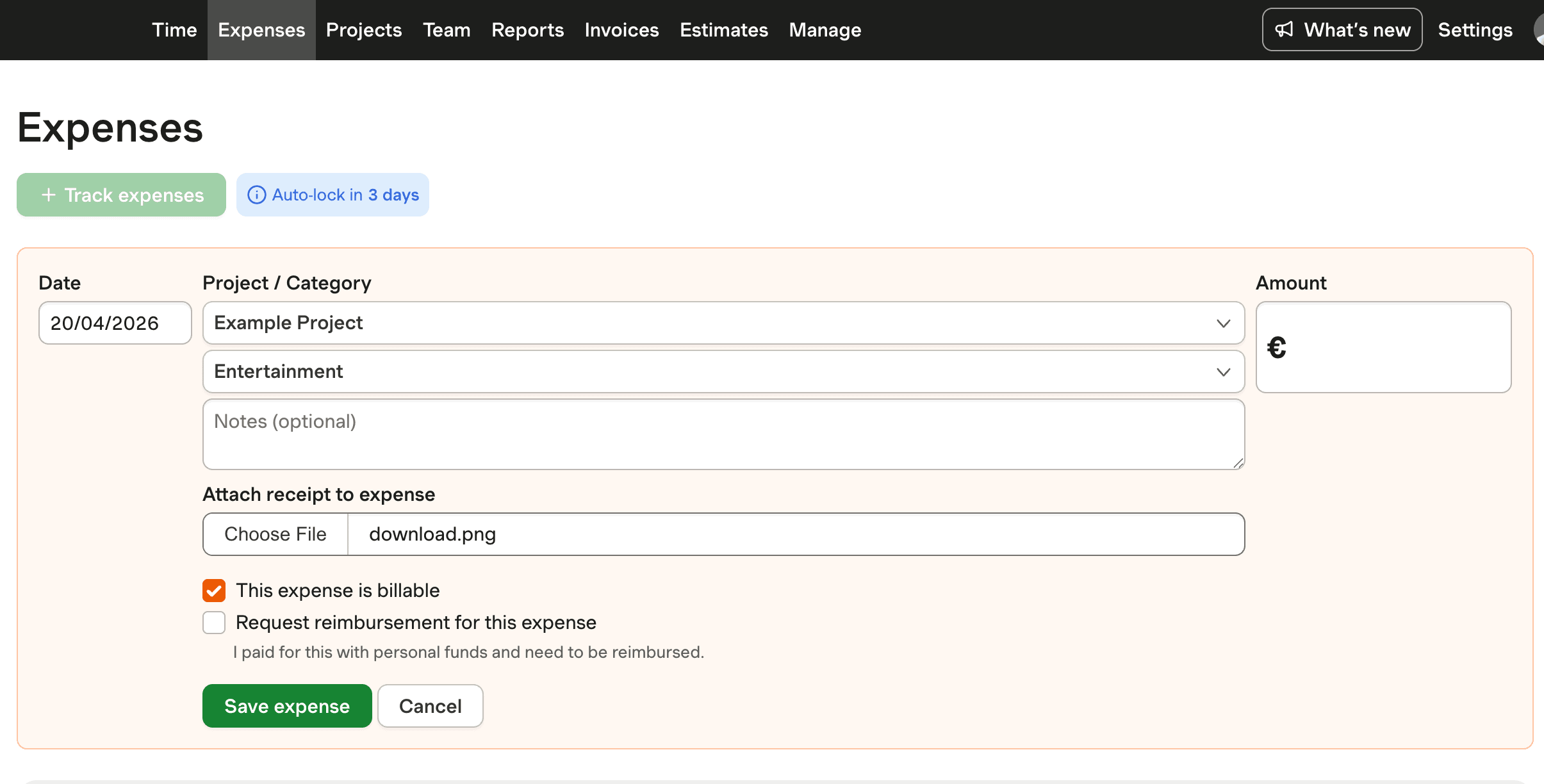
Expense Tracking with Harvest

See how Harvest helps government contractors track expenses and manage projects efficiently, simplifying financial workflows.

Screenshot of Harvest's expense tracking tool for government contractors.

Expense Tracker for Government Contractors FAQs

  • An expense tracker for DCAA compliance should provide real-time visibility, allow for clear categorization of expenses, and integrate with other financial systems. While Harvest does not specialize in DCAA compliance, it can track expenses and integrate with various business processes to support financial management.

  • Automated expense tracking systems can significantly reduce manual data entry errors and cut month-end close processes by nearly 50%. Organizations adopting such systems often report significant time savings, freeing up resources for strategic tasks.

  • Harvest provides detailed time and expense reports, which can be useful in preparing for audits by maintaining accurate financial records. Although it doesn't specialize in compliance, these features support comprehensive record-keeping.

  • Government contractors often deal with challenges like missing receipts, data entry errors, and incorrect expense categorization. These issues can lead to compliance risks, emphasizing the need for robust tracking systems like Harvest.

  • Integrating expense tracking with other business systems ensures data accuracy and streamlines financial management processes. Harvest offers integration capabilities that enhance overall efficiency and reliability in managing expenses.

  • Harvest helps contractors by providing a robust platform for tracking time and expenses, managing projects, and invoicing efficiently. While not specialized in compliance, it supports financial management strategies for better project profitability.