
Harvest
Expenses
Sign up

Ways to Track Expenses

Harvest simplifies expense tracking for businesses, offering a comprehensive module that reduces errors and integrates with financial systems for enhanced visibility.

  • Attach receipts to projects & tasks
  • Turn tracked expenses into client invoices
  • Free 30-day trial, no credit card needed

or drag & drop • Images and PDFs, max 10 MB

The Evolution of Expense Tracking

Expense tracking has evolved significantly over the decades, transitioning from cumbersome manual methods to streamlined digital solutions. Initially reliant on paper receipts and spreadsheets, these traditional approaches were both time-consuming and prone to errors. Today, digital transformation has reshaped the landscape, with approximately 79% of enterprises adopting digital expense tracking solutions. This shift not only enhances accuracy but also reduces fraud and increases operational efficiency.

Modern digital tools, such as Harvest, provide a comprehensive solution for expense management. Harvest's expense tracking module allows users to monitor expenses by date, project, and category, offering real-time data and insights. This capability is essential for businesses looking to improve financial oversight, with companies reporting up to a 43% reduction in manual errors when using automated systems.
Why Digital Expense Tracking is Essential

Digital expense tracking is essential for businesses aiming to optimize their financial processes. Traditional methods can lead to inefficiencies, costing companies up to 2.5% of their revenue due to unaddressed policy violations and manual errors. In contrast, digital solutions like Harvest offer significant cost savings, potentially reducing administrative overhead by up to 34%.

Harvest not only tracks expenses but also integrates seamlessly with accounting and ERP systems, enhancing financial visibility. This integration is crucial, as 69% of organizations report improved oversight when expense systems are connected with other financial platforms. By using Harvest, businesses can ensure compliance, streamline approval processes, and maintain a digital audit trail, which is invaluable for audits and regulatory adherence.

Manual vs. Automated Expense Tracking

There is a common debate between the merits of manual and automated expense tracking. Manual tracking, using methods such as spreadsheets, often lacks connectivity and can lead to data silos. Conversely, automated systems provide real-time data and reduce the cognitive load on employees. Harvest accommodates both methods by allowing users to manually enter expenses or automate the process through mobile apps available on iOS, Android, and web platforms.

Using Harvest, businesses can encourage employees to digitize receipts in real-time, thereby eliminating paperwork and reducing the risk of loss. This automation is beneficial for teams that work remotely or travel frequently, ensuring that expense data is available instantly for review and approval, ultimately reducing processing time by up to 41%.

Effective Expense Categorization

Effective expense categorization is vital for accurate financial management. Poorly categorized expenses can complicate budgeting and financial analysis. With Harvest, users can create custom categories tailored to their specific business needs. This customization allows for a more granular view of spending, facilitating better budget management and more precise financial reporting.

Moreover, Harvest's categorization feature helps differentiate between billable and non-billable expenses, streamlining the client invoicing process. This differentiation is crucial for project-based businesses that need to manage budgets closely to ensure profitability. By categorizing expenses effectively, businesses can derive actionable insights that drive strategic decisions.

Explore Expense Tracking with Harvest

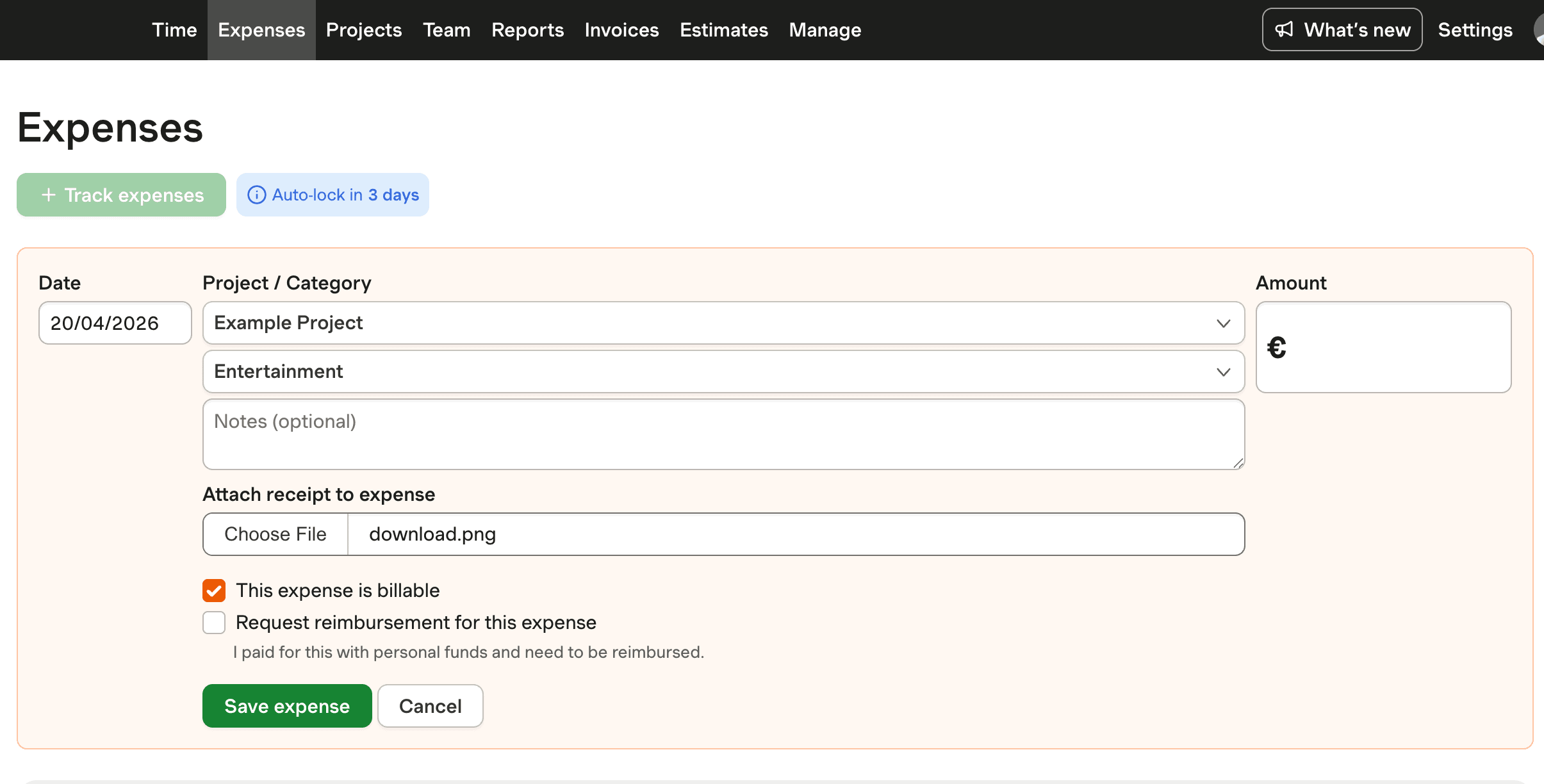
The preview showcases Harvest's versatile expense tracking module, highlighting its integration with financial systems for enhanced management.

Screenshot of Harvest's expense tracking feature in action.

Ways to Track Expenses FAQs

  • Tracking expenses effectively involves using digital tools that offer automation and real-time data. Harvest provides a comprehensive solution that tracks expenses by date, project, and category, making it easier to manage budgets and reduce errors.

  • Yes, Harvest is a highly recommended app for expense tracking. It is available on multiple platforms including web, iOS, and Android, allowing for flexible and convenient tracking of expenses anywhere, anytime.

  • You can track expenses manually using tools like Harvest, where you enter details such as the amount, category, and attach receipts directly into the system. This method offers flexibility while still providing structured data for analysis.

  • Tracking expenses offers numerous benefits, including better budget management, the ability to differentiate between billable and non-billable expenses, and streamlined client invoicing. Using a tool like Harvest enhances these advantages by providing real-time data and reducing manual errors.

  • Effective categorization involves creating custom categories that align with your business needs. Harvest enables users to customize these categories, allowing for precise management of expenses and improved financial reporting.

  • Digital expense tracking reduces fraud by providing real-time alerts for duplicated or incomplete data entries and maintaining a digital audit trail. Tools like Harvest help ensure compliance by embedding spending policies into the tracking process.

  • The future of expense management lies in the adoption of AI, machine learning, and blockchain technologies. By 2025, 80% of organizations are expected to use expense analytics tools to derive business value, with AI-driven systems enhancing compliance and fraud prevention.